Squid with orzo.

I was going to write about my current favourite recipe books, starting with an article about the main ones that I like, before doing something about a recipe from each of them. But I was hungry, so here’s Squid with Orzo, from the most recent Nigella Lawson book.


Here’s a picture of what you need. I’m not sure why the designers of this book have put the ingredients list on a different page than the method. I’m using dried dill, as we have none growing yet. The little measuring jug has 30ml of ouzo in it.

The recipe starts with chopped shallots, chopped fennel, and crushed garlic.

Those get put in a casserole, with olive oil, and cooking commences. Now, I particularly like the fact that Nigella tells you how big the casserole will need to be, to fit the resulting food. If you’ve ever had to find a bigger dish, half way through cooking something, you will know why!

In go the squids. I noticed there were no tentacles in the box when I defrosted it. I must have used those already. Keep heating gently, and stirring.

Here’s the 300g of orzo pasta, which looks like rice, but isn’t, along with my favourite brand of canned and pureed tomatoes. I only just noticed that Napolina have offices in the Liver Building, which used to have the offices of Blue Funnel Line (I worked for them for a while, back at the dawn of time) before that company went into oblivion.

Anyway, the tomatoes, a tablespoon of puree, and a can of water go in. Bring it to the boil, put the lid on, and put it in the oven, at 160°C for an hour and twenty minutes. Sure, I didn’t tell you to preheat the oven, but of course, Nigella does. Her books are full of recipes that work, with none of the awful snags I may have mentioned in a previous article, though I’m still puzzled by ingredients and method on separate pages. Orzo has a tendency to stick to the casserole; Nigella claims those are the tastiest bits! 

After the 80 minutes of cooking, you mix in some hot water, and cook for another 10 minutes with the lid off. Nigella’s food photographer has made hers look a lot redder than mine, but I can tell you it was delicious.


There’s quite a lot left, some of which may well get frozen for later. Meanwhile, I think I fancy a little more…

Roy Batty – the continuing story.

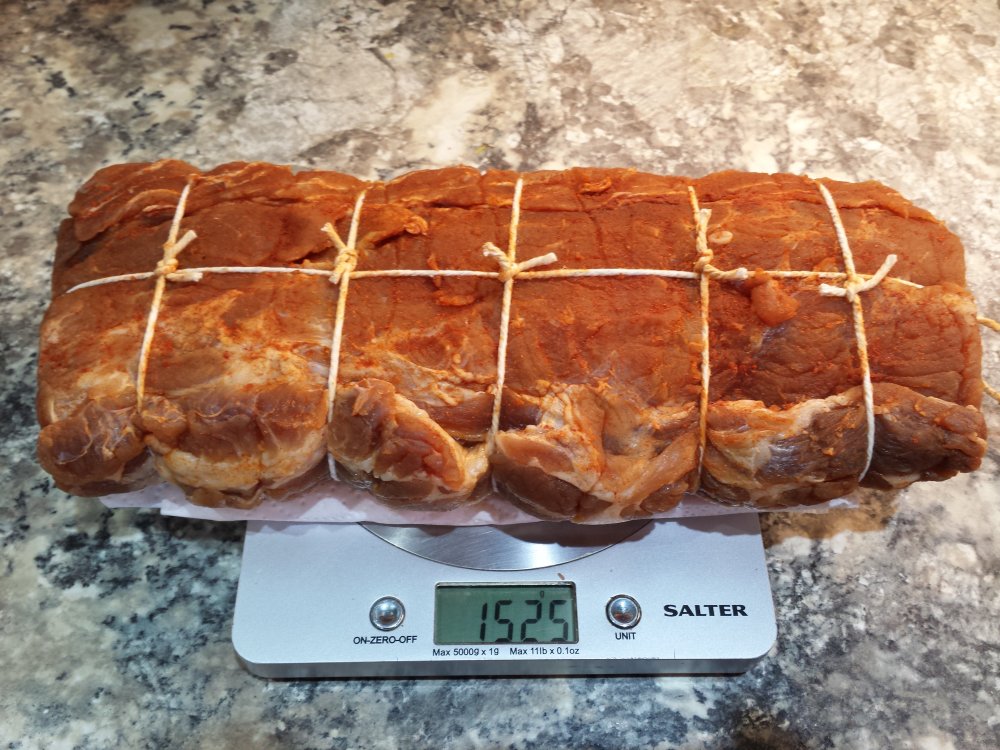
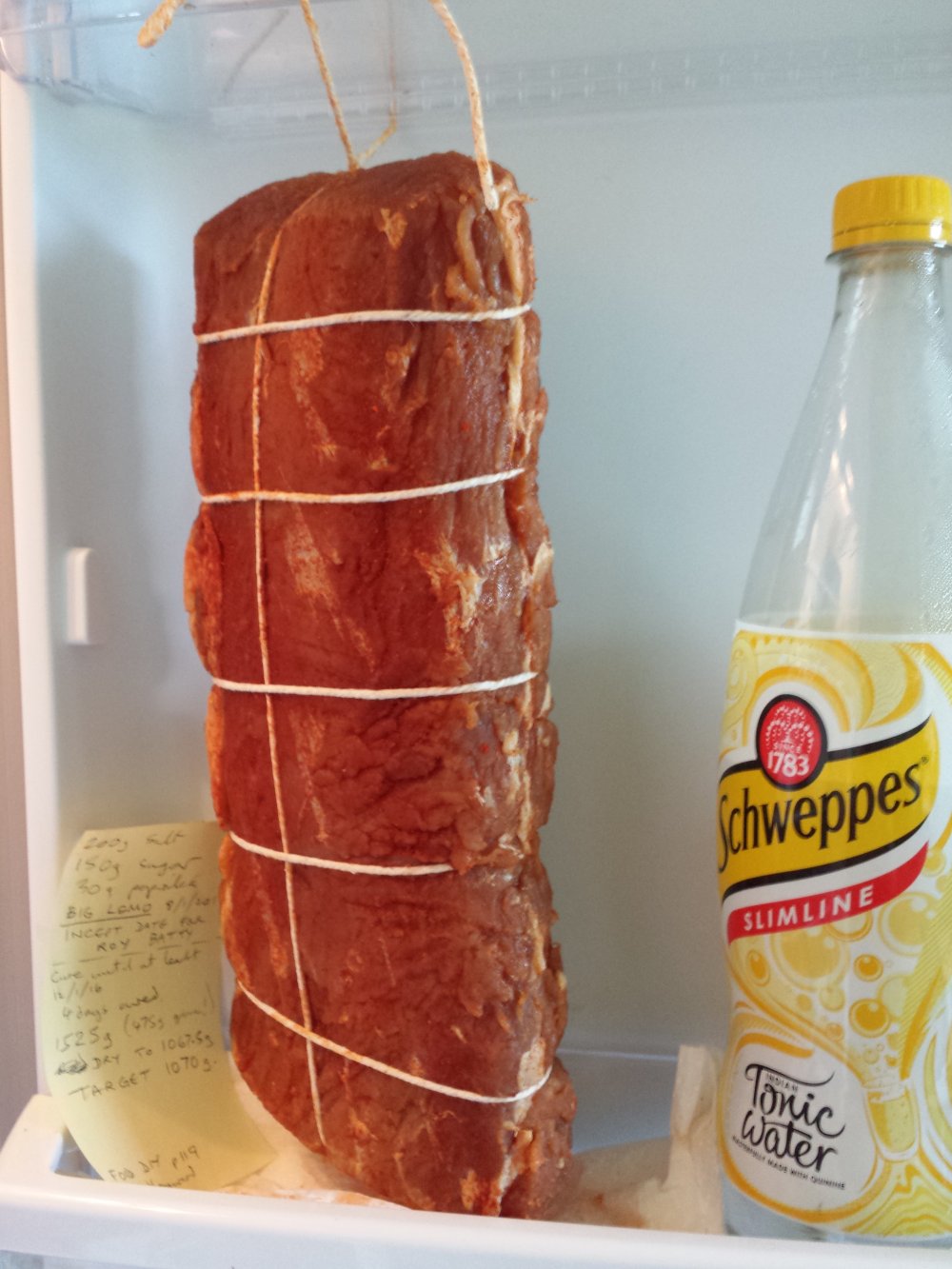
After four days of curing, I have taken the Lomo I have named Roy Batty out of the cure, rinsed it, dried it, and tied it up. A light sprinkling of pimenton on the outside, and it was ready for weighing. Now that piece of meat started out at 2000g, so I’ve already removed 475g just by curing it.

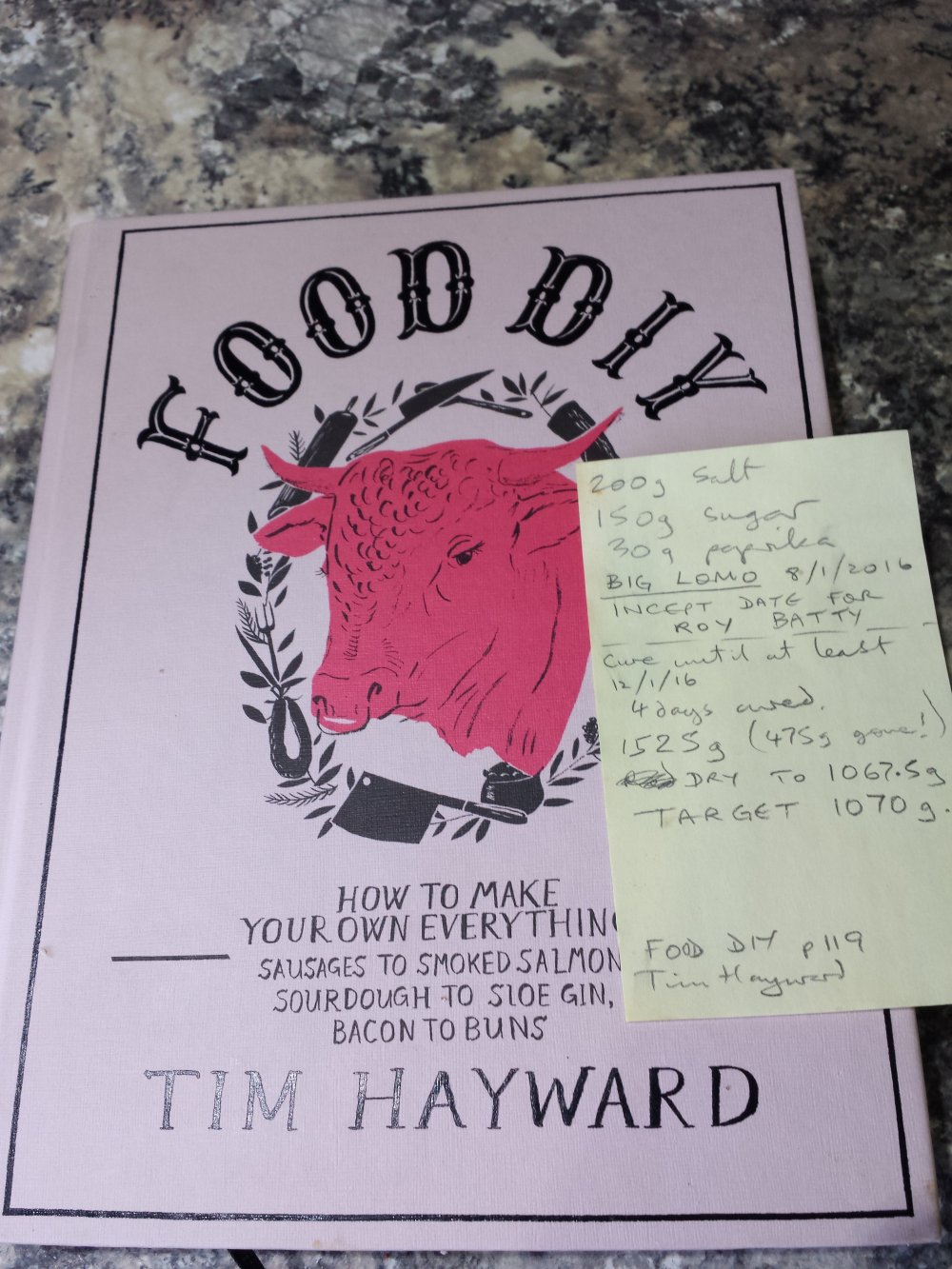
Here’s the book I am using for inspiration, with my notes on the progress so far. As you can see, I will now have to wait until the weight of the Lomo has dropped by a further 30%, to about 1070g, at which point it will be ready to eat. I’ll probably divide it up and freeze most of it, to make it last a reasonable time, and just have one cling-filmed piece on the go in the fridge, for use when required.

And here’s the Lomo in its new home for however long the drying process takes. It will probably be a few weeks, even though fridges are very good at drying out food, often when you don’t want them to.


For a next project, I think I’ll maybe try making some pastrami…

Full size Lomo. Dedicated to Roy Batty.

The Lomo I’ve made a couple of times was really rather under-sized. That was because I had used pork tenderloin, when it should really be made from pork loin. The last time I was in Tesco, I spotted this fine special offer, at £4 per kilo, right next to the same item at £5 per kilo! The string to hold it in shape for roasting, and the layer of fat, or skin, on one side had to go, of course.

 So, here it is, in all its meaty glory, ready to go into its first process, the cure that removes quite a lot of liquid from it. I used about 200g of cheap cooking salt, 100g of sugar, and about 20g of smoked paprika, the delicious Spanish pimenton that I love.

Into the cure it goes!


To the right, you can see part of an earlier mini-lomo, and a few slices I cut off for testing purposes. The test was a delicious success, of course.


I started this one on January 8th, 2016, which any Blade Runner fan will tell you was Roy Batty’s Incept date, in case you were wondering about the title I chose.


A day later, and you can see that the cure has taken a lot of fluid out of the meat. I turned it over, and put it back in the fridge for a couple more days.


It will then have to be dried, tied up, weighed, and hung up somewhere cool and dry. I should really make a drying cage to hang it outdoors, if I can. Then it will have to lose another 30% of its weight before we can start eating it.

Lamb Tagine. Mussels…

Here’s the dinner we had before our son went back to university. Lamb and apricot tagine, with spicy roasted squash, and cous-cous. The red wine went very well with it. In the background is our dessert. I didn’t make it, Mr Tesco did. I just defrosted it, and it was quite pleasant.

This is the snack we had when I got back from taking the student back to his digs. Mussels in a garlic and white wine sauce, accompanied by bread and butter, olives, cheese stuffed peppers, and a few other bits and pieces. The fizzy white wine was an enjoyable addition.

Sunday – some nice, ordinary food.


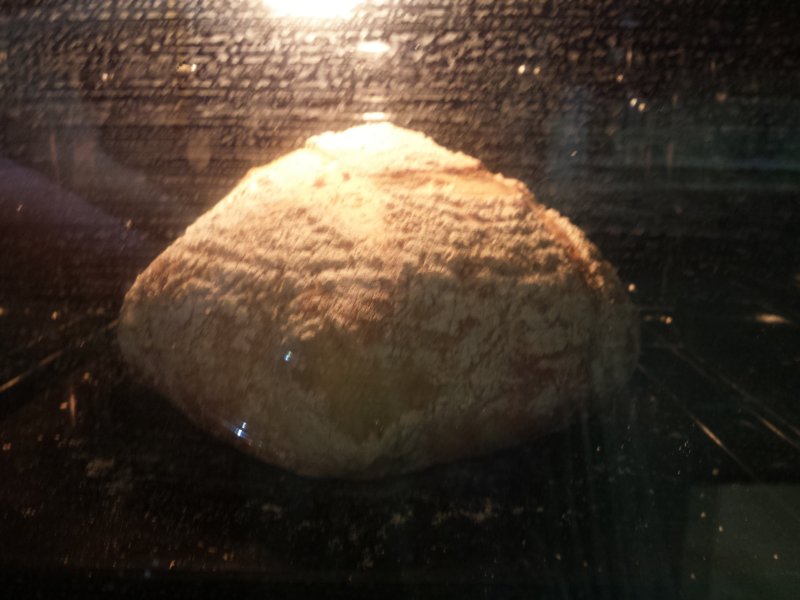
Here’s a loaf of white bread that has just gone into the oven, before the “oven spring” expansion has started. It’s the ordinary yeasted white loaf, the first recipe in “Brilliant Bread”.

And here it is a couple of minutes later, after the oven spring has started. I threw a cup of water into the tray at the bottom of the oven, when the loaf went in, so the crust wouldn’t harden before the expansion got going. 

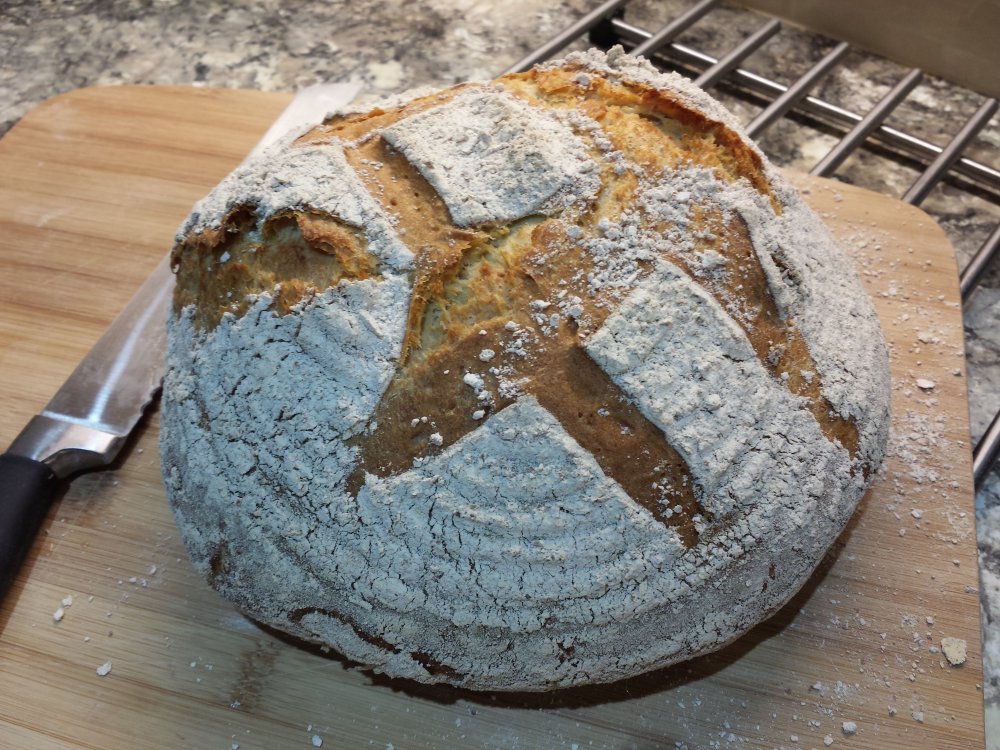
And here is the result, with a split on the left, in spite of my careful scoring, and the steam. This was a very active dough!

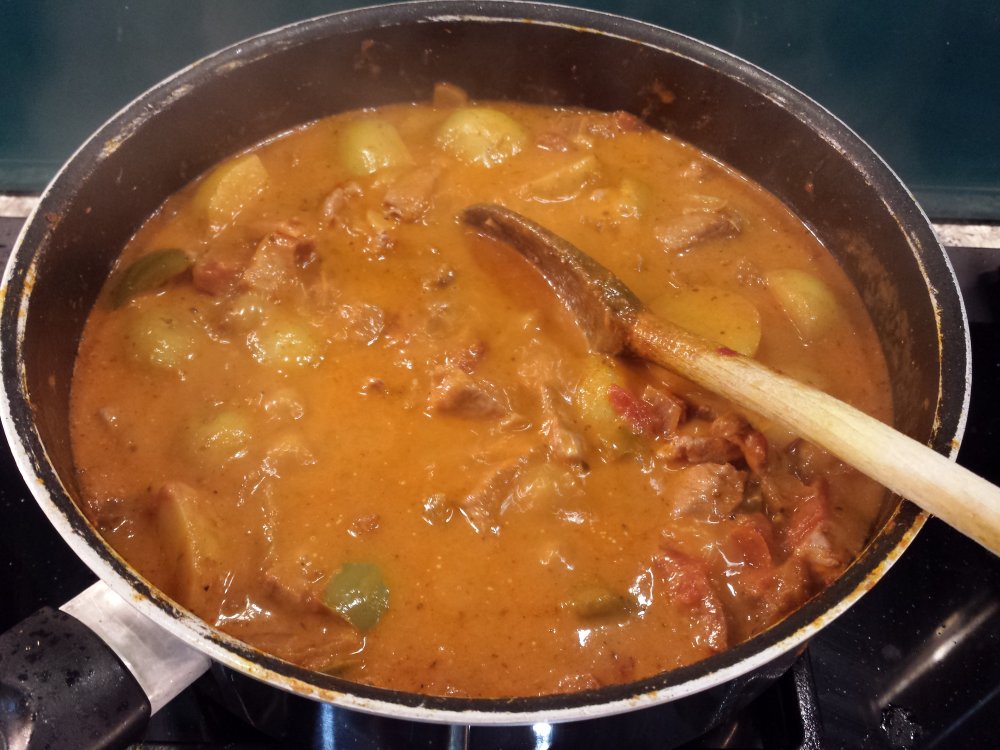
Meanwhile, I was also making a tasty bacon, chorizo, chicken, and potato stew to feed us. There’s no recipe, as this is just something I make “out of my head”.


Forgive the hasty post, and boring formatting. The Blogger editor screws up my work quite horribly at times. When I try to move a picture, it deletes a nearby one….


Just a little Christmas dinner, sort of thing…

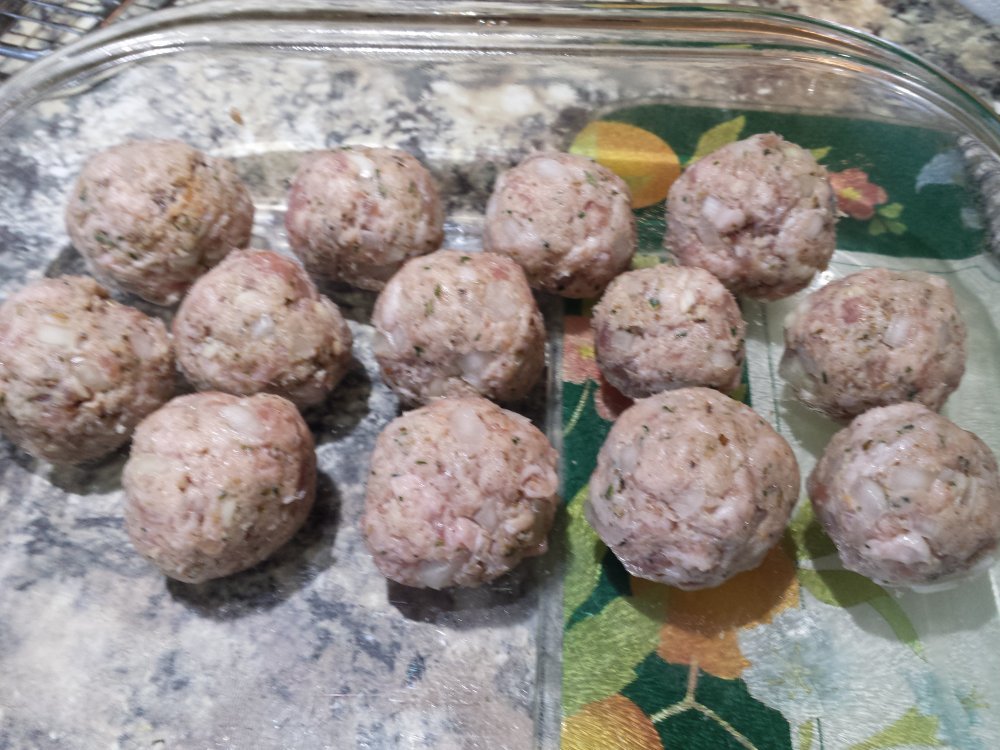
 Here we see some interesting sausage-meat stuffing balls. They are made of sausage-meat, onion, garlic, fresh thyme and Greek oregano. The rest of the space in the dish was filled with balls of Paxo sage and onion stuffing, but that’s not as interesting.

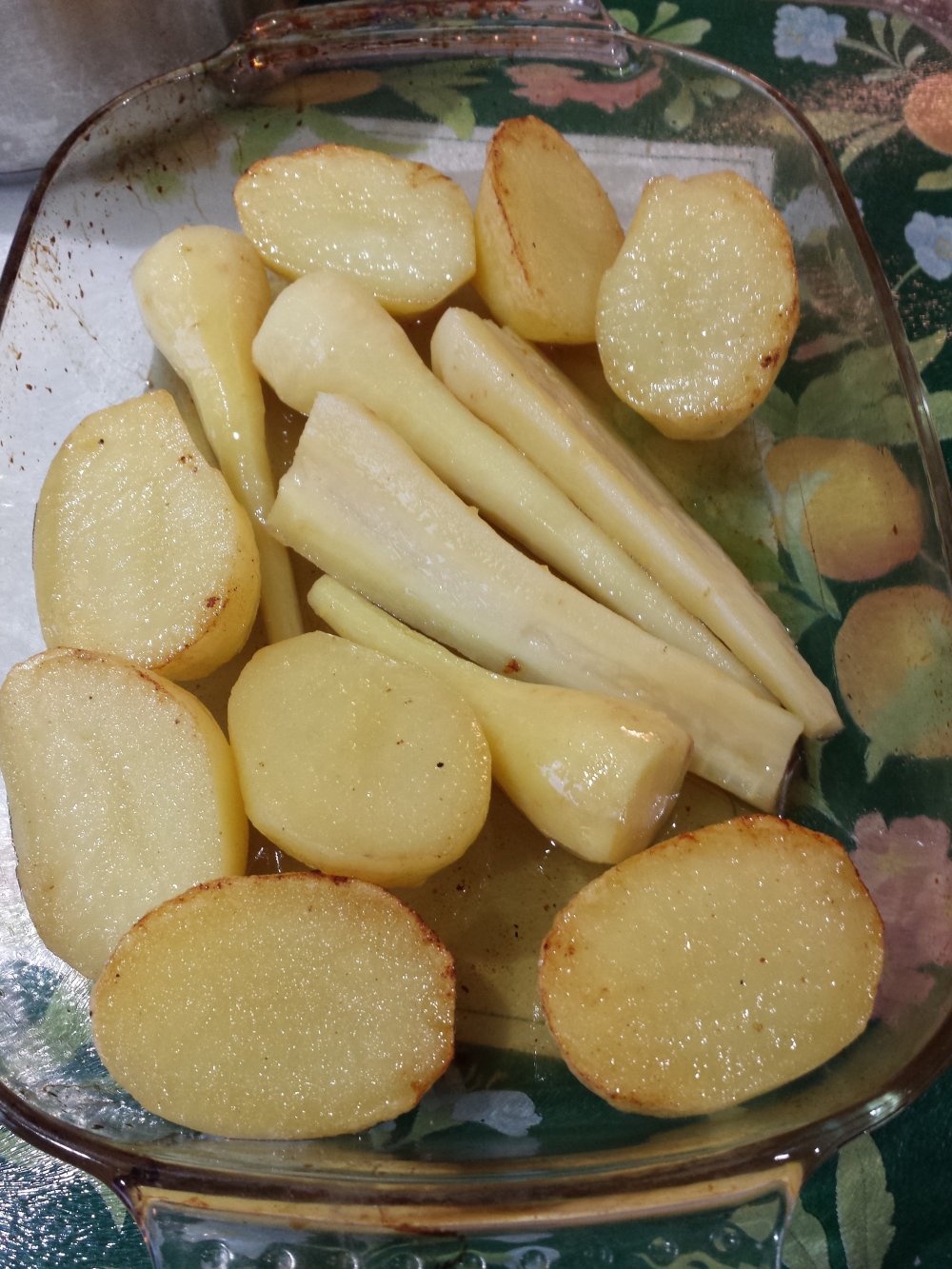
Roast potatoes had been cooking in the tasty duck fat for 15 minutes before I added the parsnips. At the time, I thought this wouldn’t be enough parsnips. This is a common error with Christmas dinner.

Suddenly, I had carved lumps off the turkey crown, put the trimmings and vegetables on the table, and we were pretty much ready to eat our dinner!

We let the Youngling pour the Champagne, which he did very well. No wastage, no half empty glasses.


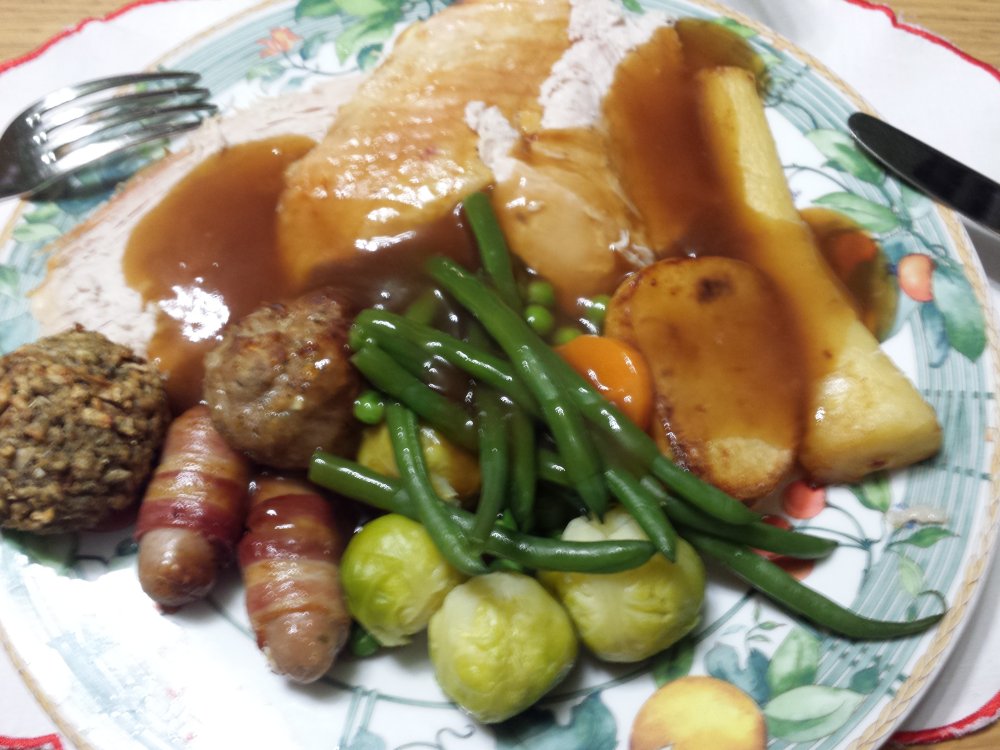
This was my dinner, before I added even more…


Turkey, Cameron’s delights, sage and onion stuffing, sausage-meat stuffing, roast potato, roast parsnip, carrot, peas, green beans, Brussels sprouts, and gravy. 

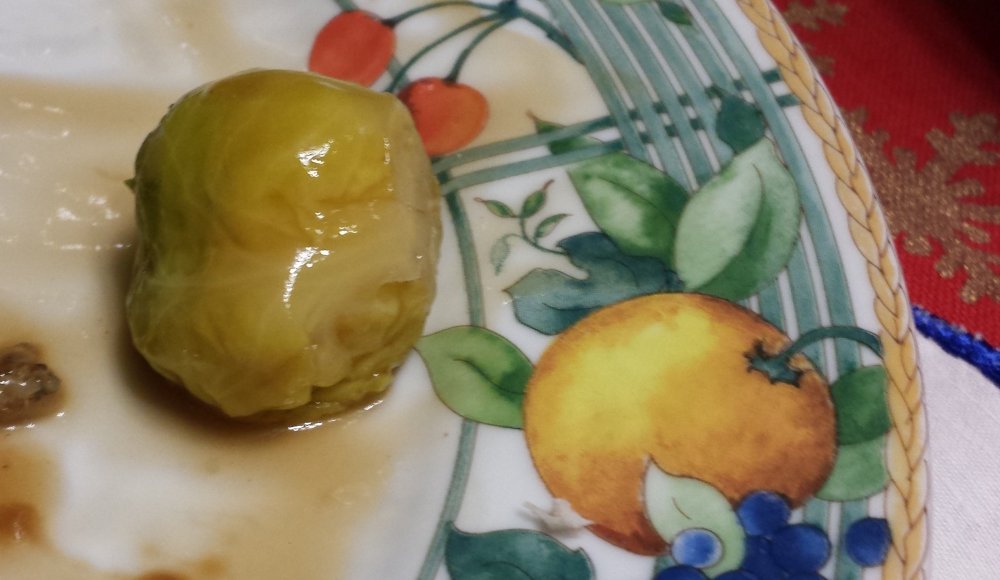
Of course, we have explained to the Youngling that Brussels sprouts are delicious, but he continues to believe his uncle’s remark that they can never be eaten. Here is the token sprout we always put on his plate, so he can discover for himself how lovely they are, when his uncle’s evil influence wears off.

Strange Oven Spring

Here’s a strange little adventure I had today, with an ordinary white loaf. 


I proved it in my nice new proving basket, turned it out, and scored it with a serrated knife. Now, as far as I could tell, and I was careful about this, all the cuts went to the same depth.


Here’s a shot, just after it went into the oven. The loaf looks jolly nicely shaped and even. The baking stone should have been evenly hot, but maybe it had not been heating up for long enough, and was hotter at the back of the oven. Quite early on, there was an obvious bulge at the back of the loaf. Yes, Deirdre, I do know the glass oven door could do with a clean.


Still, the loaf was rising nicely…


And, when I took it out of the oven, it was very obvious that the “oven spring” had not occurred evenly. One of the cuts has taken up almost all of the stretching that the loaf has done. I ask you all to theorise as to why it is like that.


  • Uneven depth of scoring cuts?
  • Unevenly heated stone?
  • Shaping stresses in the loaf not evenly distributed?
  • Fan oven hotter at the back side of the loaf?
  • Act of God?
  • Something to do with the curvature of space?

Rambling in the Kitchen

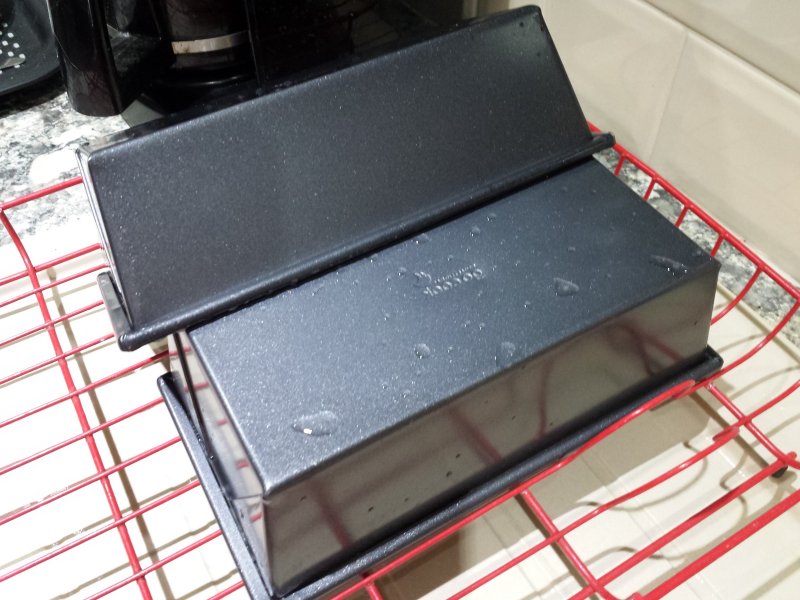
After one of my ancient bread tins pulled a loaf in half, I bit the bullet, and bought two new ones. They’re a bit smaller than the old ones, and have a non-stick coating. The instructions that came with them say they shouldn’t be used at any higher temperature than 230°C, which is annoying, as quite a few recipes suggest that 240°C is the temperature to use. I don’t know how accurate the oven settings are, in any case, so I will ignore the warning. I’ll let you know if the coating falls off.

I was considering whether to cook something complex for our Christmas dinner, but decided to take the easy route this year, and chose a turkey crown. That will do for a couple of days, at least! We have had a commercial three bird roast in the past, and I was quite disappointed with it, because it had an awful lot of stuffing compared with the amount of actual bird meat, and was impossible to slice neatly. I do intend to do another three bird roast, some day, but I will try to use a minimal amount of stuffing, and use mostly sausage-meat, maybe with some chestnuts.

These chicken wings were cooked in our air fryer, and were very pleasant, but having to put the basket in the dishwasher to remove the burnt spices and remaining chicken fat was a bit annoying. You don’t get that problem when you do chips in them. Still, at least quite a lot of the fat didn’t get eaten, so that’s good.


 As threatened recently, I made a few pastrami on rye sandwiches. It’s supposed to be a classic combination, and they do go together very well. The price of the pastrami in the shop, at £3 for 110g, is ridiculous, though. It’s brisket, for goodness’ sake. I will most definitely make my own, some time. When I do, you’ll see it on here…

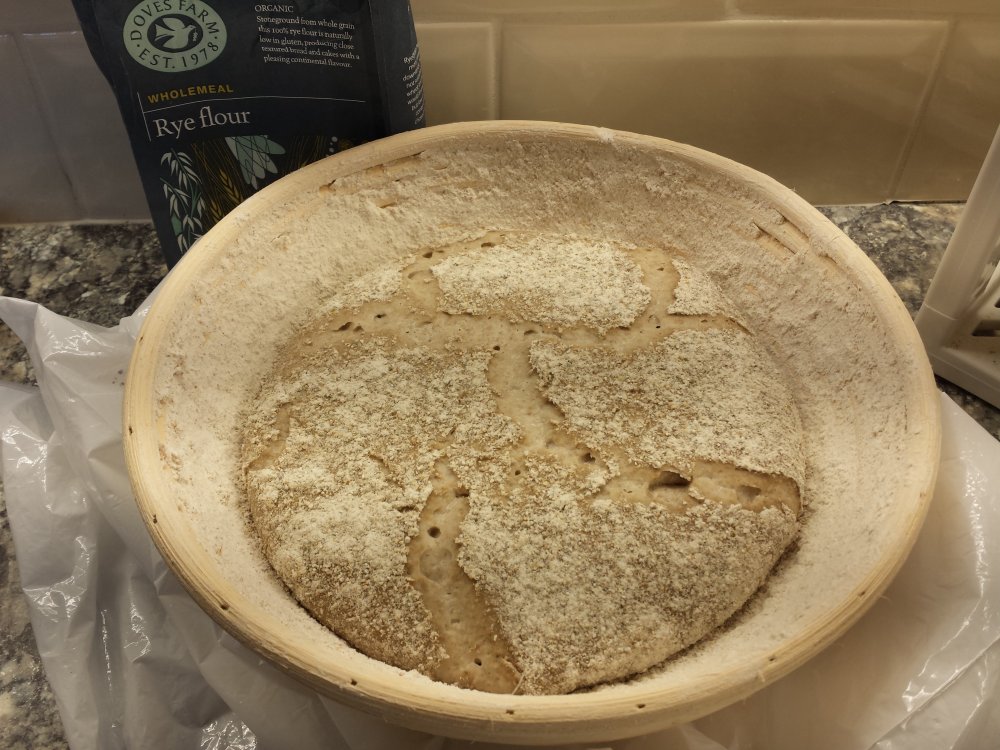
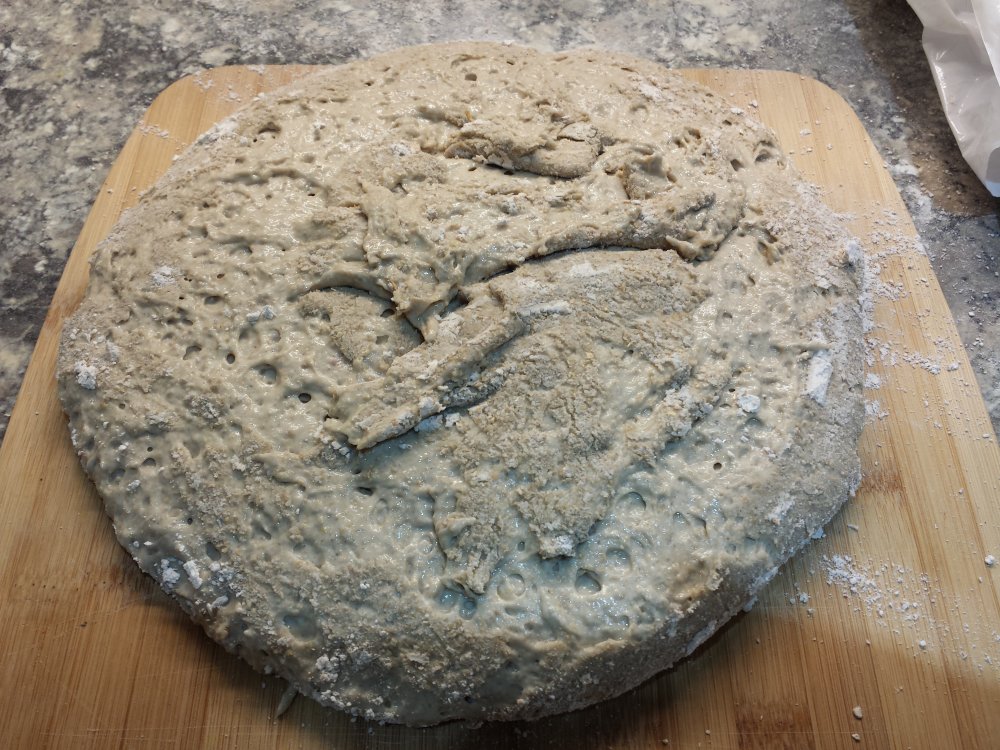
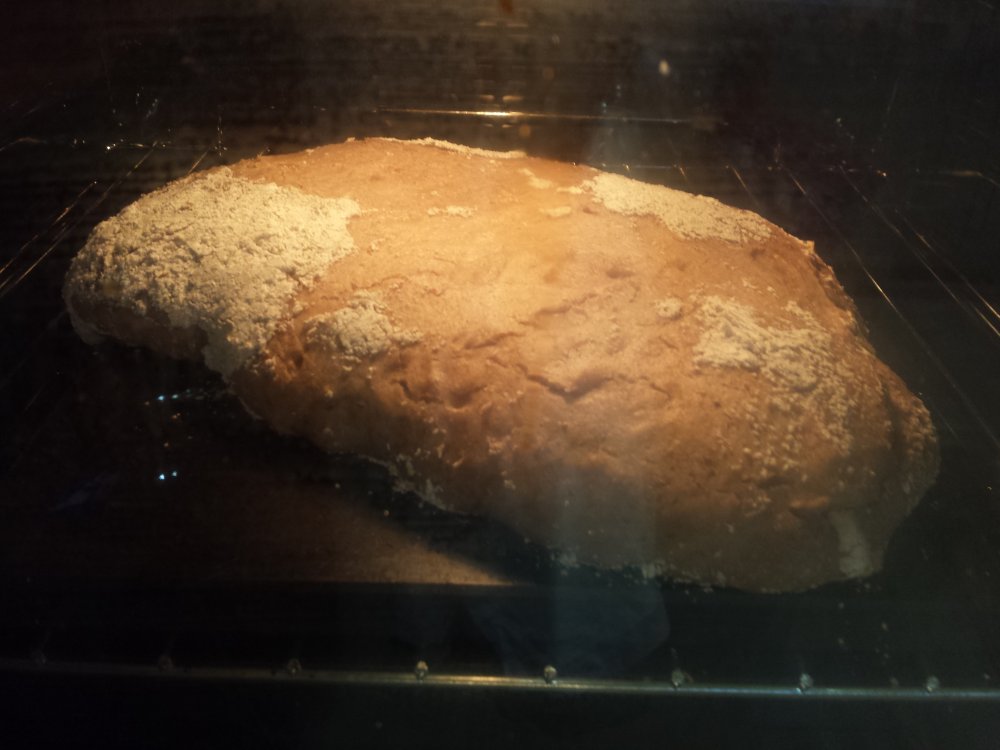
Purely Rye Sourdough – Grand Finale

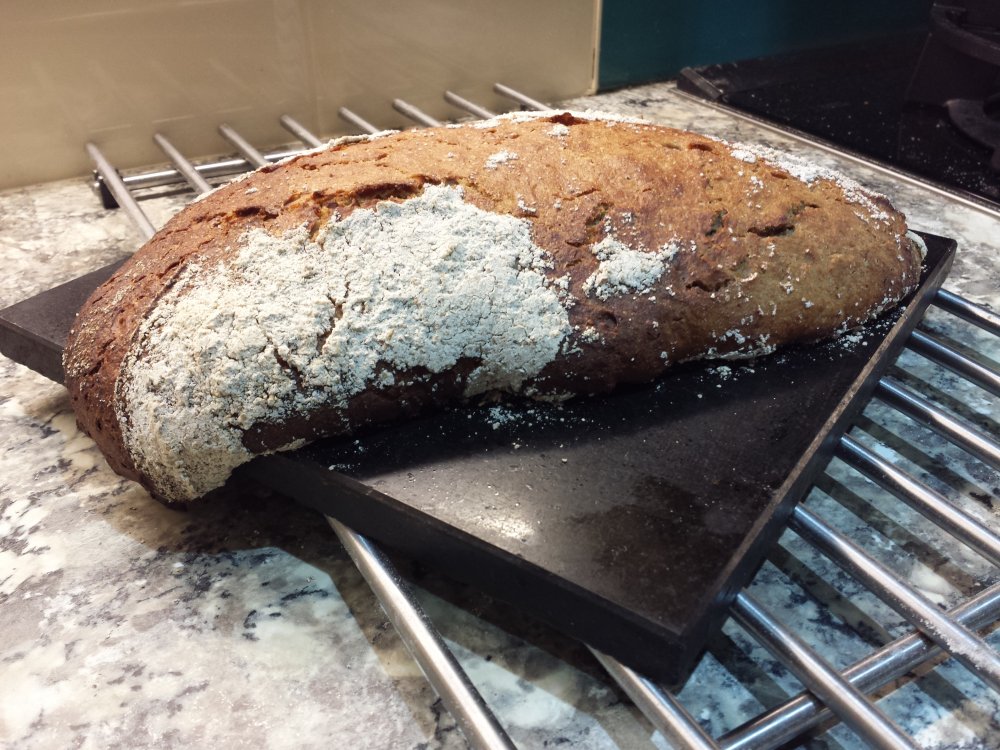
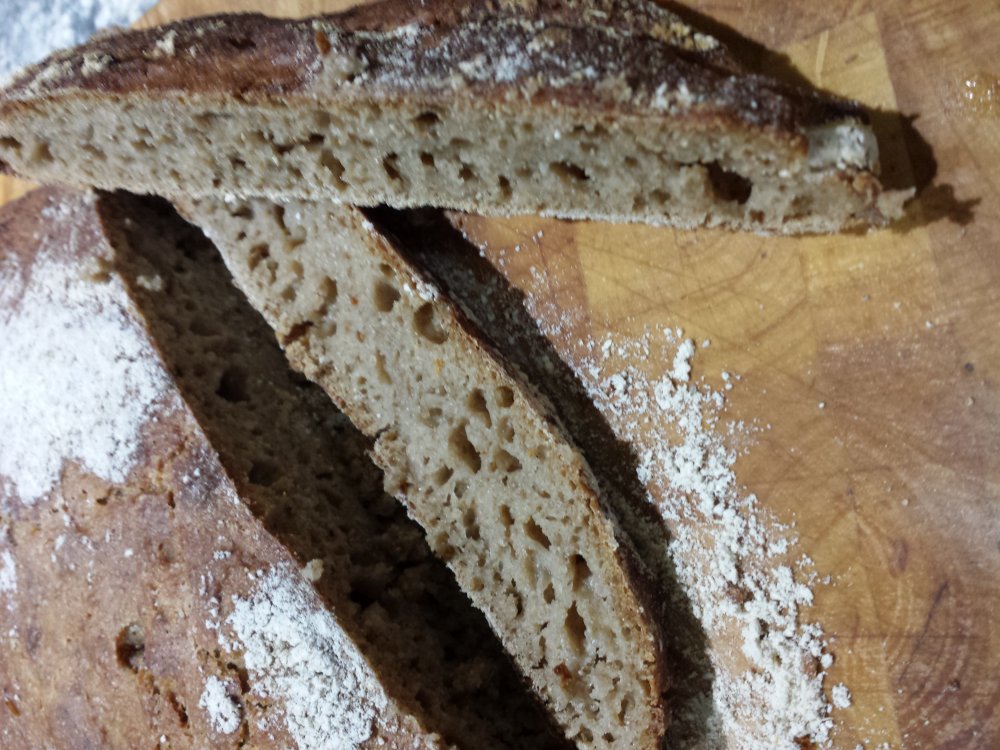
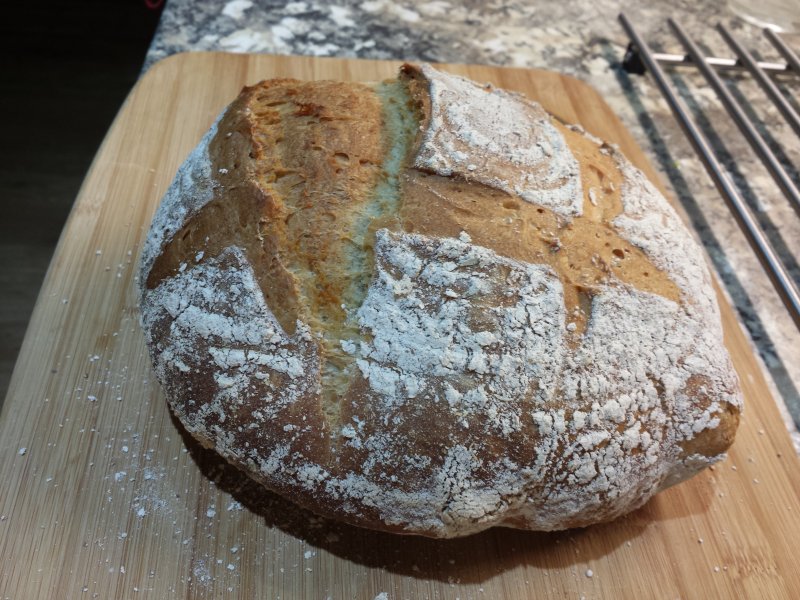
The result is worth it.


It tastes good, as well as looking good. I think I need to scale the recipe up to make a bigger loaf, though, as it’s going quite quickly. Meanwhile, I am thinking of things to do with the exploded white loaf…

Purely Rye Sourdough – Part 3

Hubris, or something like that.

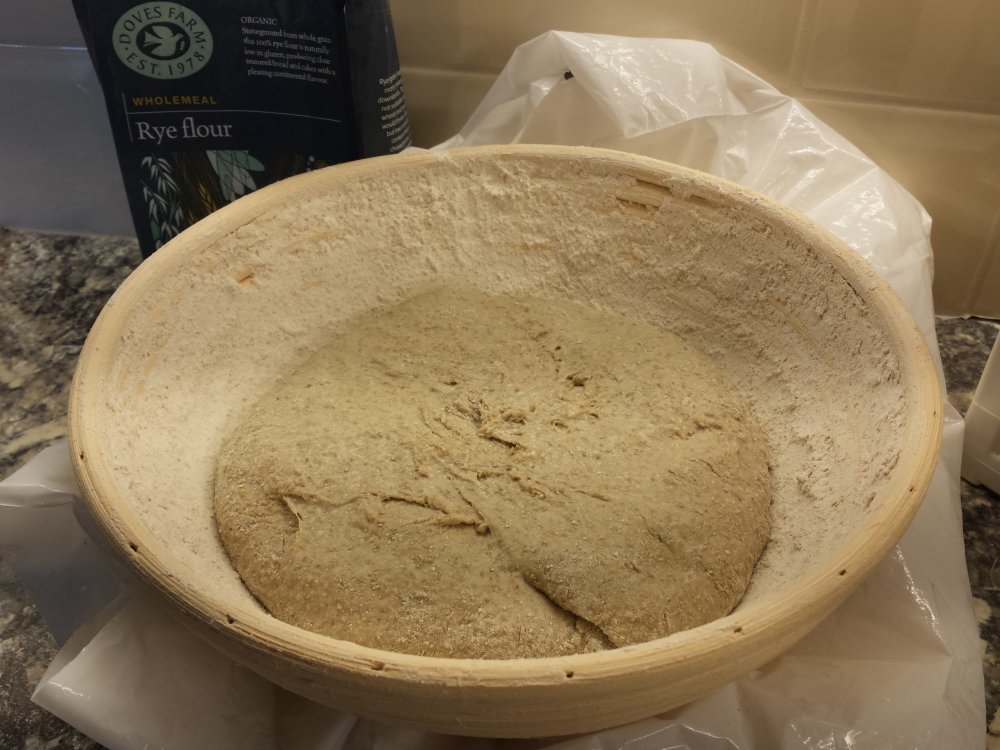
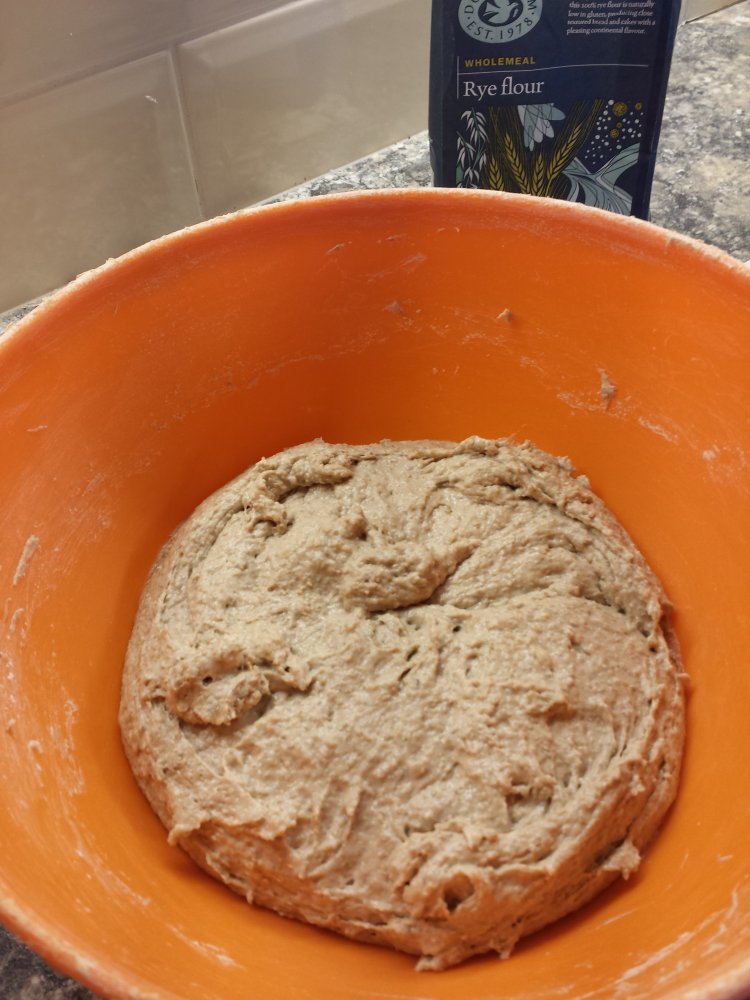
Have you ever had one of those days where everything conspires against you? The loaf in the foreground, that I was going to bake while the rye sourdough in the background took its time to rise, was looking so good. It was a lovely, bouncy dough, and was rising nicely, as you can see. 

Meanwhile, the rye sourdough has possibly risen by an imperceptible amount. It wasn’t totally inactive, though, as it was able to cast some sort of dreadful curse upon the pretty young loaf in the foreground. 

I clearly didn’t score the top of the loaf sufficiently deeply, or perhaps the cuts somehow managed to close themselves. 

Then, I forgot to throw a cup of water on the bottom of the oven, so that the steam would allow the top of the loaf to stretch, before setting in a nice curved shape. So, the top set flat, and the continuing expansion of the inside eventually cracked one end of the loaf, and the inside attempted to escape that way, resulting in the bizarre shape you see here. 

That was bad enough. I had also forgotten that the loaf tin had been washed, and I neglected to grease it with oil or butter. The loaf stuck itself very firmly to the tin. Sometimes you can cut round them, but with this one, the bottom had stuck like glue, and it split.

Remember, when somebody sets themselves up to write about how to make bread, or do some other clever thing, they may not be as clever, or helpful, as they intend to be.

Maybe I should have quietly thrown this abomination in the bin, started another one, and made myself look good? Well, at least I am being truthful, and there are lessons to learn. Checking the tin to see if it needs greasing, scoring the top of the loaf properly, throwing water into the oven to create steam…

Today, we have learned, or relearned these things. The hard way.

Meanwhile, the sourdough is sitting sniggering. It’s not going near the oven until I am sure it’s completely ready. If it ever is. We can but hope.