Life of π.

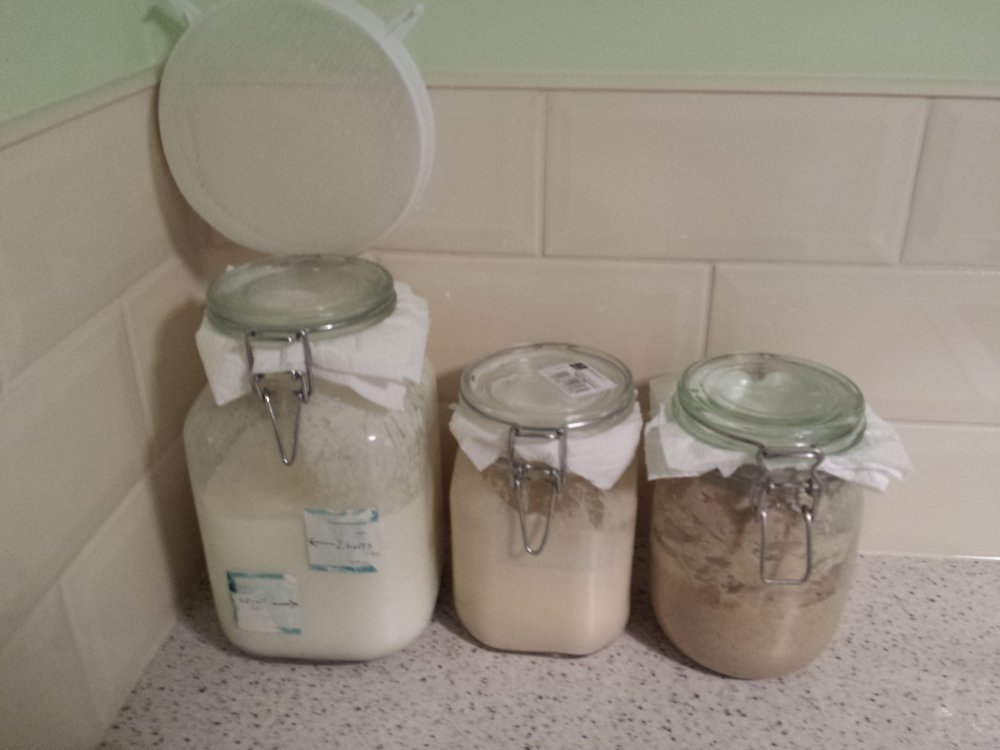
The recent post about a day in the life of a foodie was woefully incomplete. I totally forgot to mention some of the things that get done pretty much every day. The jar on the left, in this picture, is the one I make kefir in. For authenticity, I should be using a goatskin, of course. And it should hang in the doorway, so that anyone passing it can shake it, for luck. That, so I have read, is very much a thing, in Mongolia, or wherever kefir started out. But I’m so lacking in authenticity that I’m not even using mare’s milk. It’s hard to picture the Mongol hordes charging towards your defences mounted on cattle. Anyway, each day, the kefir is strained, and the liquid part goes into the fridge. The disturbing lumps, refered to in most kefir literature (yes, that too is a thing) as kefir grains are given more milk to work on.
In the other two jars, I have sourdough starters, one plain, and one rye. The hardest part of keeping sourdough starters is getting used to the amount you have to throw away. You see, the micro-organisms in the starters excrete waste products; if you just add flour and water, these waste products build up. Chucking half of the starter away before you feed it means half the waste products are removed, and the remaining little chaps get to work in a cleaner environment. Anyway, on to Π…
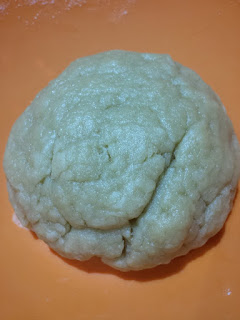

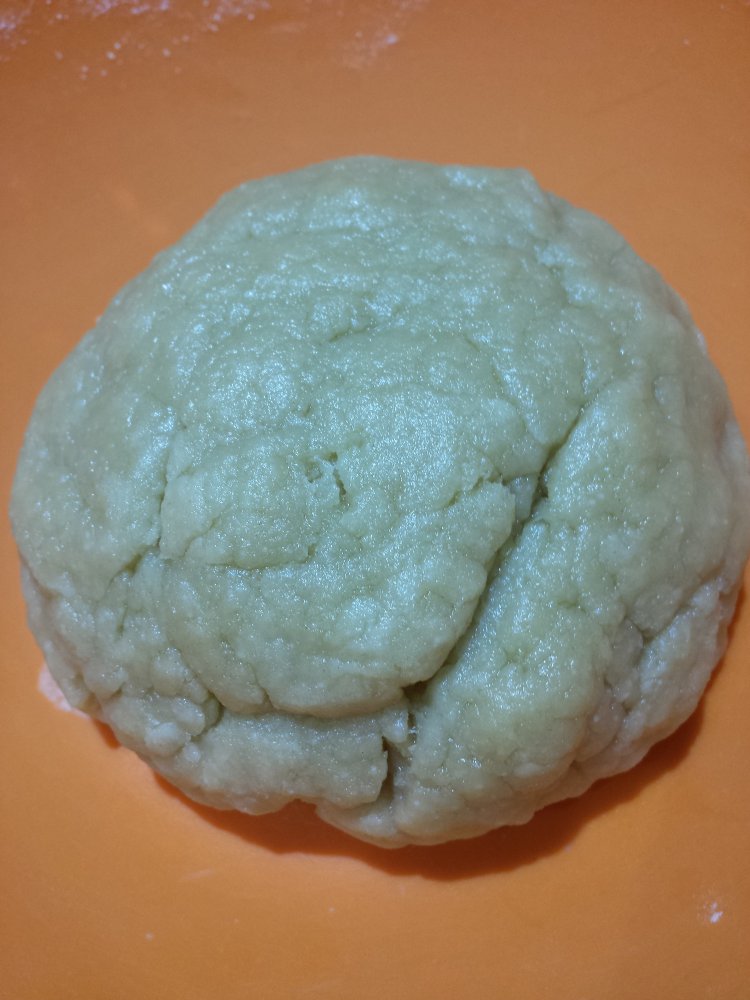
This blob is the strange pastry that the pie will be made in. It’s hot water crust, and contains a disturbing amount of lard. I studied a couple of recipes, before making it. The one in Leith’s “How to Cook” uses butter and lard, but it’s a recipe for a proper raised pie. I made mine in a tin, as the extra challenge of building a self-supporting pie case seemed a little risky for a first attempt. I was following in the doughty footsteps of Tim Hayward, whose “Food DIY” has inspired so much of what I have been writing here. 

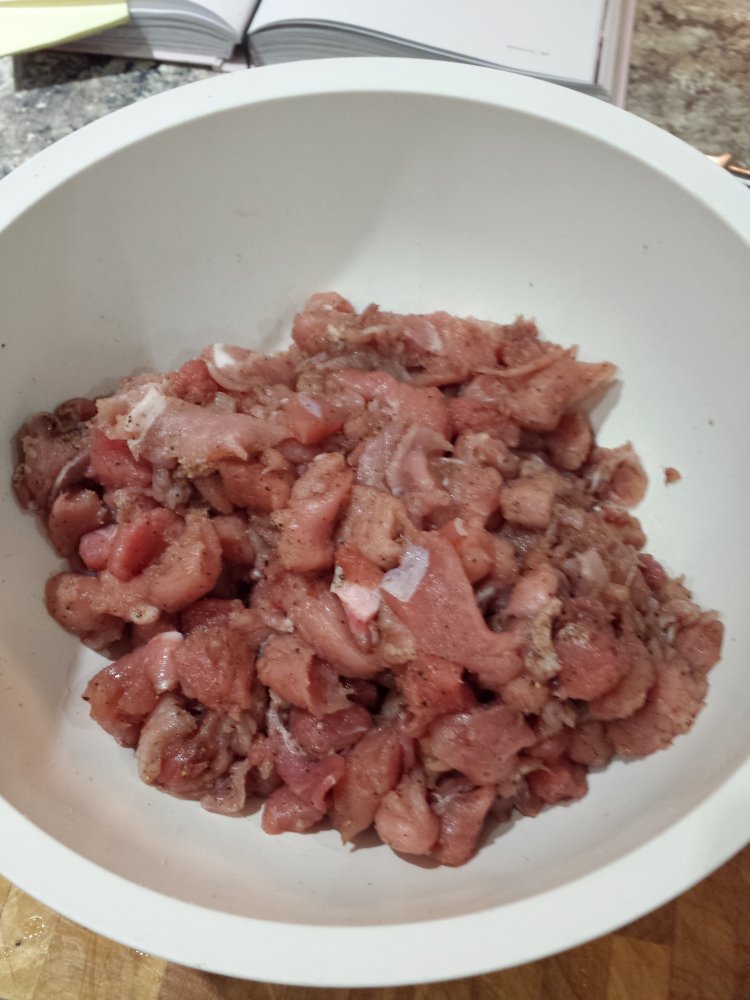
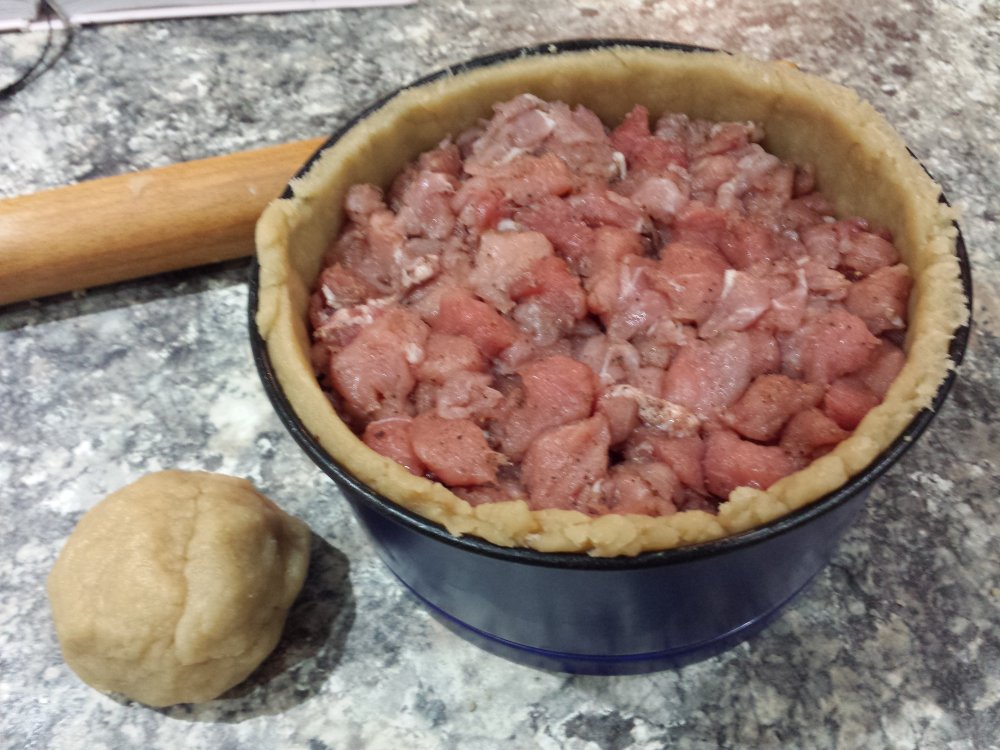
Although this is from the recipe for a Gala Pie, I’m just using the meat, and not adding the boiled eggs. What we see here is chopped pork, with the addition of some shop bought, unsmoked bacon, for its preservatives. Harder to see are the salt and the spices. I’ve resisted the inclination to reduce the amount of salt, as it also has a preservative effect. Tastes good, too.
So, a third of the pastry is waiting to become the lid of the pie. I’ve lined the tin with the rolled out three quarters of it, and done my best to make sure there are no cracks. In goes the meat, and at this point, I’m wondering how Mr Hayward managed to get four boiled eggs in his pie as well as 1200g of meat.

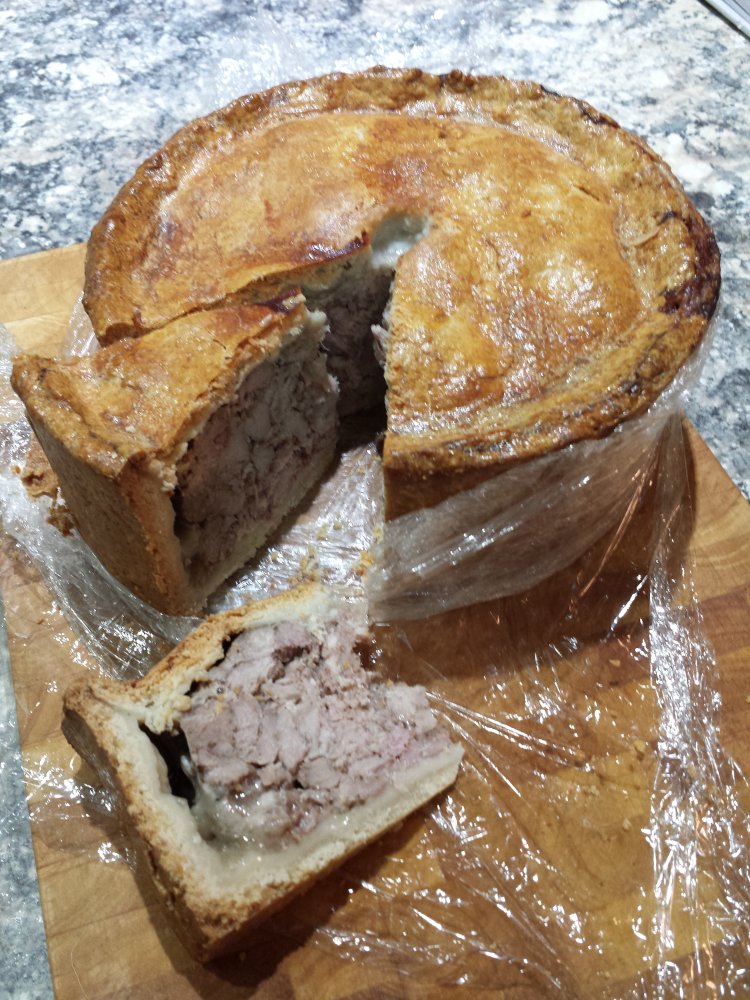
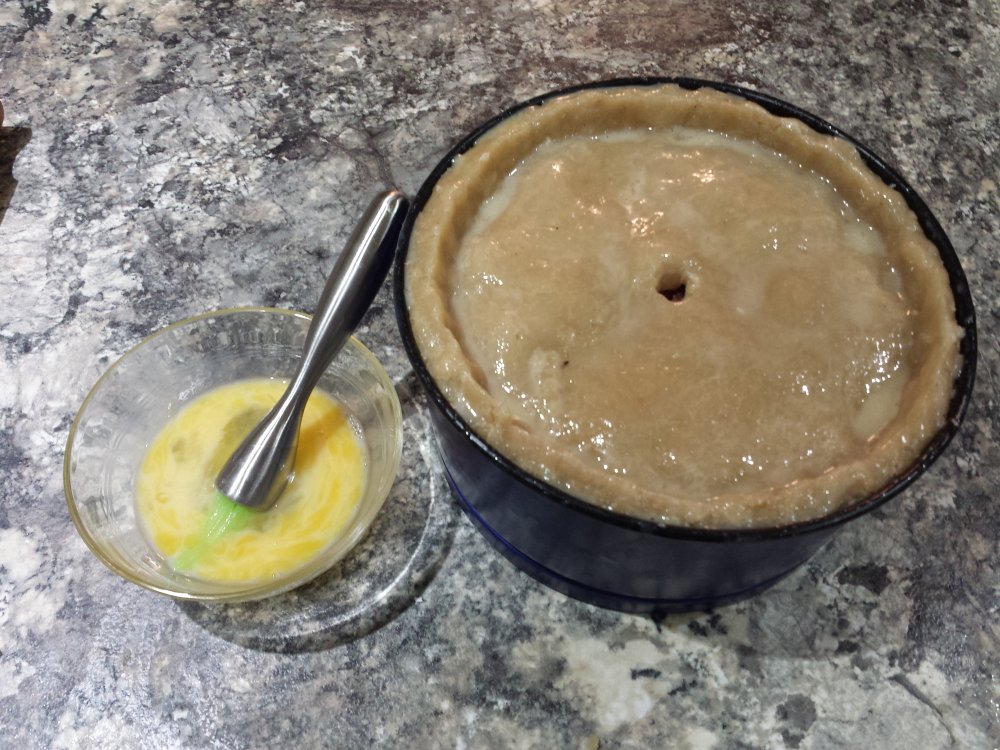
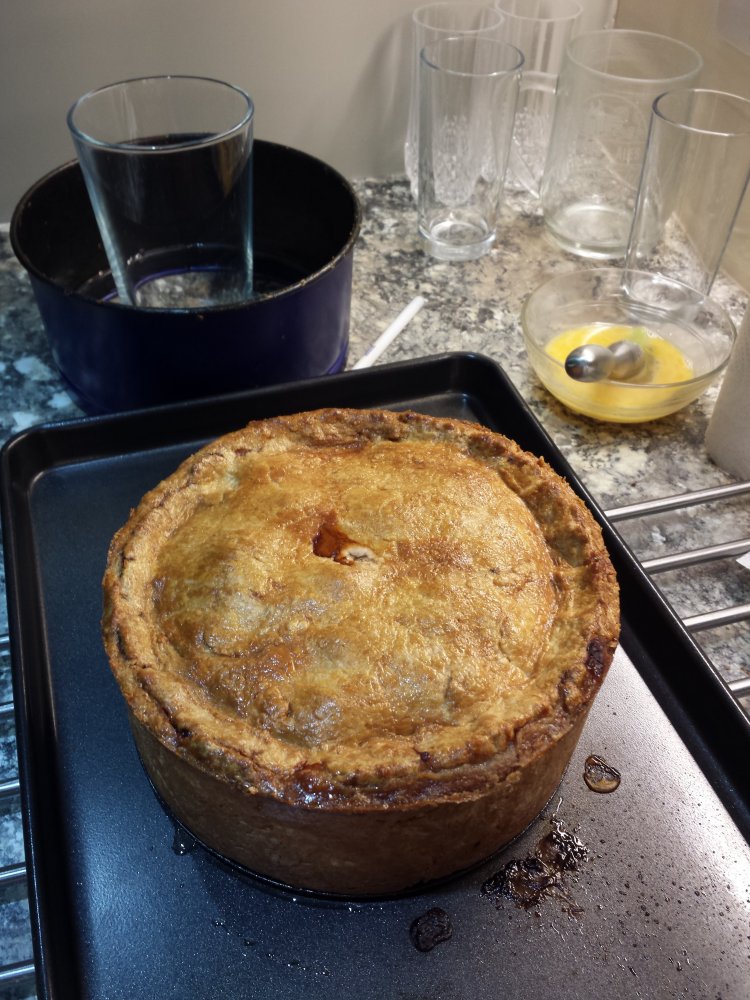
On with the lid, glaze it with a bit of beaten egg, make a hole in the lid, and bake the pie at 180°C for an hour and a half. Because I’m still learning how to use this oven, a check of the internal temperature seemed like a good plan. Yes, pork is certainly cooked if it gets to 75°C, so the next move is to take it out of the tin, give the top and sides some more egg wash, and bake it for another ten minutes.
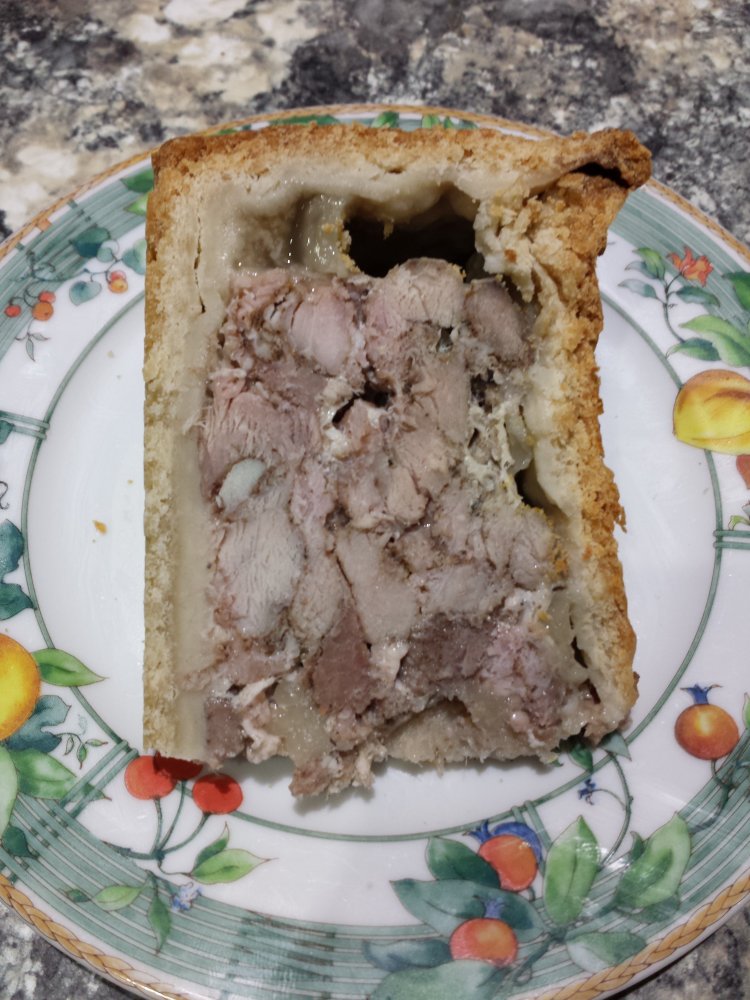
Once that’s done, the pie has to cool completely, before having its internal spaces filled with jelly. [Note to Americans, this does not mean jam.] The jelly seems to me to be a little soft, so I’m reducing it a bit before using it, to make sure it sets hard. More soon…

Mmmmm, pig’s foot jelly.

A day in the life of a foodie.

Storm Imogen seems to be gradually petering out, and we are still perched here, near the top of the hill. No doubt, storm Peter will be upon us too soon. A good night’s sleep, without the howling gale that seems to have been going on since November, would be such a fine thing, but the wind’s increasing now, so I will probably go bonkers quite soon, and miss out on the sleep altogether. 

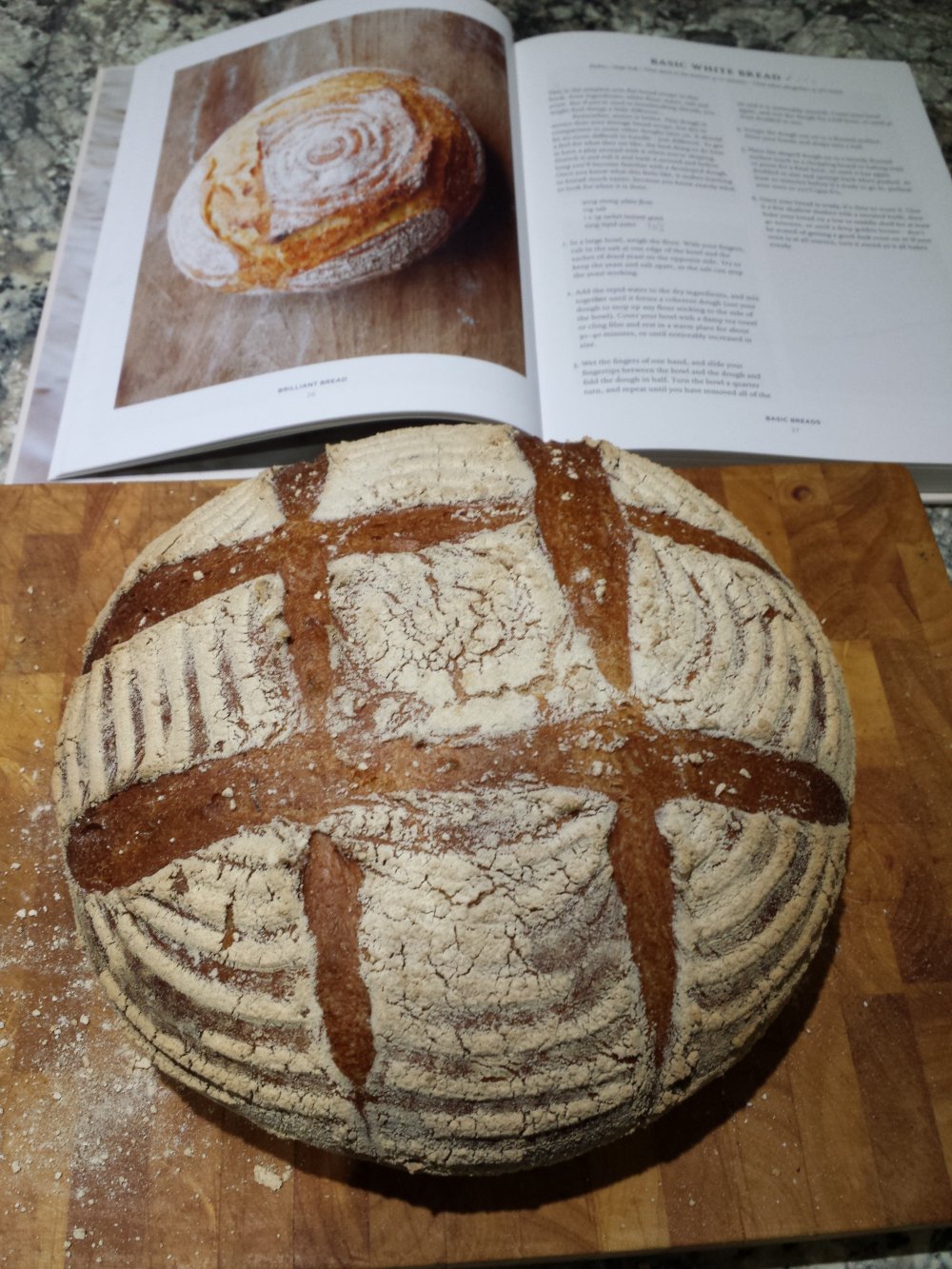
Today was a very foodie sort of day. Here’s a white loaf, preparing itself for the oven, in its cosy proving basket.
It turned out like this, after the usual manipulations of the baking stone and the splosh of water. I think it looks ever so slightly more artistically correct than the one in the book. 

#loaf, geddit?
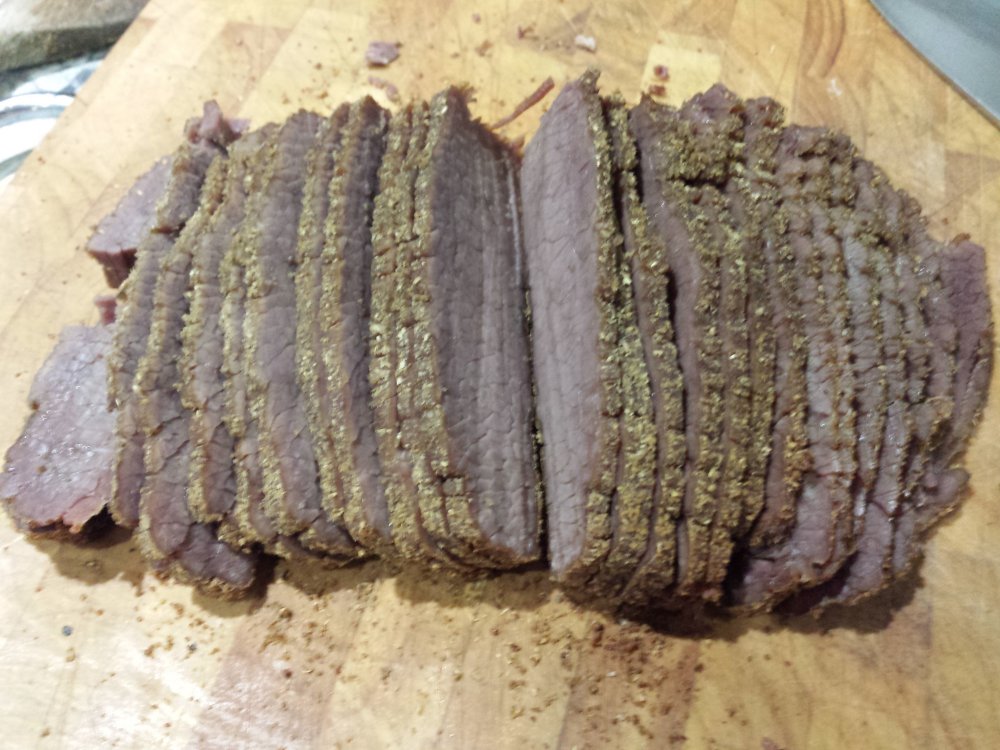
The pastrami I started five days ago was sufficiently brined to go on to its next stage. I dried it, coated it in ground coriander, with much less ground black pepper than last time, and steamed it for almost four hours. This time, it was tender…

Here it is, sliced as thinly as I could manage without breaking the slices (apart from that one on the left), and ready to be packed up. A £5 piece of brisket has turned into at least £10 worth of pastrami, and the tenderness and flavour are much improved on my first go.

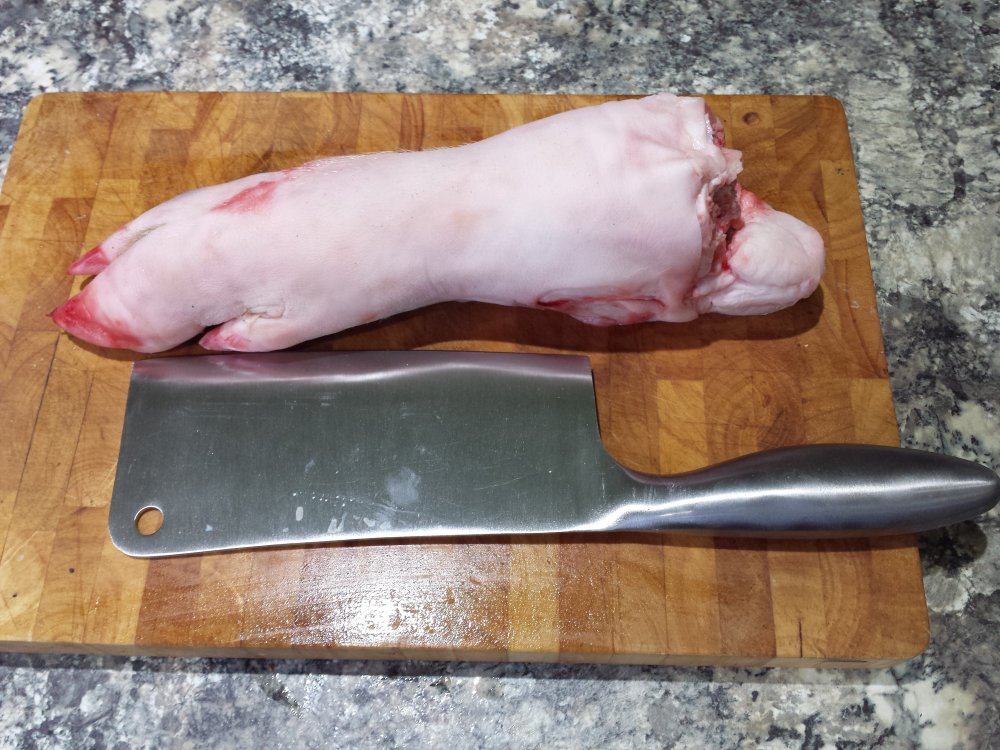
I am preparing to make my first ever raised pork pie. That will need pork jelly to fill the gaps between the meat pieces. So, this is a pig’s trotter. I split it, in an act of extraordinary violence, then added water, celery, carrot, bay and would have added thyme if we hadn’t run out of it. Bring it to the boil, and simmer until it falls to pieces, basically.

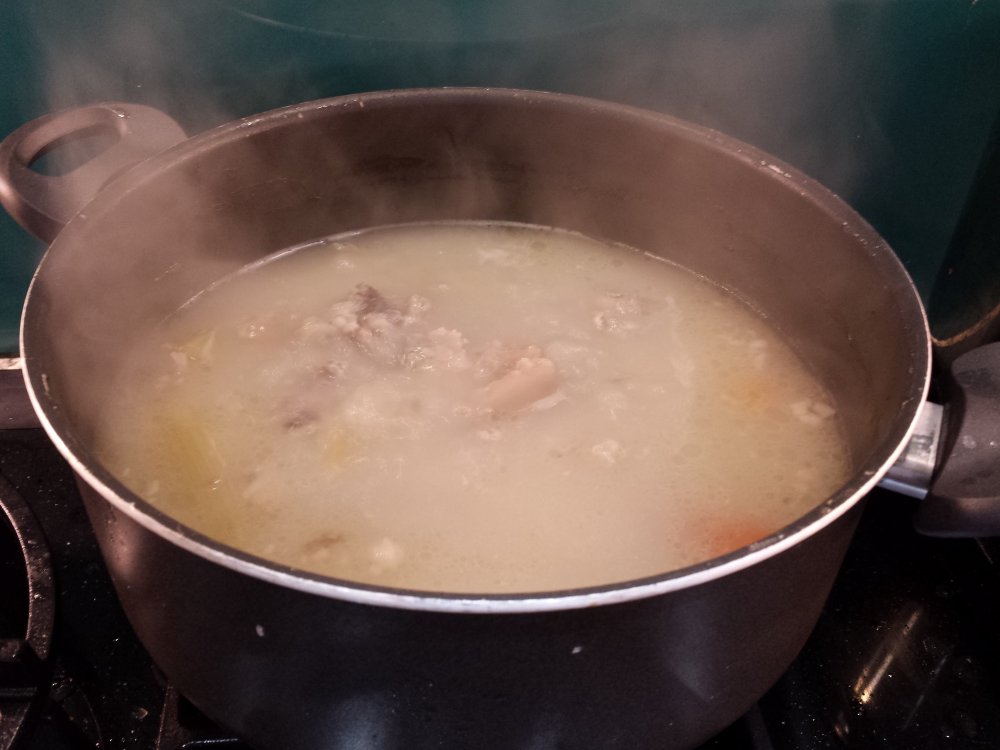
Like this. Then, strain out all the solids, and put it in the fridge once it’s cool. It has to set. If it doesn’t, one can boil it up again, of course. Here’s a video of me, testing to see if the jelly has set. Yes! It might yet need further reduction, as there seems to be a lot, from a single trotter! 

This? It’s the risotto I made for my tea. Bacon, chorizo, shallot, garlic, beans and beans, butternut squash, arborio rice, cheese, and some of the lovely chicken stock from the two chickens I cut up the other day. Om nom nom, as the saying goes.

Pastrami 2 – The Softening.

This must seem like a long, boring series of Tesco advertisements, but I promise you, they’re just the nearest conveniently huge supermarket to where we live.

If I’m going to have to tell the truth, the first batch of pastrami I made was not as tender as it should have been. So, I’m making more.

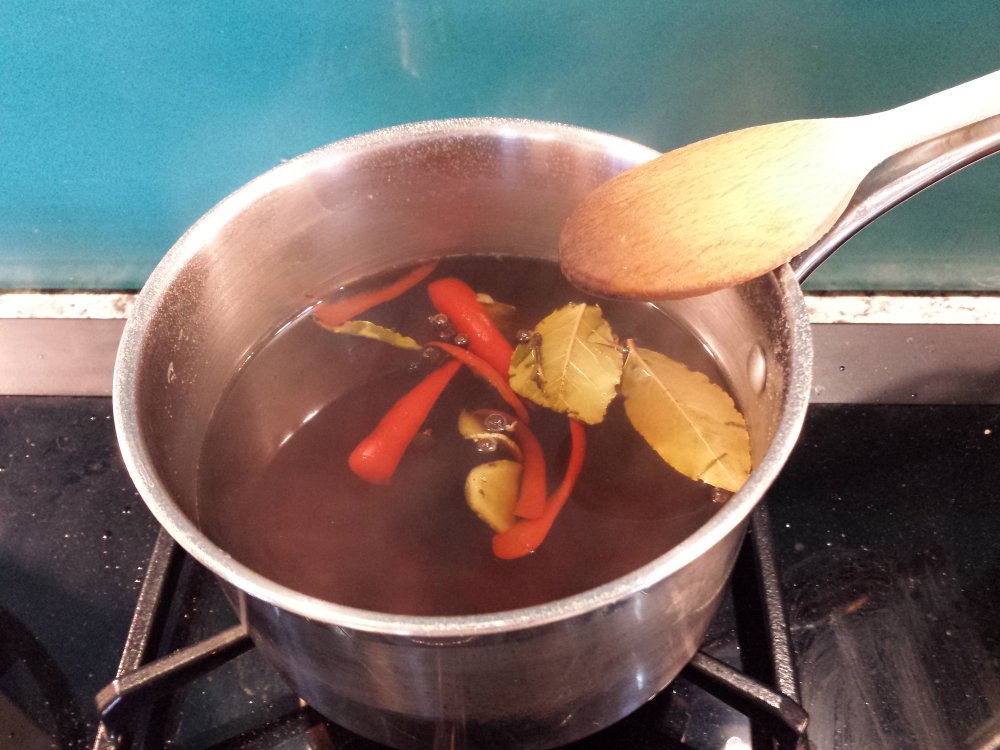
Here’s the brine, being boiled up. Once it’s cool, and the brisket has been trimmed, they join one another in the fridge for five days.


And now I’m hungry

Hack, slice, chop! Money saved…

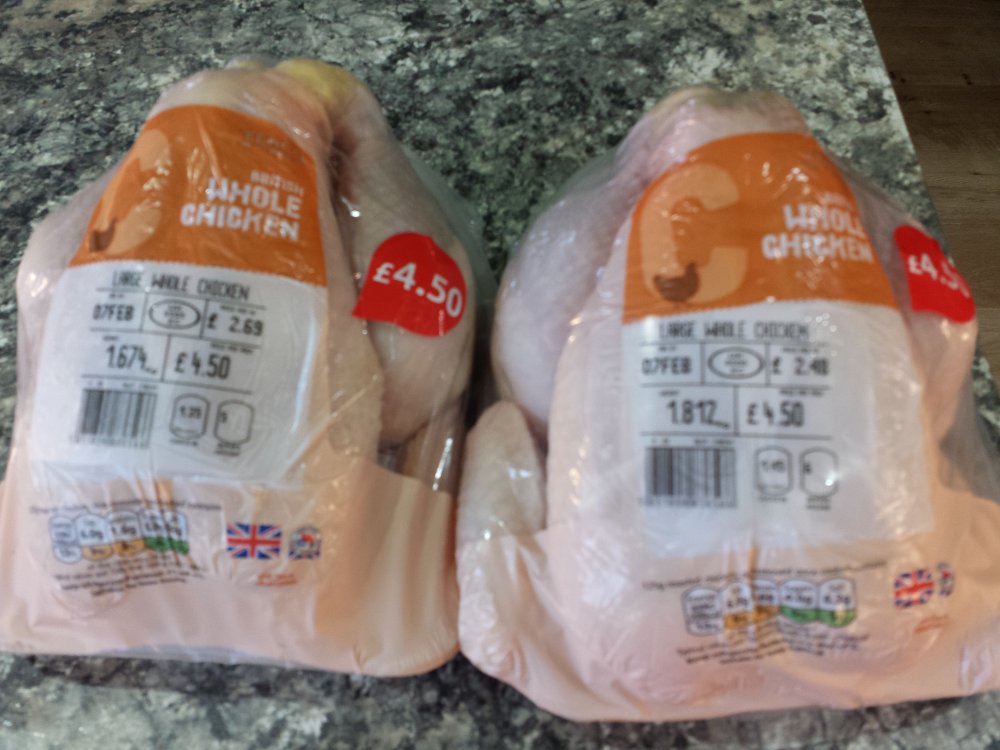
Mr Tesco let me have two chickens for £9. That was nice of him.

I sharpened up one of my favourite knives, ready to save some money, and attacked.

The prices below are my guesses, based on the Tesco website.

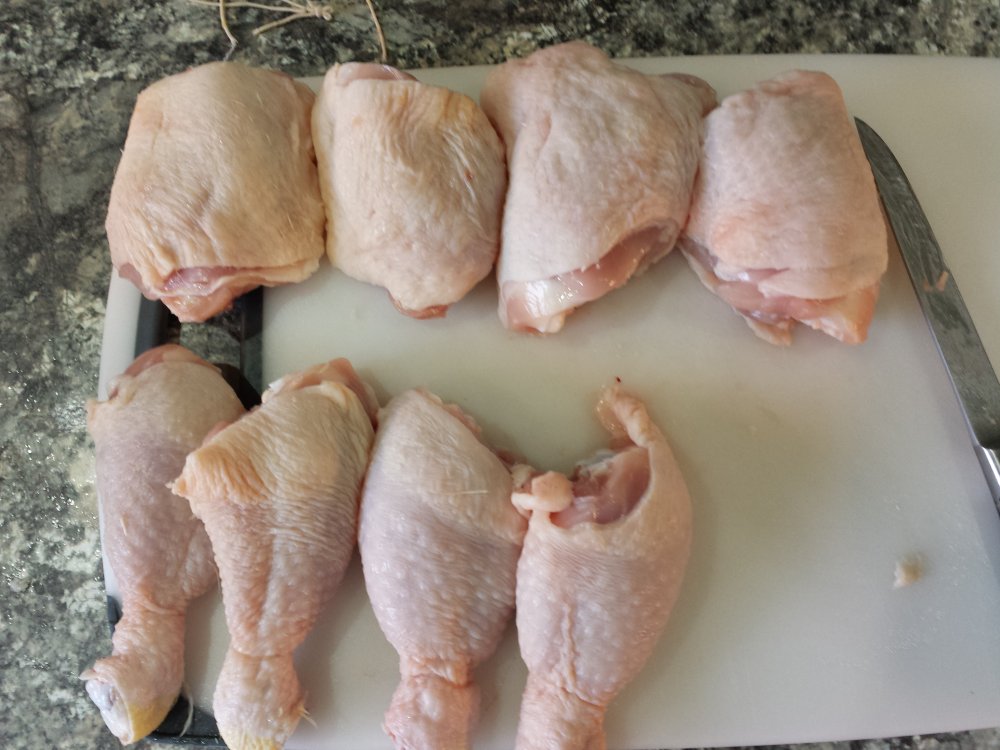
Four chicken thighs, £2.


Four chicken drumsticks, £2.


Yes, I know they are a bit untidily cut. I’m badly out of practice at this sort of thing.

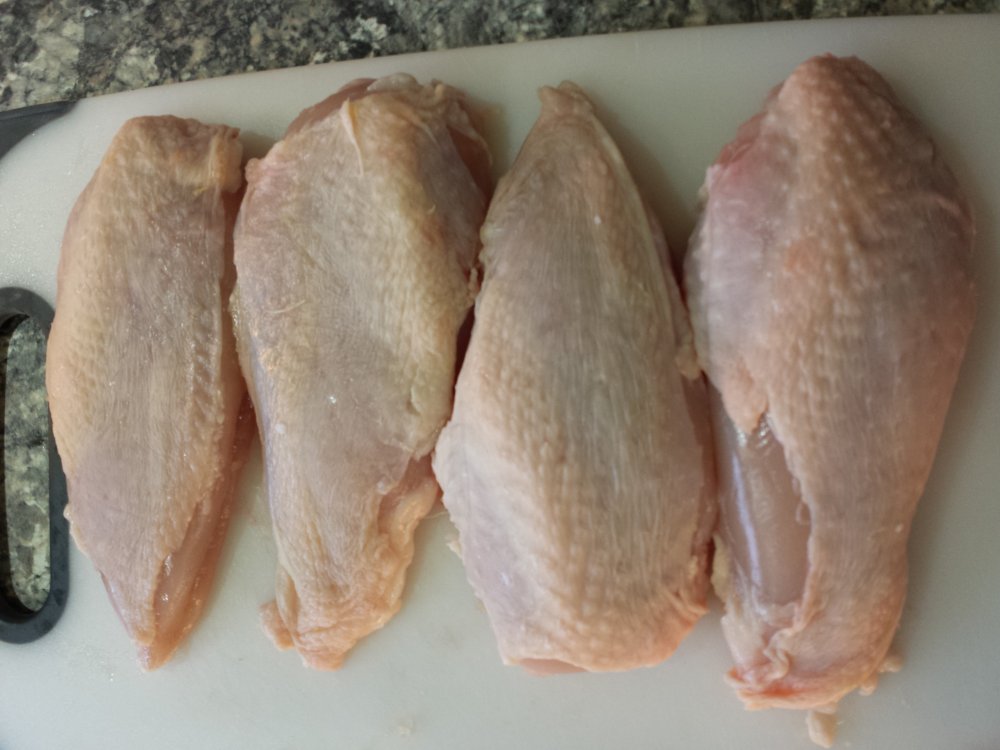
Four chicken breasts, £4.

Four chicken wings, no idea, as they aren’t sold in such small numbers.
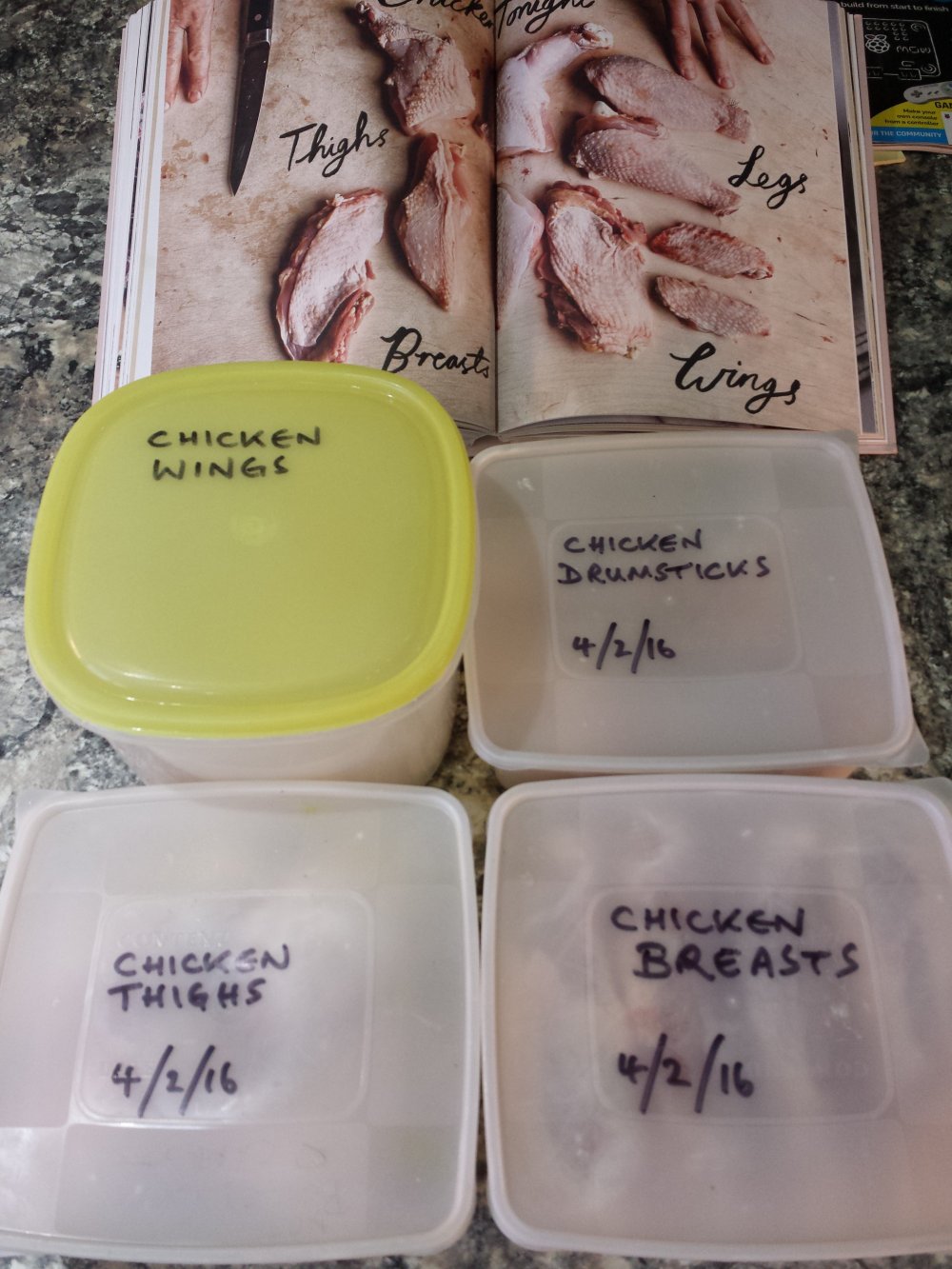
All cling-filmed to keep them separate, apart from the wings, which I am saving up until I have a big box of them packed and ready to cook. And off to the freezer they go!

So, you might wonder, where’s the money saving? Ah, well, you see, all the bits that were left are currently bubbling away cheerfully in the stock pot. There will be quite a bit of stock, and the fat that I will take off the top is lovely for cooking.

Did I forget to mention the Pastrami?

I think I did forget to tell you about this. It started with a nice bit of brisket from the Tesco meat counter, all rolled up, tied, and ready to roast. I took the string off, opened it out, and removed as much fat as I could.
Next, I made up a brine cure, for it, following the suggestions in “Food DIY” for the choice of spices. There’s 200g of salt and 100g of sugar in the cure, all boiled up and allowed to cool. That went into the fridge for six days, with fairly regular shaking to help things along. After that, the meat was drained and dried, before being coated with freshly ground black pepper and coriander seeds.
The next step is to hot smoke the meat over wood chips, until the internal temperature is 75°C. I used a probe thermometer to make sure I got this right. I nearly ruined the roasting tin, while doing this. Since then, I’ve bought a galvanised dustbin, so I can do hot smoking outdoors, and not destroy things. After that, the meat gets steamed for at least three hours.
My apologies for the rather badly out of focus picture of the sliced meat after I steamed it. I was overcome by the excitement, and anticipation of a nice pastrami sandwich. There should really have been rye bread for that, but there wasn’t. Never mind. It was a nice sandwich.

Roy Batty is ready to be eaten!

The Lomo I started on Roy Batty’s inception date reached its target weight yesterday. I’ve cut it into several pieces, and wrapped and frozen most of it. Here are some slices  from the piece I have kept ready to use. I can assure you that they were delicious.

My next project? Probably a real meat pie… or something…

Crab!

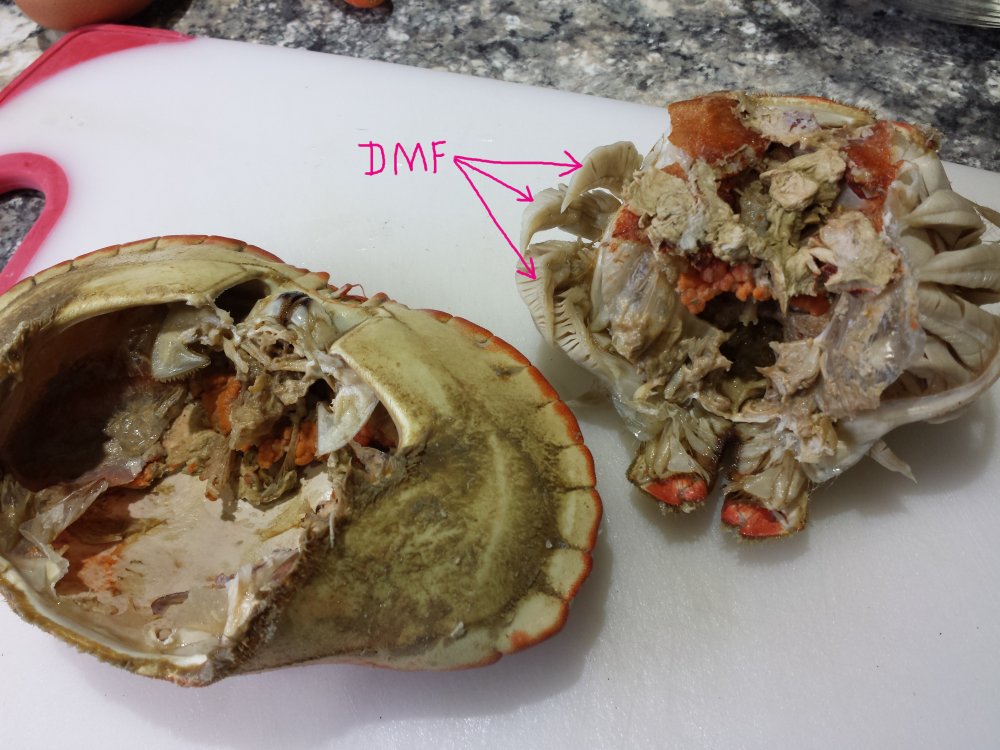
Here’s an impulse buy from the last time I went shopping! A cooked crab at an irresistible price. I had never dealt with one before, and was a bit bothered about it, because most of the books that mention crab say that after you have opened the crab up, you should “Remove the Dead Men’s Fingers”, without any clues as to where they might be. One of our newer books, Prue Leith’s “How to Cook”, has pictures that make it quite clear where these disturbingly named features are, and I’ve labelled them above. 
After about half an hour’s work, I had a large amount of broken crab shell, dead men’s fingers, and assorted gubbins, and a small bowl of actual crab meat. A very small bowl.


In the end, I decided to add it to this risotto of butternut squash, beans and asparagus. It made a great improvement to the flavour.

Seedy difference.

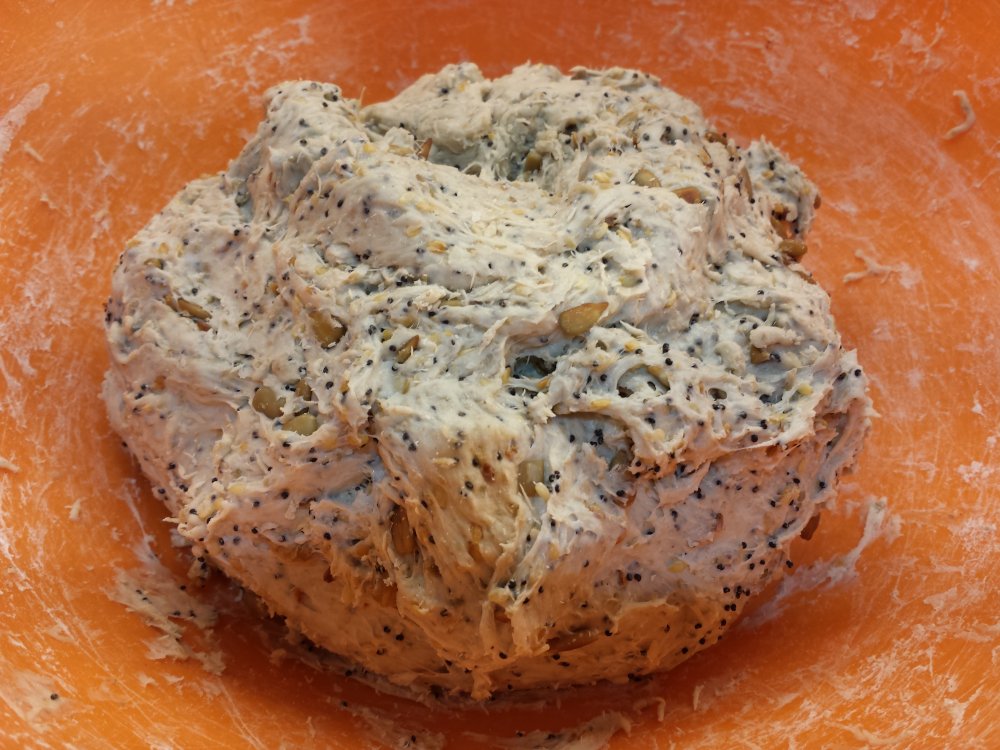
This is the “seeded sour” bread from Brilliant Bread. I increased the amount of rye flour, and reduced the amount of strong white flour.
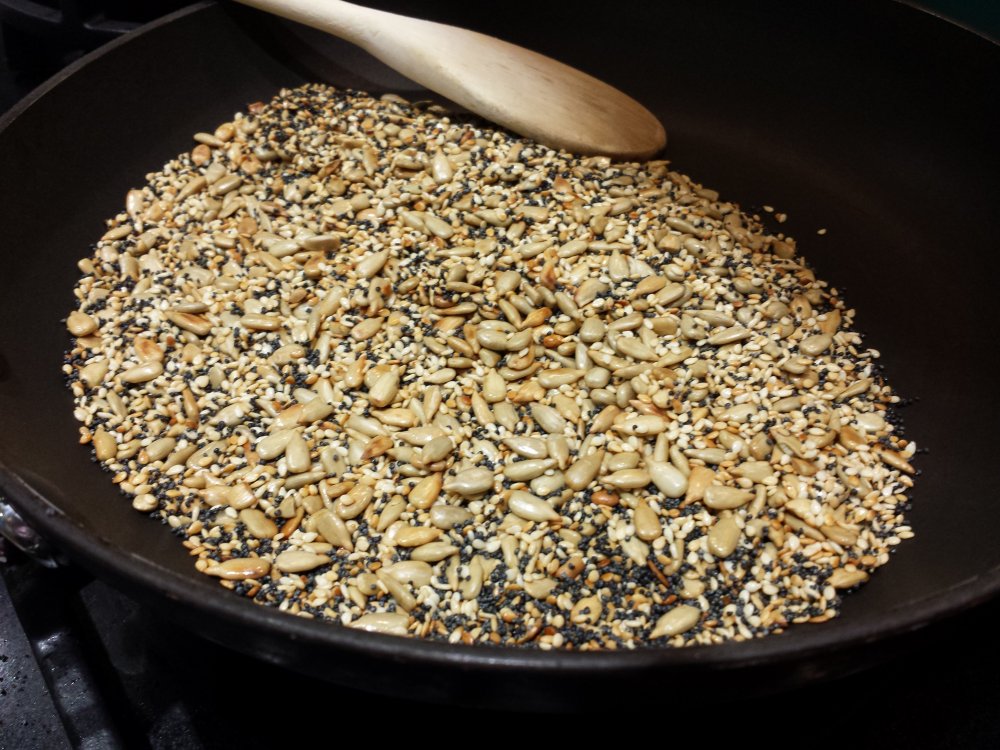
The seeds need to be toasted in a dry frying pan, until the sunflower seeds start to look noticeably coloured. By this time, the sesame seeds are smelling lovely, like toasted sesame oil. There’s enough poppy seeds in this to make you fail a drugs test in America. See if I care…
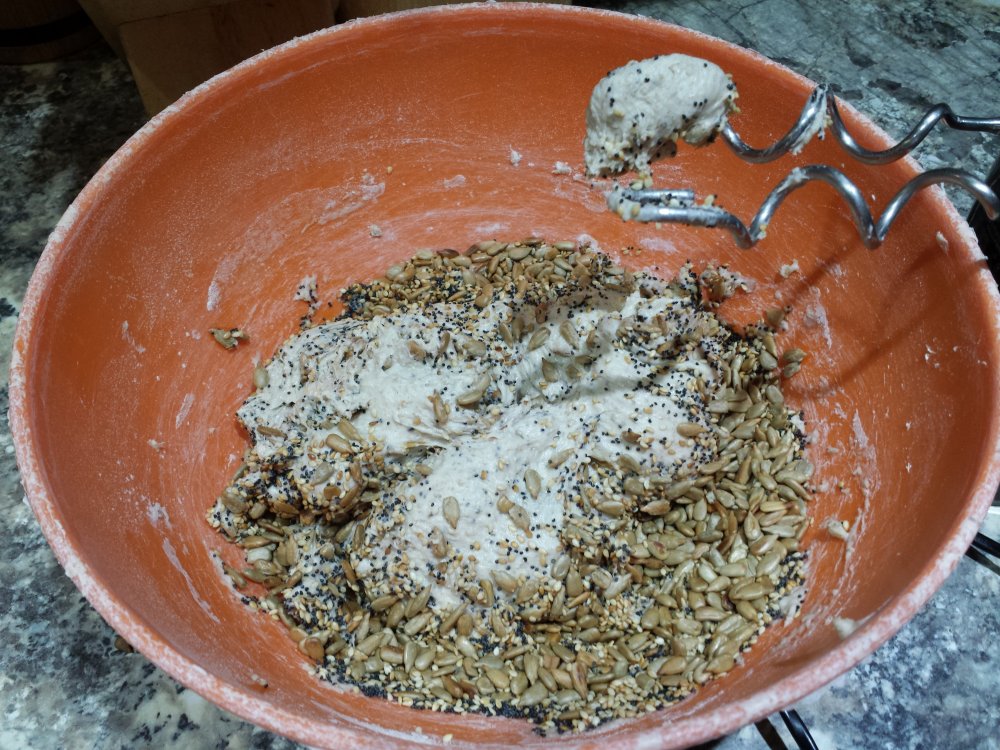
Good grief, I’ve been using the same cheap plastic bowl for about 37 years. I’m introducing the toasted seeds to the dough here, as you can see.
Let this interesting dough rest for as long as it seems to want. Overnight in the fridge is pretty much a minimum. The recipe described this as a wet dough. I think it’s not particularly wet. I used a tin, and my baking stone. New addition was a dish of boiling water at the bottom of the oven, to produce steam, so the bread could stretch as it cooked.
I am pleased with the look of the result, and looking forward to trying it with a nice Worcester blue cheese I bought the other day. It might even warrant a glass of a decent red wine to help the cheese go down.

Roast Beef for Sunday

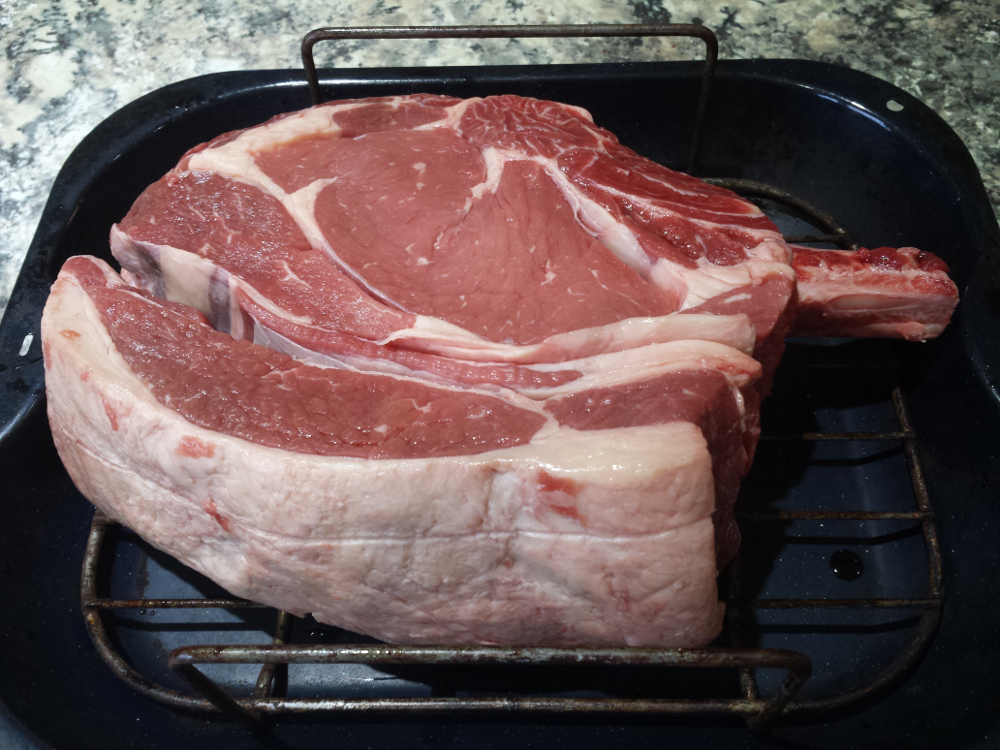
This fine thing is the piece of beef I bought to use during the Christmas holiday, but ended up freezing because there was so much other food we were in danger of bursting.
You may notice the silly bit of elastic that was holding it together has broken. I replaced that with two proper bits of butchers’ string before it went in the oven.
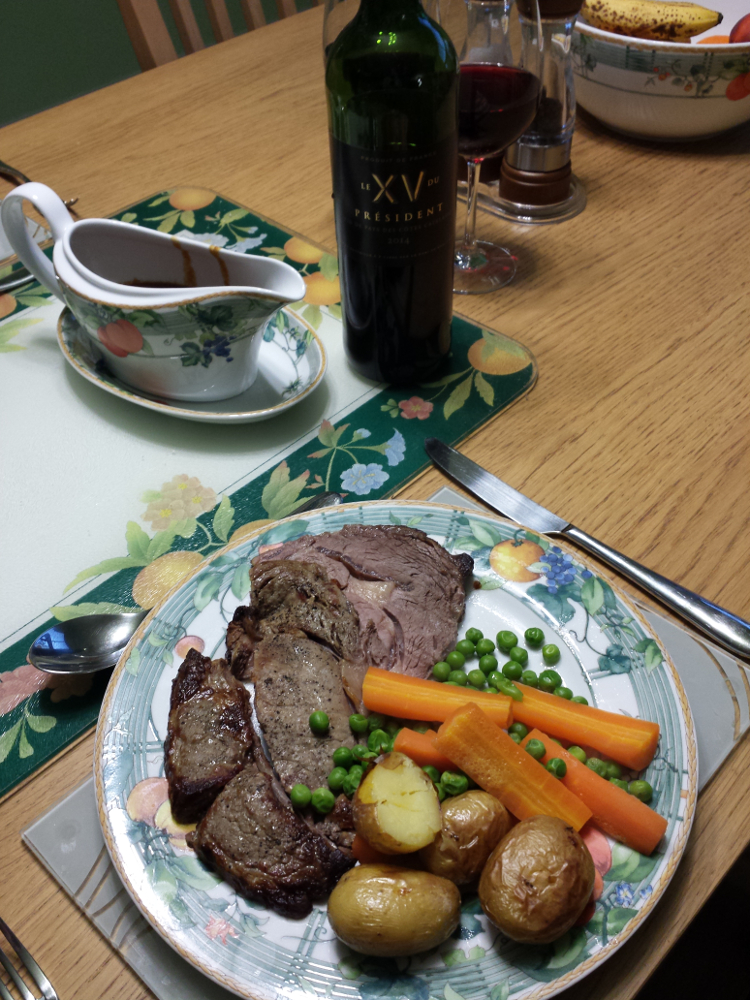
Almost there! The wine’s poured, and the real gravy is ready. This meal was a joint effort, as my lovely wife makes splendid Yorkshire Puddings, while I have no idea how to do them. There are quite a few things like that, but I think I’ll carry on pretending there aren’t….
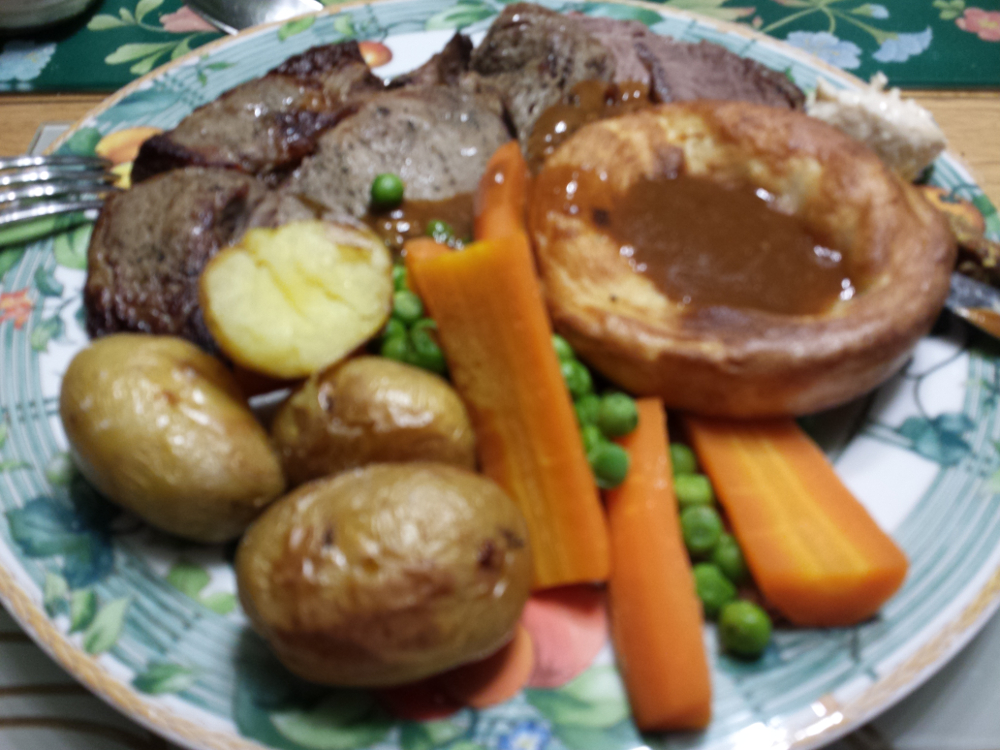
And I apologise for this shot being out of focus. I was hungry, and wanted to start eating. Yorkshire Pudding with gravy has arrived, all is right with the world.
Yes, we actually had a dessert! This has meringue, ice cream, whipped cream and blackberries, so we decided it was a deconstructed [1] Eton Mess.


[1] I’m pretty certain that we can’t be the only ones to be annoyed immensely by the way cooks/chefs on the television spread the elements of something like, say, a meat pie around the plate, and announce proudly that they have deconstructed a meat pie. No, you pretentious idiots. You have failed to make a meat pie, and served some stew with a lump of pastry nearby. 

Burns Night comes early in Wales.

Well, Burns Night doesn’t really happen earlier in Wales, but when one of you is going to be away on the actual night, it makes sense. Sadly, I completely forgot to arrange for a piper to pipe the haggis into the dining room, and the food would have gone cold if we had read all of Burns’ ode to the beastie…
I put those sauce jars on the table for no sensible reason, and neither of them got used. The potatoes were roasted in a little olive oil, with a sprinkling of salt. In the dish with them are a couple of Jerusalem artichokes that needed to be used up. To the left, mashed swede and onion; to the right, mashed parsnip and turnip. Simon Howie’s haggis has a plastic skin, but the contents are very authentic, and delicious.
Here’s mine. It was very tasty, but extremely filling. It was a good job I had forgotten to make any dessert!