Mmmm, delectable…

I have been reading this cookery book, because who doesn’t read cookery books? It’s a translation of a 13th Century book, written by a Moorish scholar who loved the food in Andalusia and Maghrib. ISBN 978-9004469471. It can be bought from Blackwells, if you have a awful lot of money to spare. Even the paperback is £42! Fortunately, it is possible to obtain it as a .pdf file.

I have so far read the very informative, scholarly introduction by the translator, the section on bread, and am now well into the meat dishes section.

I wasn’t particularly surprised to find that none of the recipes include weights or volumes of ingredients. That sort of thing is common in old recipe books. By old, I mean Mrs Beeton era, not the tatty Good Housekeeping book one tends to inherit when the oldies move on to somewhere food doesn’t matter any more… Those are quite good.

But I was a little surprised to find how many of the meat stews were served by breaking a lot of bread into tiny bits in a bowl, pouring stew juices on the bread, and layering meat on top, often followed by an egg mix. I couldn’t think of anywhere I had seen this, until I went to our cookbook library and searched a few favourite books.

There was nothing like this in Arto der Haroutounian’s Penguin paperback, “Complete Arab Cookery”, as far as I could see. But then I thought, who has written more knowledgeably about Middle Eastern food than anyone else I can think of? Claudia Roden, obviously. She’s a cookery book superhero, and in “Arabesque” (ISBN 978-0-718-14581-1) there are two recipes that are served that way. One is Turkish, “Kofte Kebab with Tomato Sauce and Yoghourt” on page 212, and the other is Lebanese, “Chicken and Chickpeas with Yoghourt”, on page 307.

I did also look briefly in Clarissa Dickson Wright’s “A History of English Food”, (ISBN 978-0-099-51494-7) to see if there was anything similar in our own food history. At first, I couldn’t find anything, but then I remembered – we didn’t bother with the bowl. The bread was a flat loaf called a trencher, left intact instead of breaking it up, and the meat and gravy went on top of that. And anyone who ate all of the meat, and the gravy-soaked trencher as well, as called a “trencherman”.

Now, back to my reading…

Nasi Goreng Awan

What on Earth is that? Indonesian chicken fried rice, with accompaniments.

In 1970, Nasi Goreng was my favourite dinner in the canteen. It was wonderful, and all I can remember about it was that it was chicken fried rice with a fried egg on top. But we had very good Asian cooks in the canteen, so it must have been OK.

To recreate it, I referred extensively to “Sambal and Coconut“, yet another of the cookbooks I really like.

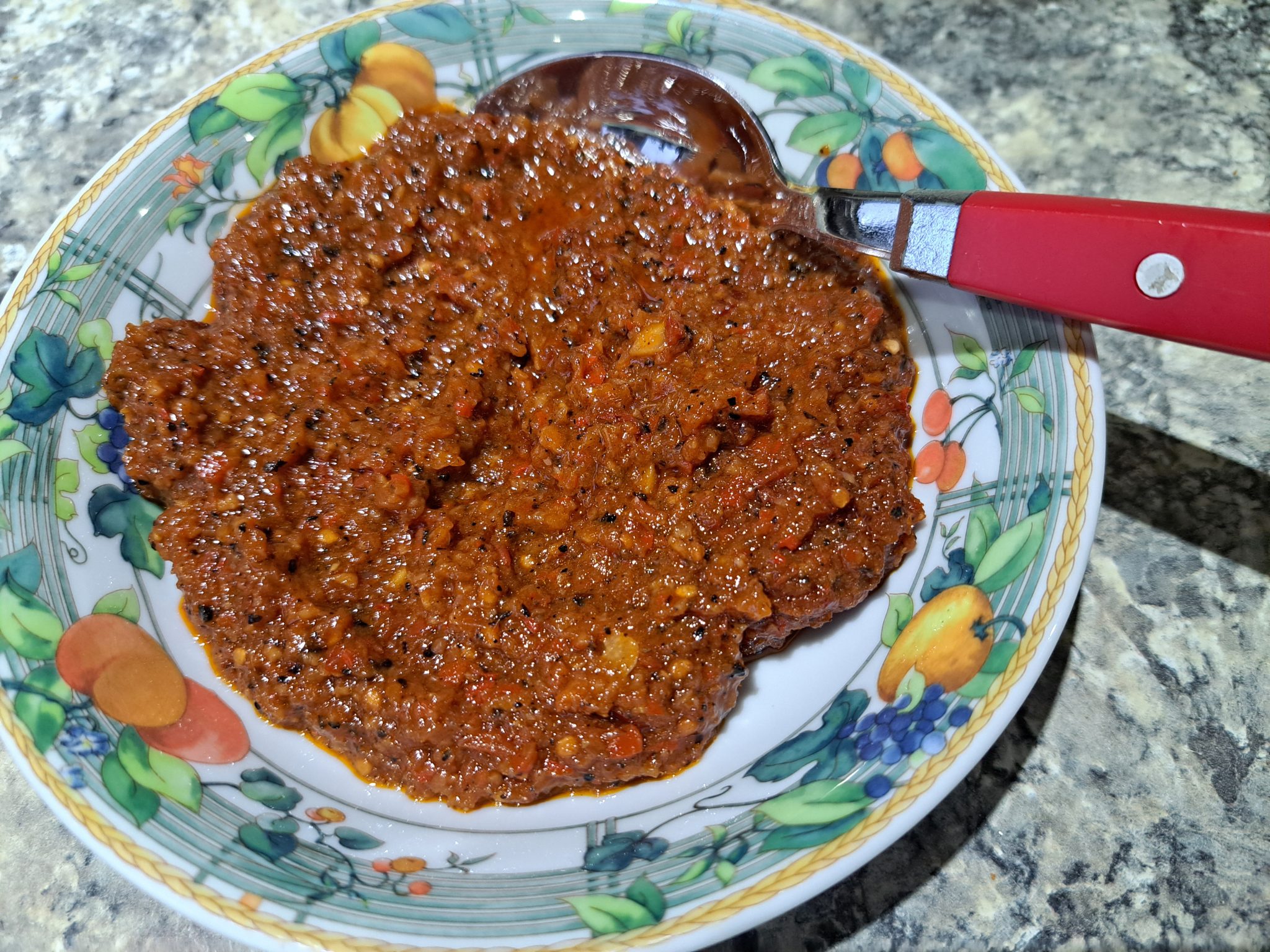
This is a tomato and chilli sambal, which I think could have done with quite a lot more chilli. Home grown tomatoes made it very tasty, though.

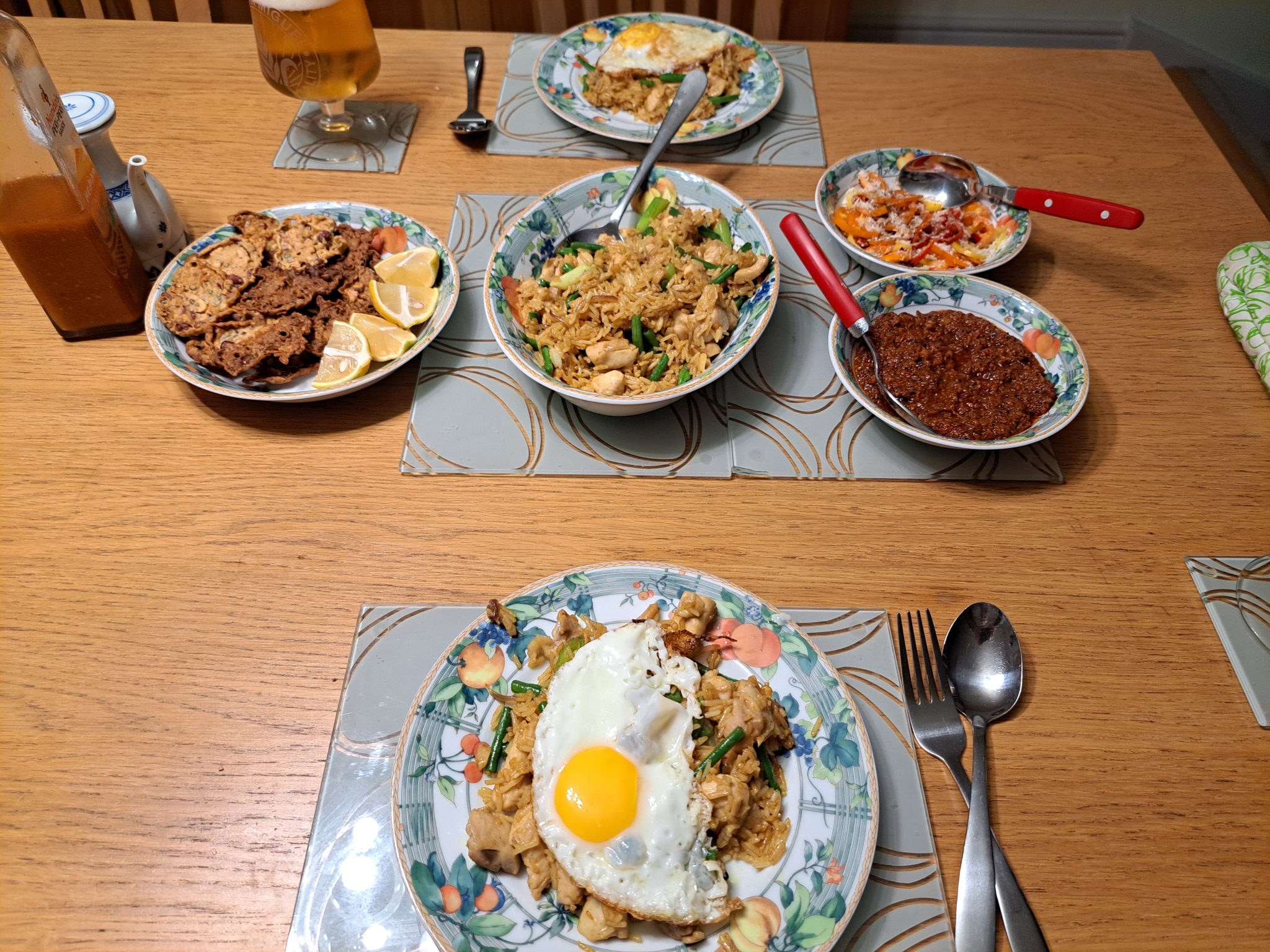
To the left, peanut and lime leaf kerupuk. Centre is the nasi goreng that was not yet on the plates. Right side, a mild pepper and coconut salad, and the sambal.

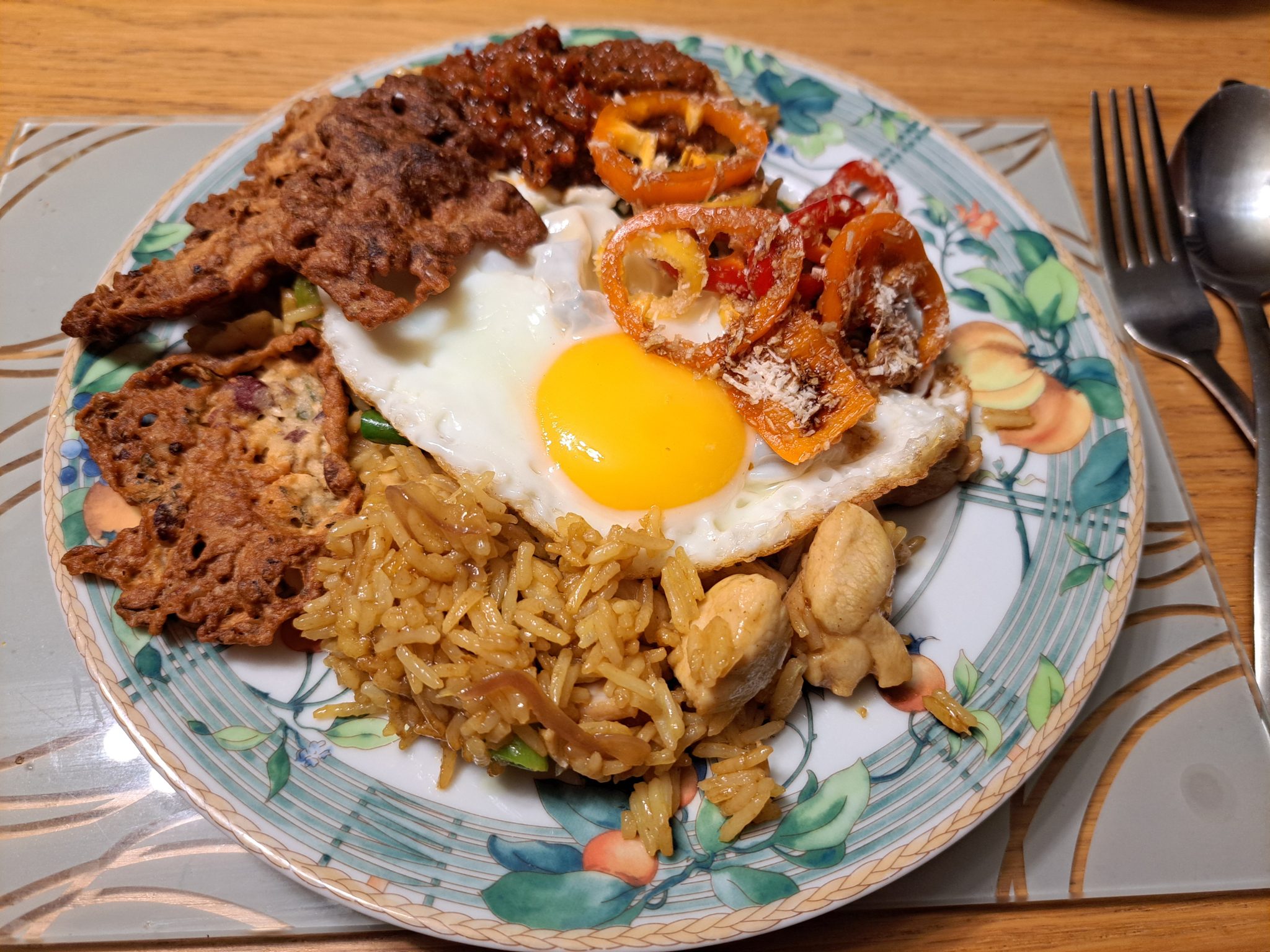
Here’s my plate, after I had added the accompaniments. It was all tasty, with good contrast between the crunchy kerupuk and the tender chicken. Will make again, with more chillis…

Steaks, new toy…

I recently bought a new foodie toy, a sous vide cooker, which I hope will be useful to prevent duck breasts from shrinking when I cook them. It should also enable me to cook medium-rare steaks, without the risk of over or under cooking them. I found it on eBay, for £30. Apparently, I could connect to it with my phone, and control it that way, but there’s nothing wrong with the control panel on top, which is what I shall use instead.

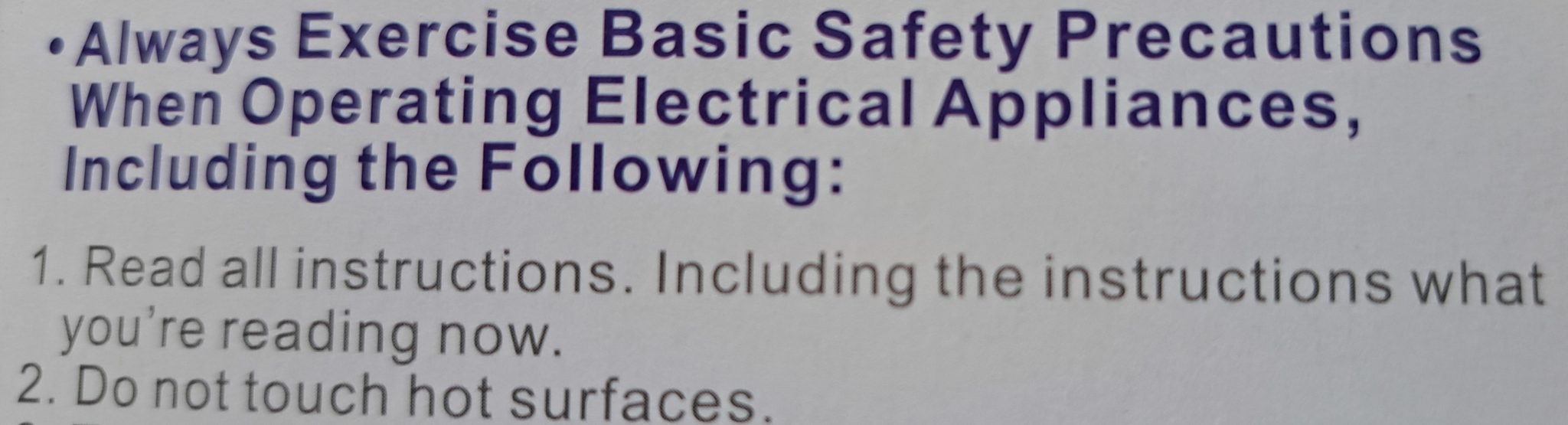
As a very safety conscious Walrus, naturally, I have read the instructions carefully. It’s the usual stuff, you know, don’t use this in your sword swallowing act, etc… Later on, I shall be heading out into the World, in order to Read all instructions.

This is part of the instructions what I read.

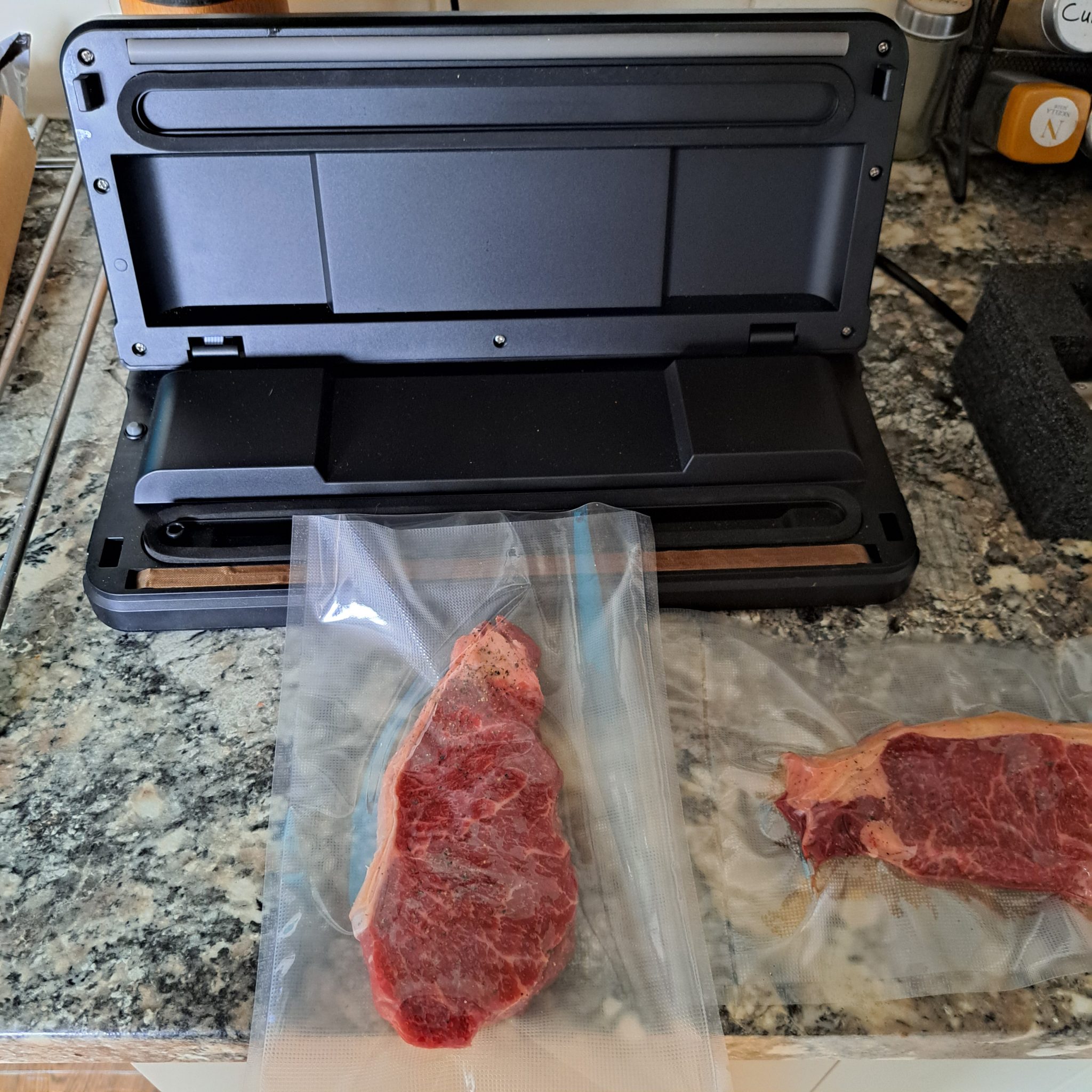
I already had a nifty device for vacuum packing the steaks, so I seasoned them, and got the air sucked out of the bags. You don’t need this device, really. It’s entirely possible to use Zip Lock bags, and get as much air out as you can, though they may tend to float if you don’t get it all out. But it’s a cooking toy, so I love it. Made by Tayuugo, if you want one like it…

The second steak, about to be suffocated. To the right, one I did earlier.

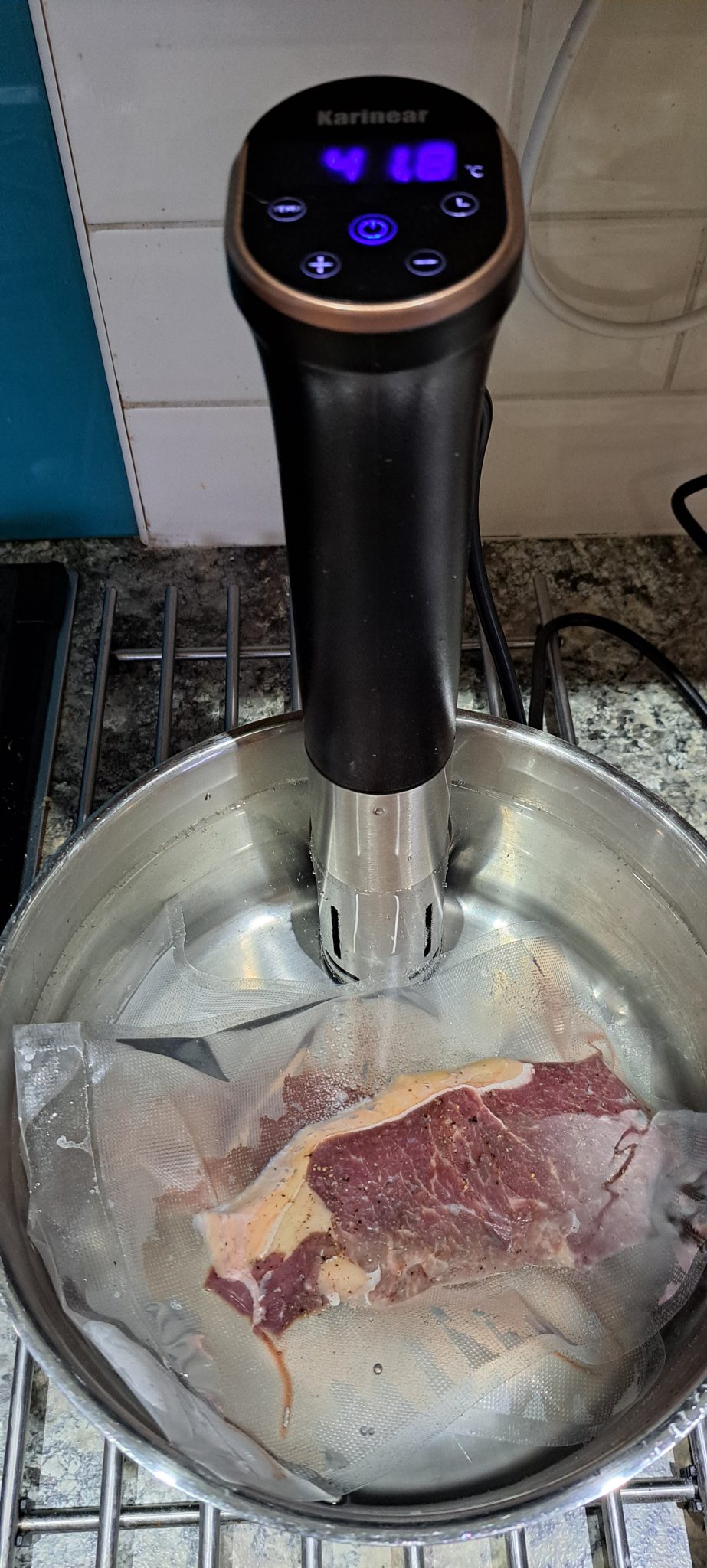
Next step: fill a big pan with water, clip the sous vide device on, and set it going. The temperature should be 55°C, and up to two hours is plenty of time. It doesn’t take long to get up to the right temperature. Meanwhile, I baked a couple of potatoes, and then fried some mushrooms in butter.

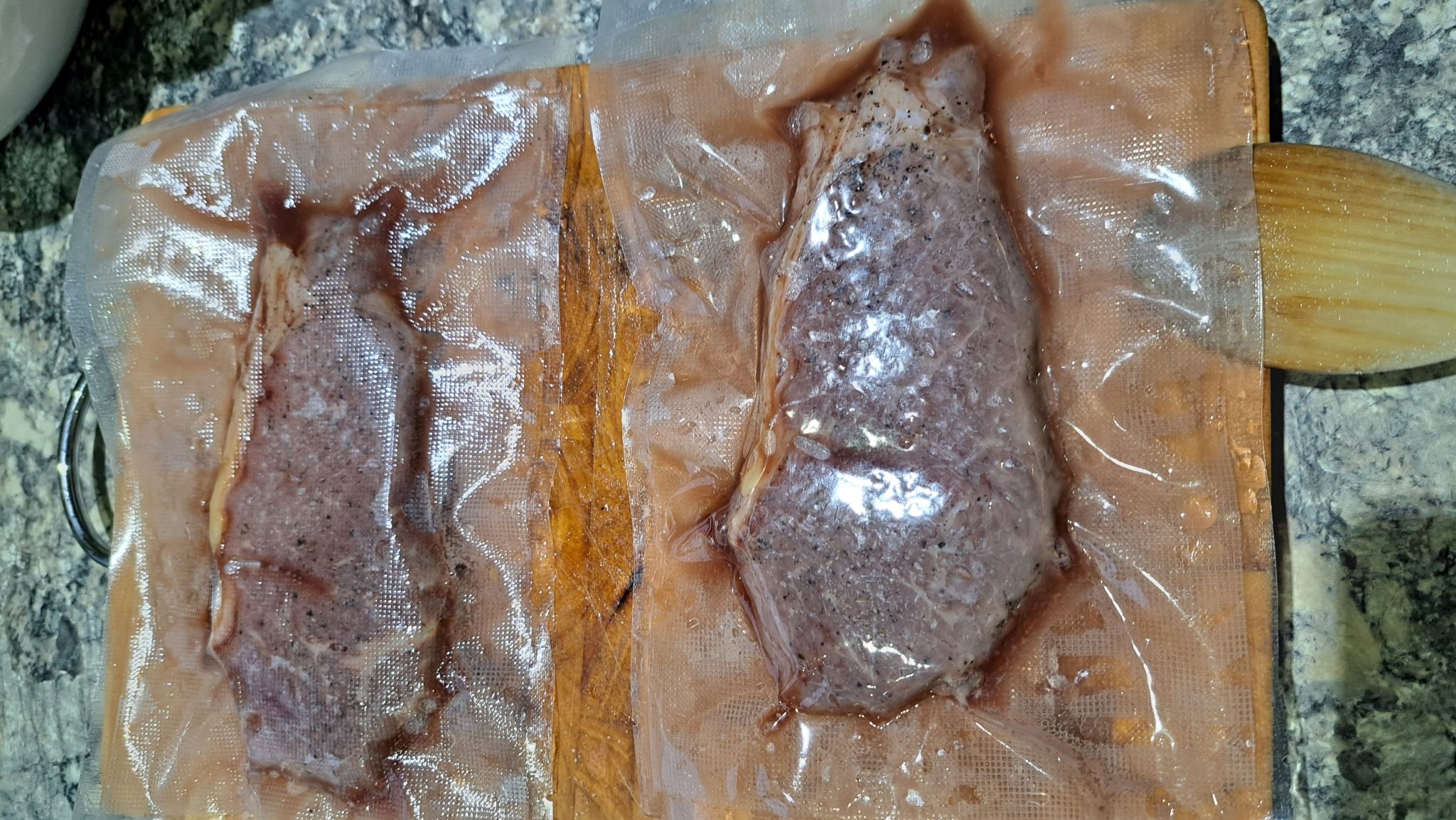
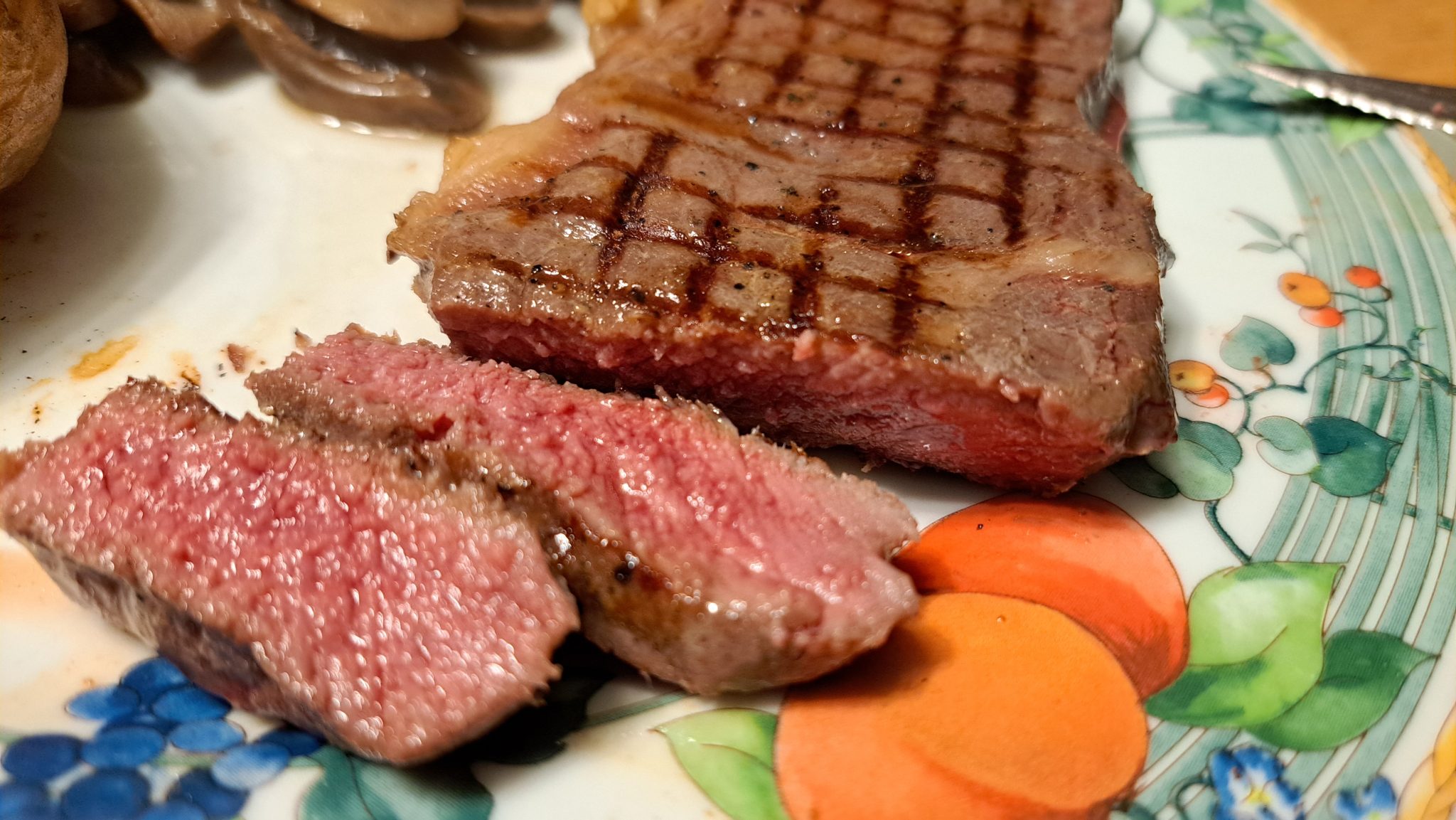
After almost two hours in the water bath, the steaks are cooked, but they don’t look like it. They need a quick flash fry in a very hot pan.

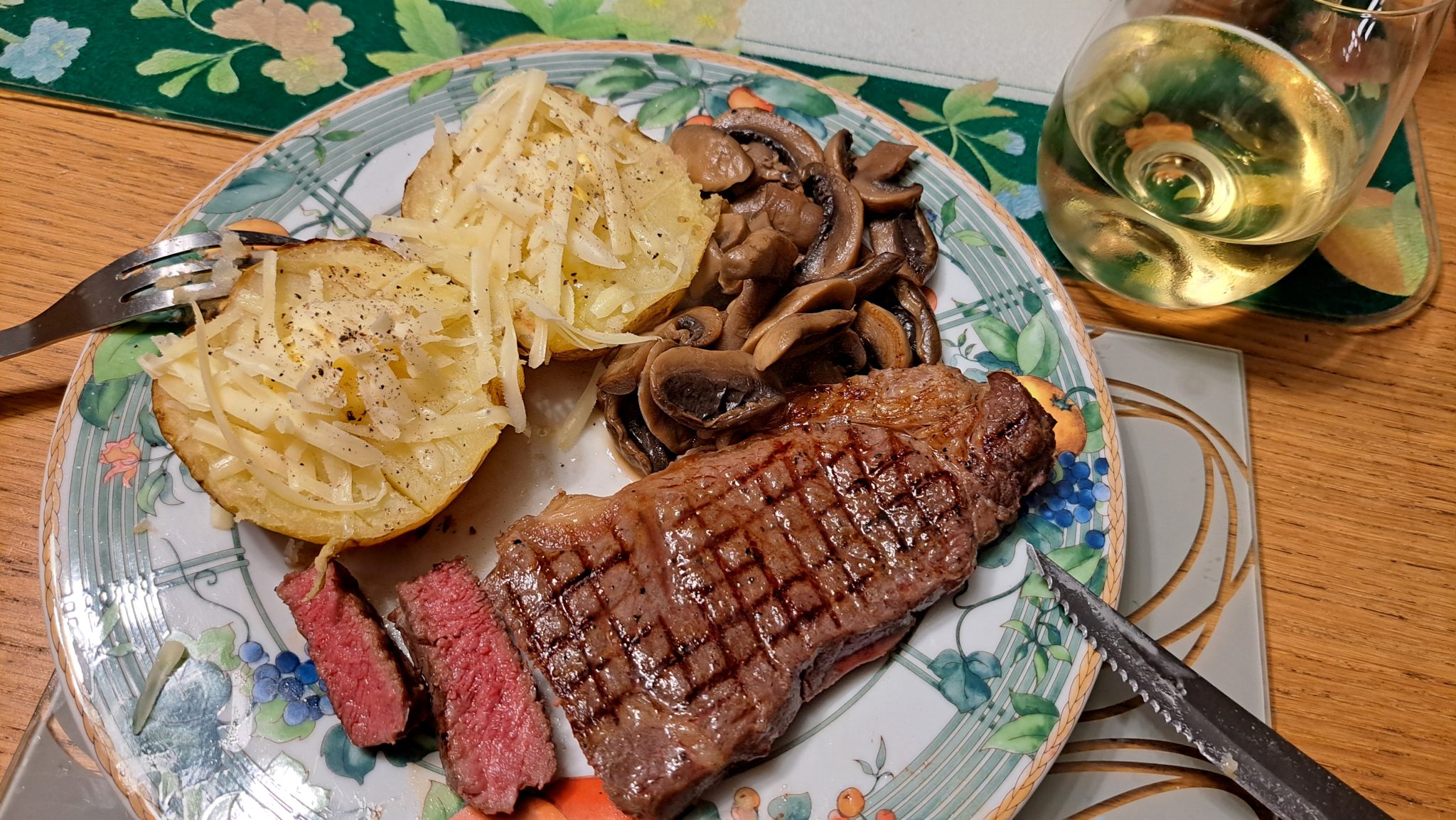
It was a very quick flash fry, and I didn’t take any pictures while I was doing it… but here’s the plated result…

Now, you may call that rare, rather than medium-rare, and you may be right, but it is definitely what I was aiming for. The big difference between cooking the steaks this way, and frying them, is the way they’re not overcooked at the surface, with a smaller pink area inside. Now that I know the process, I will not be using cheap supermarket steaks like these, but really good ones from the friendly local butcher.

Update: This sous vide device died the third time I used it, and I got a refund. My new one is an Inkbird one, and cost twice as much. Let’s hope it lives longer…