
Mmmm, delectable…

I have been reading this cookery book, because who doesn’t read cookery books? It’s a translation of a 13th Century book, written by a Moorish scholar who loved the food in Andalusia and Maghrib. ISBN 978-9004469471. It can be bought from Blackwells, if you have a awful lot of money to spare. Even the paperback is £42! Fortunately, it is possible to obtain it as a .pdf file.

I have so far read the very informative, scholarly introduction by the translator, the section on bread, and am now well into the meat dishes section.

I wasn’t particularly surprised to find that none of the recipes include weights or volumes of ingredients. That sort of thing is common in old recipe books. By old, I mean Mrs Beeton era, not the tatty Good Housekeeping book one tends to inherit when the oldies move on to somewhere food doesn’t matter any more… Those are quite good.

But I was a little surprised to find how many of the meat stews were served by breaking a lot of bread into tiny bits in a bowl, pouring stew juices on the bread, and layering meat on top, often followed by an egg mix. I couldn’t think of anywhere I had seen this, until I went to our cookbook library and searched a few favourite books.

There was nothing like this in Arto der Haroutounian’s Penguin paperback, “Complete Arab Cookery”, as far as I could see. But then I thought, who has written more knowledgeably about Middle Eastern food than anyone else I can think of? Claudia Roden, obviously. She’s a cookery book superhero, and in “Arabesque” (ISBN 978-0-718-14581-1) there are two recipes that are served that way. One is Turkish, “Kofte Kebab with Tomato Sauce and Yoghourt” on page 212, and the other is Lebanese, “Chicken and Chickpeas with Yoghourt”, on page 307.

I did also look briefly in Clarissa Dickson Wright’s “A History of English Food”, (ISBN 978-0-099-51494-7) to see if there was anything similar in our own food history. At first, I couldn’t find anything, but then I remembered – we didn’t bother with the bowl. The bread was a flat loaf called a trencher, left intact instead of breaking it up, and the meat and gravy went on top of that. And anyone who ate all of the meat, and the gravy-soaked trencher as well, as called a “trencherman”.

Now, back to my reading…

I am not an estate agent.

We would like to sell our house. It is rather a special one.

We tried to sell it last year, using an estate agent. We are putting it back on sale this year, with a different estate agent, who seems very impressed with how special this house is. I can tell you who they are, if you ask me…

Would you like a nice view? Like this?

This is the view from the main bedroom window.

You don’t actually need to be a lottery winner, really. You could be a creative couple who want to move from somewhere very expensive in a city to somewhere rural. The house is on a small estate, but it is not like the other twelve houses inside. Or in its garden.

There’s a well regarded builder in this part of Wales, who sells houses “off plan”, so you get to watch them being built for you, and you can customise them, a lot. The normal houses here are four bedroom dormer bungalows. This one has only two bedrooms, with the other two left open and used as our study. There are custom made book-cases that we can’t take with us, with drawers and cupboards underneath, and a big table for computers, art work, and similar things. This would be lovely for people working from home, or anyone who wants a good space for their hobbies.

Technology

The house is connected directly to the internet by Gigabit optical fibre, and we don’t have to rely on wifi (although we have it for the things with no Ethernet socket) as there are Ethernet cables to most rooms. The cables end in the study, and you can easily obtain an Ethernet switch to put there to connect it all up.

There are 13 solar panels on the roof, although three of them need new optimisers.

In the garage, there’s a battery system that charges on cheap rate electricity during the night, and outputs it during the day.

There’s also an electric vehicle charger in the garage.

Did I mention the view?

Bungalow?

In principle, the house is a dormer bungalow. But it’s built on a slope, and one of the options we had was to have a cellar room underneath it. So, this is one of the world’s very small number of three storey bungalows. Here’s a picture of the cellar room, which we use as a gymnasium, and a guest room when the rare visitors stay. On the left, stairs up to the ground floor. The far door leads to the sauna room, which also has a shower and toilet. As well as being part of the sauna fun, the shower is also very useful when we bring the dogs home covered in mud. The shelves on the right are now gone, and the room has been repainted in a slightly lighter yellow.

Outside that patio door, there is a Jacuzzi hot tub, currently about a year old. We do rather enjoy our little luxuries.

The garden is unusual. We don’t like mowing lawns, so there aren’t any. At the front of the house is a very low maintenance Japanese-style garden. The neighbouring house is unable to look into our lounge window, because I planted a row of proper poplar trees to shield us. There’s a rowan tree which provides berries for birds, and supposedly scares off witches. I haven’t seen any, so it must work.

In the back garden, we have a nice big shed, with electrical power supplied. And we have a greenhouse, which I have grown amazingly tasty tomatoes and other lovely things in. There’s a barbecue area with a pergola over it. The barbecue is one of those big concrete ones, and the cracks in the back of it don’t seem to be getting any worse – it hasn’t fallen down. It has solar powered lights on the pergola, in case you are still eating after it has gone dark.

The barbecue area by night.

Three grape vines are growing up the pergola, and we had our first grapes last year. There’s a fruit cage, because the blackbirds kept eating our fruit. Home grown blueberries are so very much better than those tough things the supermarkets sell. The blackcurrant bush provides the best jam I ever tasted. Other features of the garden include apple trees, a fig tree, three raised beds for vegetables, and much more.

The garden was like this when we started…

To be continued…

Dumplings! No suet…

I’ve been making dumplings in stews for, ooh, forever. I always made them the way my Mum did, with Atora suet, using the recipe on the packet. And more often than not, I made solid cannon-balls, instead of the light, fluffy things I was intending to make.

Today, I found we had run out of suet. A quick scan of the entire internet (OK, I used a notorious search engine that shall not be named here) revealed that suet is not considered necessary. There were recipes using melted butter, and other recipes using olive oil.

All the recipes were pretty similar, take some self-raising flour, add a bit of baking powder, herbs if you like, salt, and more or less equal amounts of olive oil and milk. You only need just enough liquid to be able to form a dough from the dry ingredients. If it’s sticky, add more flour. If you mix it about too much, you’ll develop the gluten in the flour, and get cannon-balls…

To my great delight, the result was nice and fluffy!

Yes, that is a beer. We also ran out of red wine.

Definitely fluffy, not cannon-balls. No more suet for this purpose, then!

Baked Camembert Loaf

Nice Mr Tesco sold me a beautifully smelly La Rustique Camembert cheese for a £1, and I decided I wanted to bake it in a loaf of bread. Not a ready made loaf, which was what all the online recipes I found showed how to do. So, here’s a way to make a cheesy loaf from scratch, in case you wanted to.

  • 150g Wholewheat flour
  • 350g White bread flour
  • 7g Easy Bake yeast
  • 10g Salt
  • 350g Water

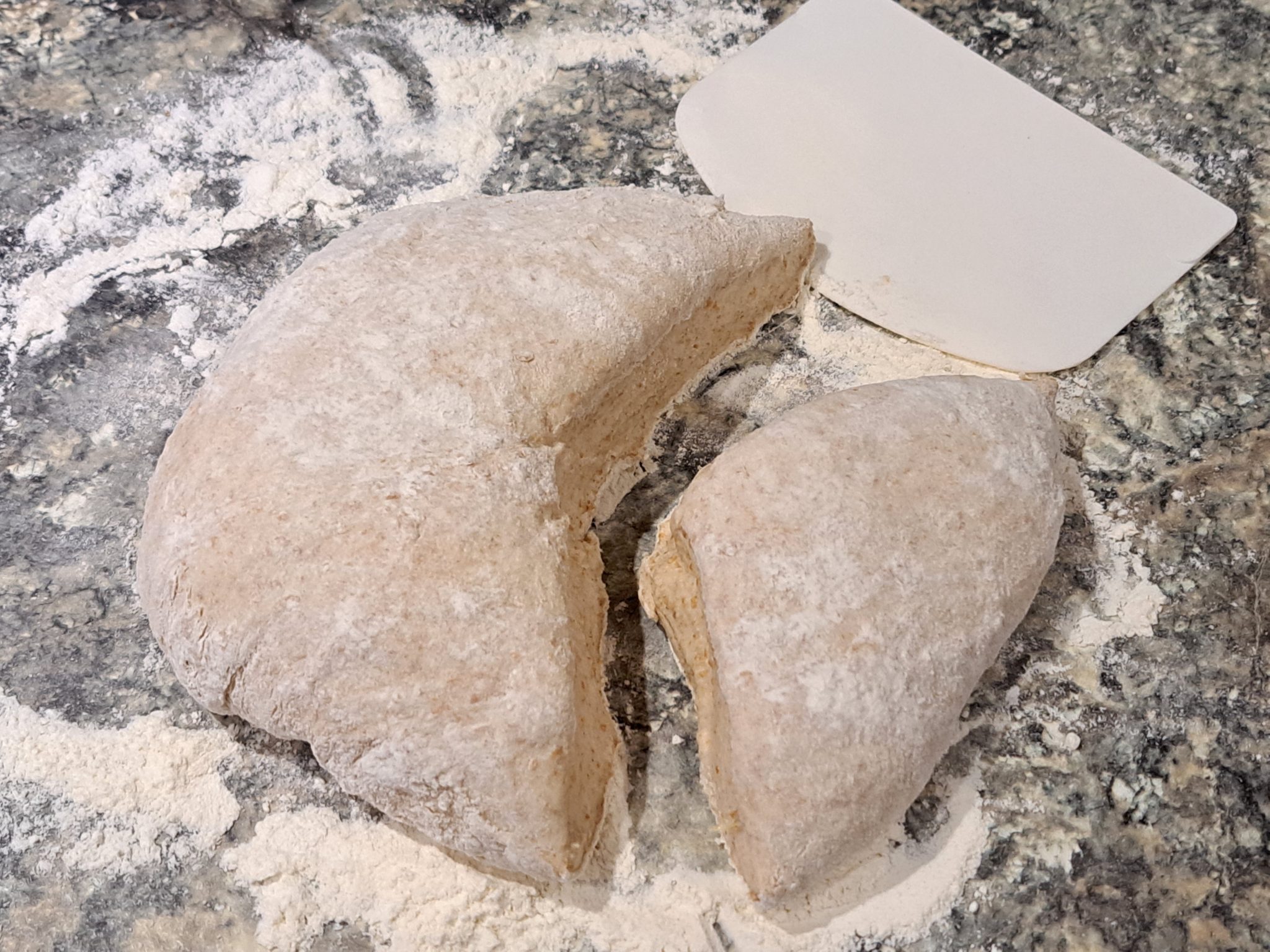
If you don’t know how to make a bread dough with those ingredients, I think I may have explained it in another post, somewhere. Basically, mix it all up, knead it, let it rest, knead it again. That sort of thing, you know, normal bread making… I divided about a third of it off to wrap the cheese in.

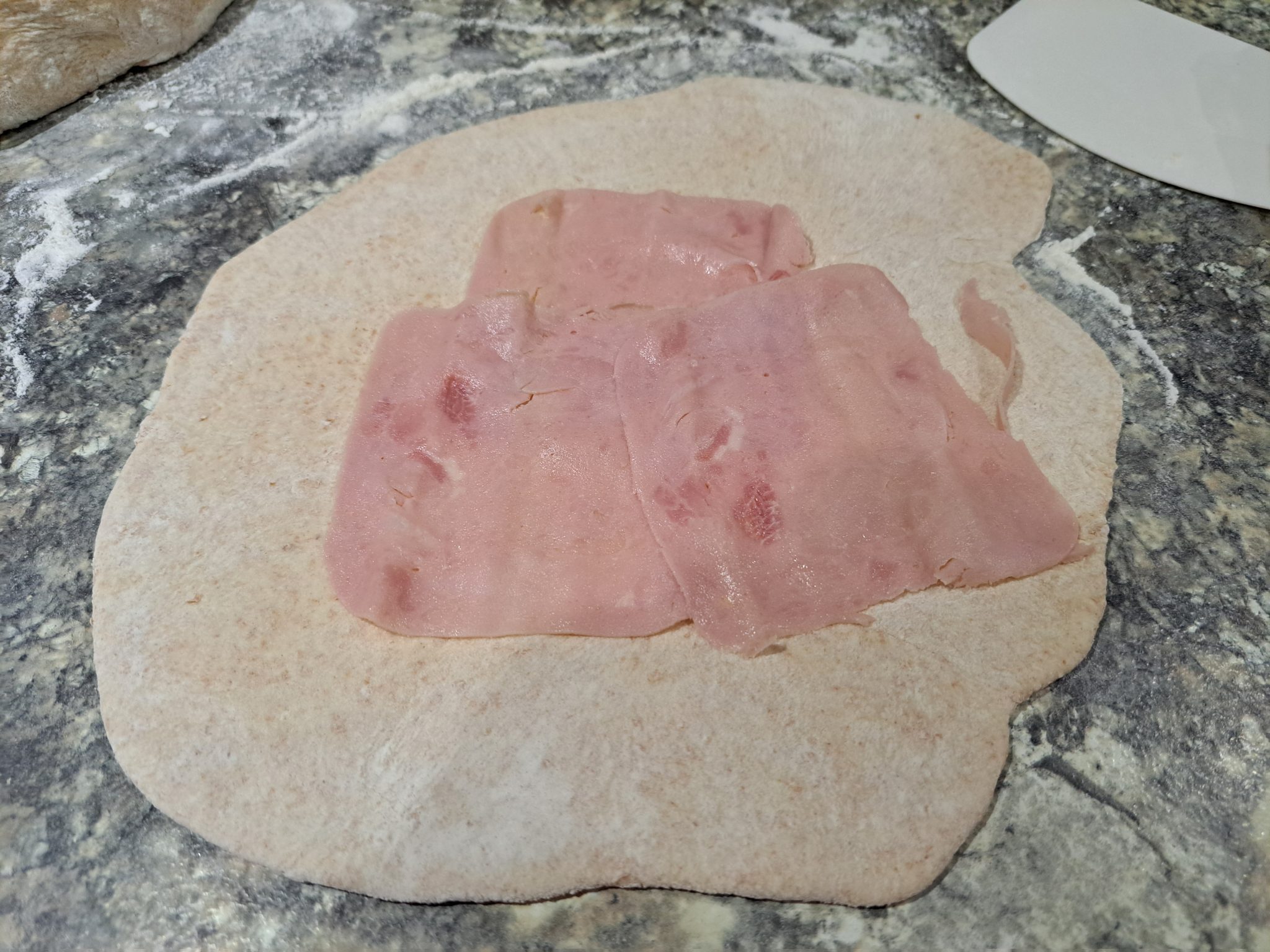
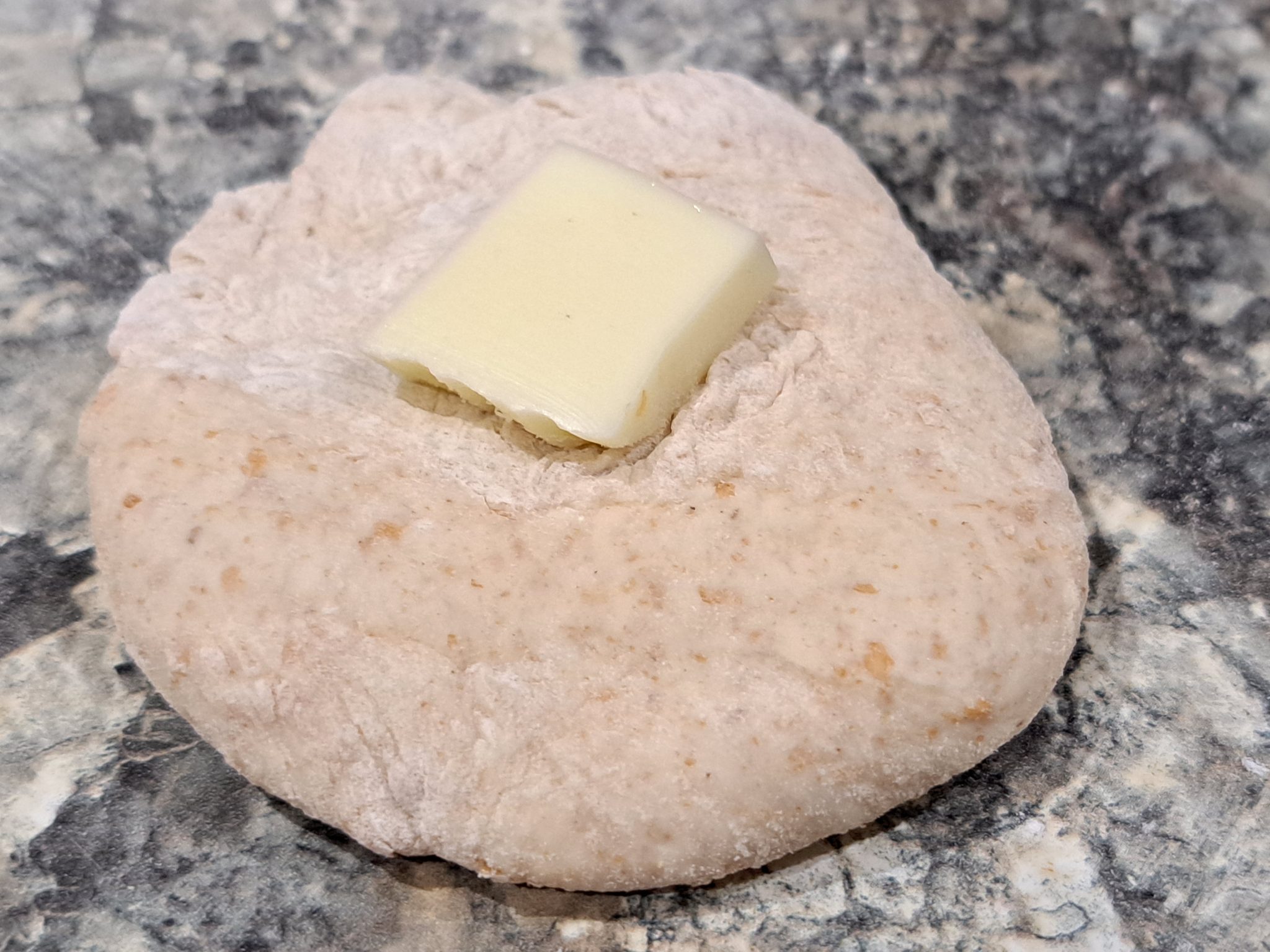
Previous attempts of mine to make this sort of thing went wrong because the molten cheese leaked out, mainly because I had the joins underneath when I baked it, instead of on top. But, to make sure, I added a layer of wafer thin ham slices. I think the leakage may have been made worse because I previously used ordinary, cheap Camembert, which seems more runny than La Rustique, when it’s cooked.

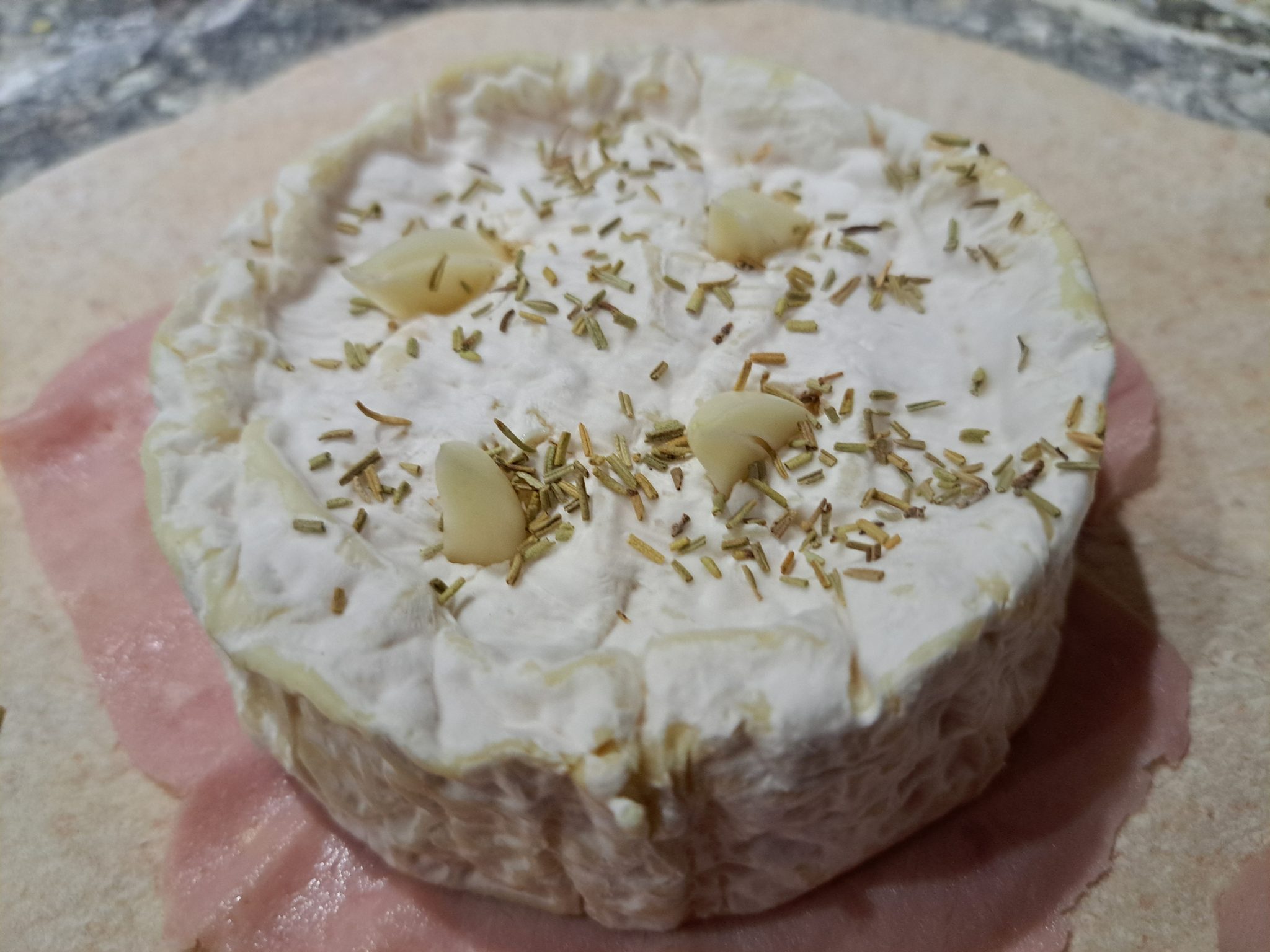
I put the cheese on top of the ham, cut slots in it, pushed garlic pieces into the slots, and sprinkled it with rosemary.

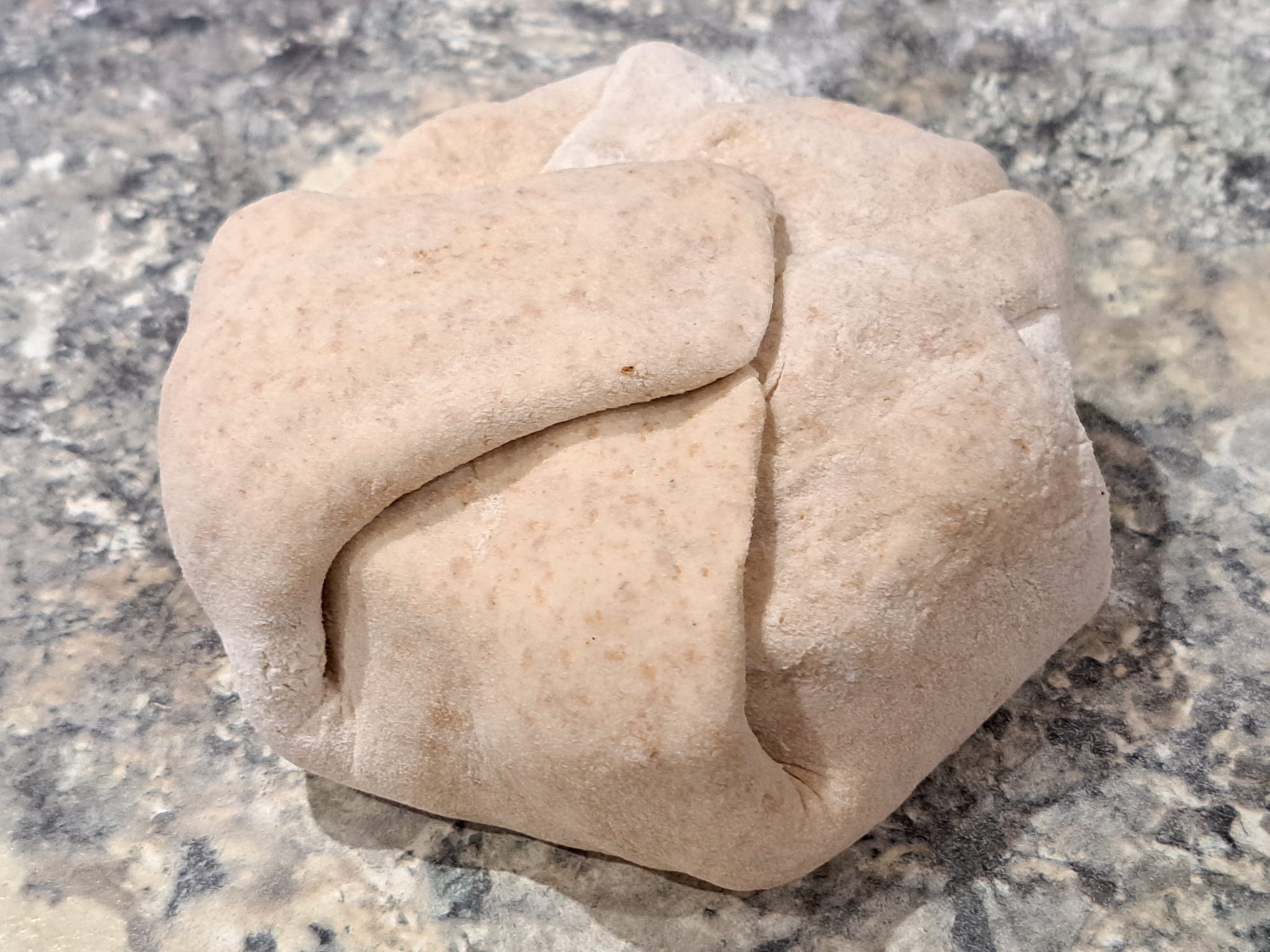
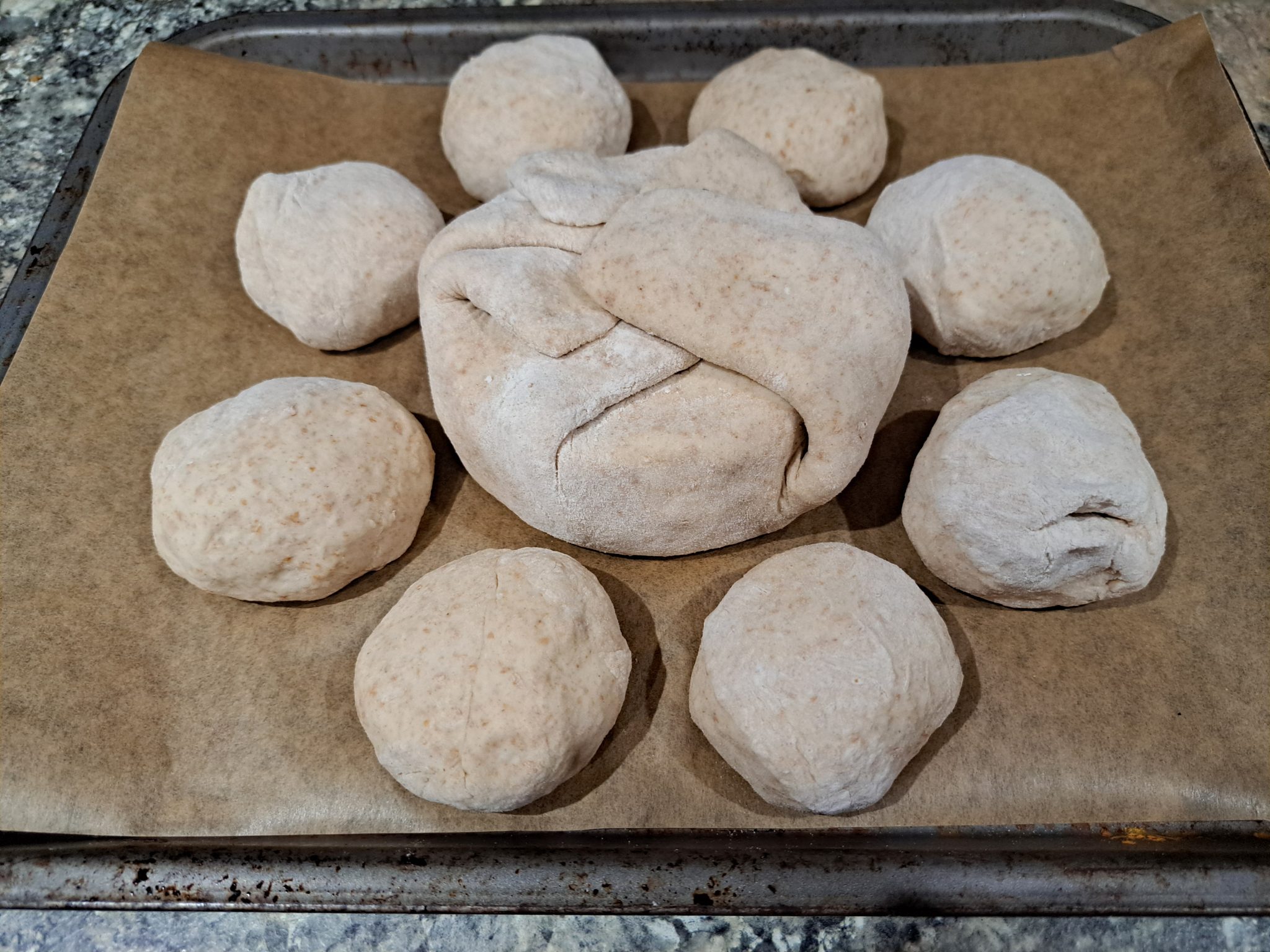
Then, I folded the dough over the top, not particularly tidily, and gently pressed it to seal it together. A lot of recipes leave the top of the cheese exposed, and I may try that another time.

I divided the remaining dough into eight pieces, put a bit of mozzarella that was lurking in the fridge into each one, rolled them into, well, rolls, and arranged them around the main loaf.

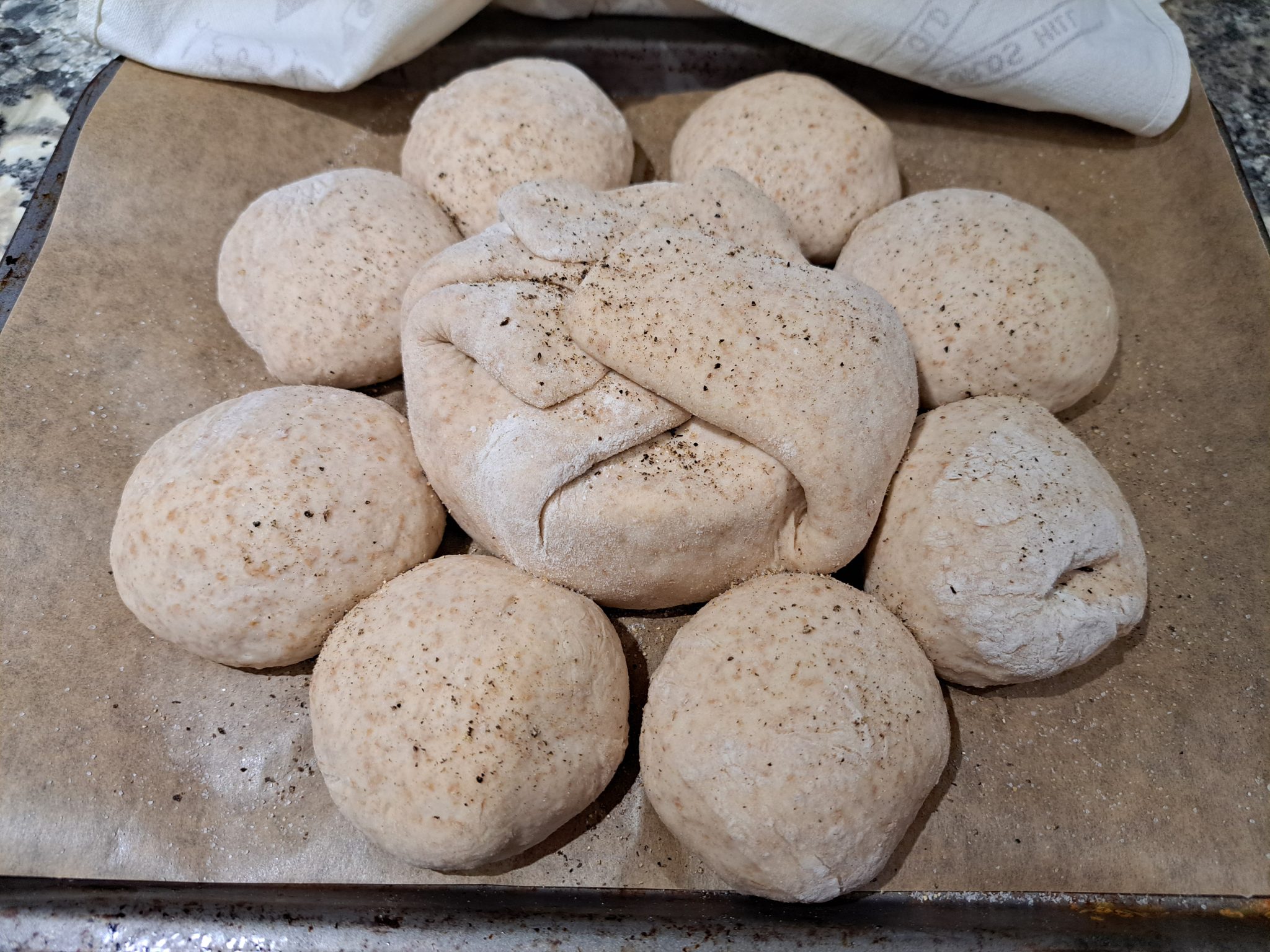
Then, I left them in a warm part of the kitchen to rise for a while, until the rolls were starting to merge with the main loaf, like this…

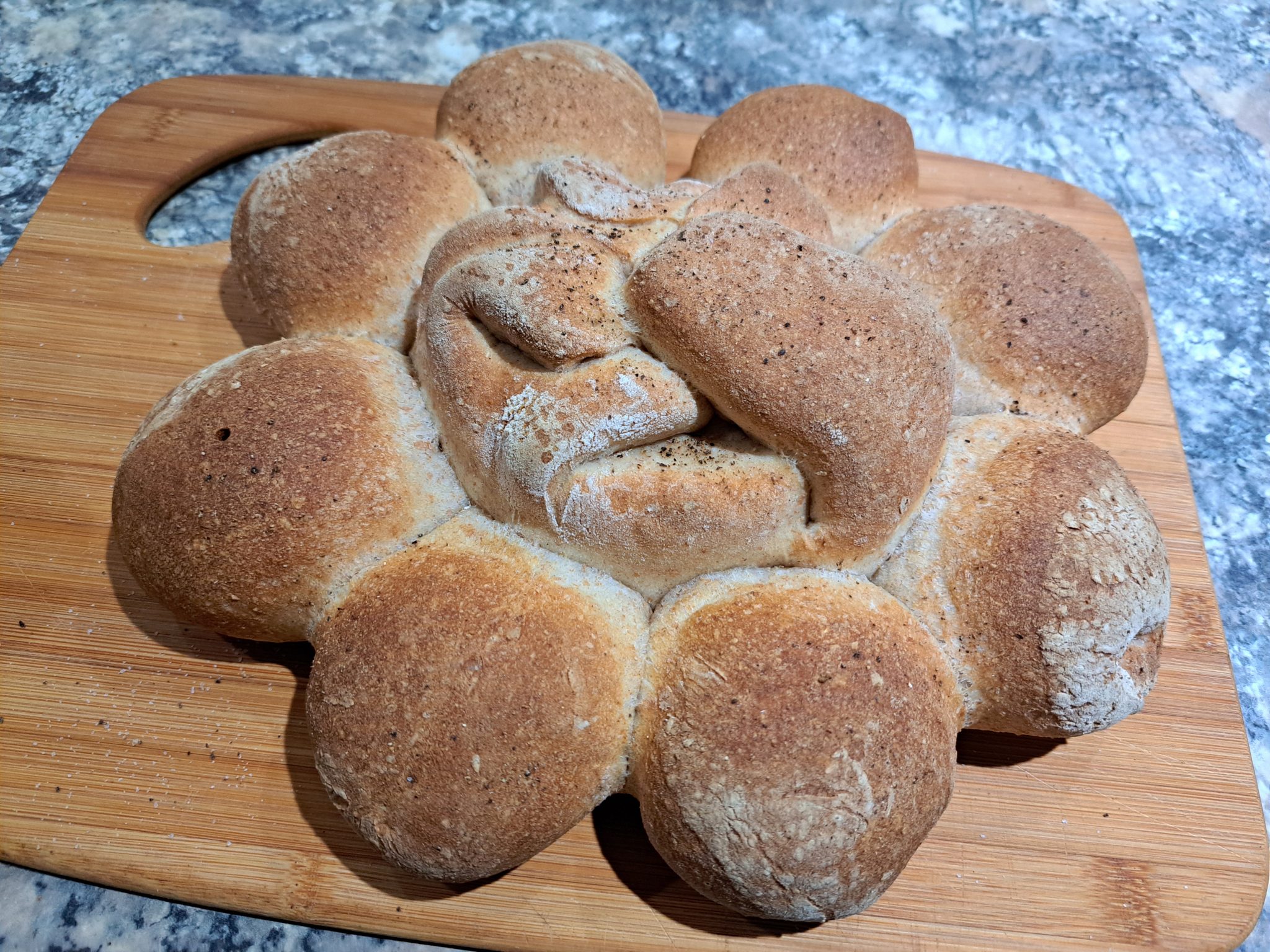
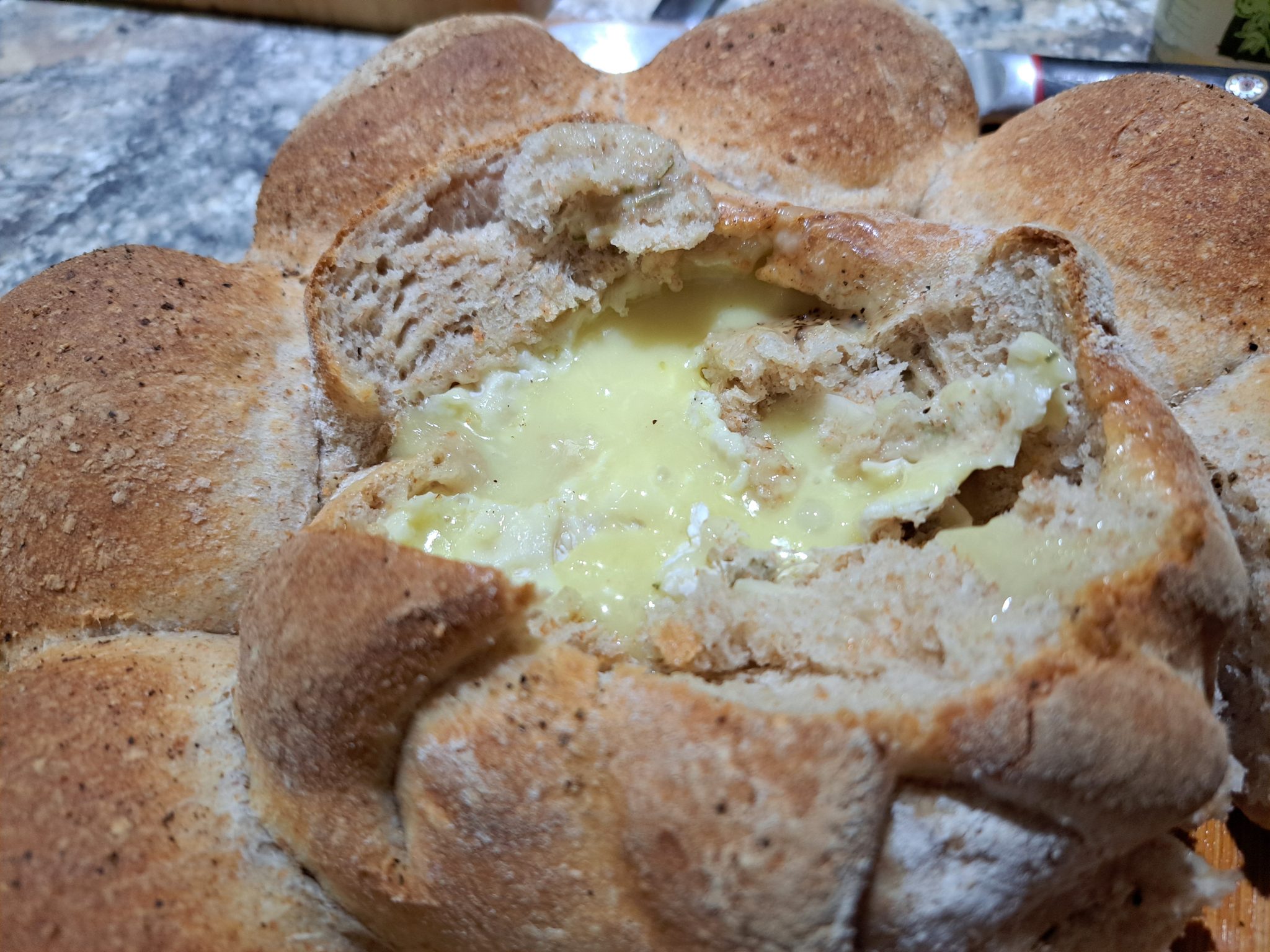
The cooking time at 220°C seemed likely to be about twenty minutes, from my limited experience of cooking bread rolls, and small loaves, which is how long I gave it. I think 25 to 30 minutes would be better, as the main loaf was very slightly underdone in places. That could have been caused by the moisture from the cheese, though. When it was baked, it looked like this…

It was pretty crusty, which was what I wanted, and I cut the top off with a knife, so we could start dipping…

Yes, it was very nice!

I was particularly pleased that the cheap deli ham had prevented the cheese from giving the loaf a soggy bottom. There was more that enough for two people, meaning those rolls will come in handy for lunch!

Curry waffles?

Because, why not? Basically, I wondered if a seitan mix would work in a waffle maker, and I decided a savoury flavour would be interesting.

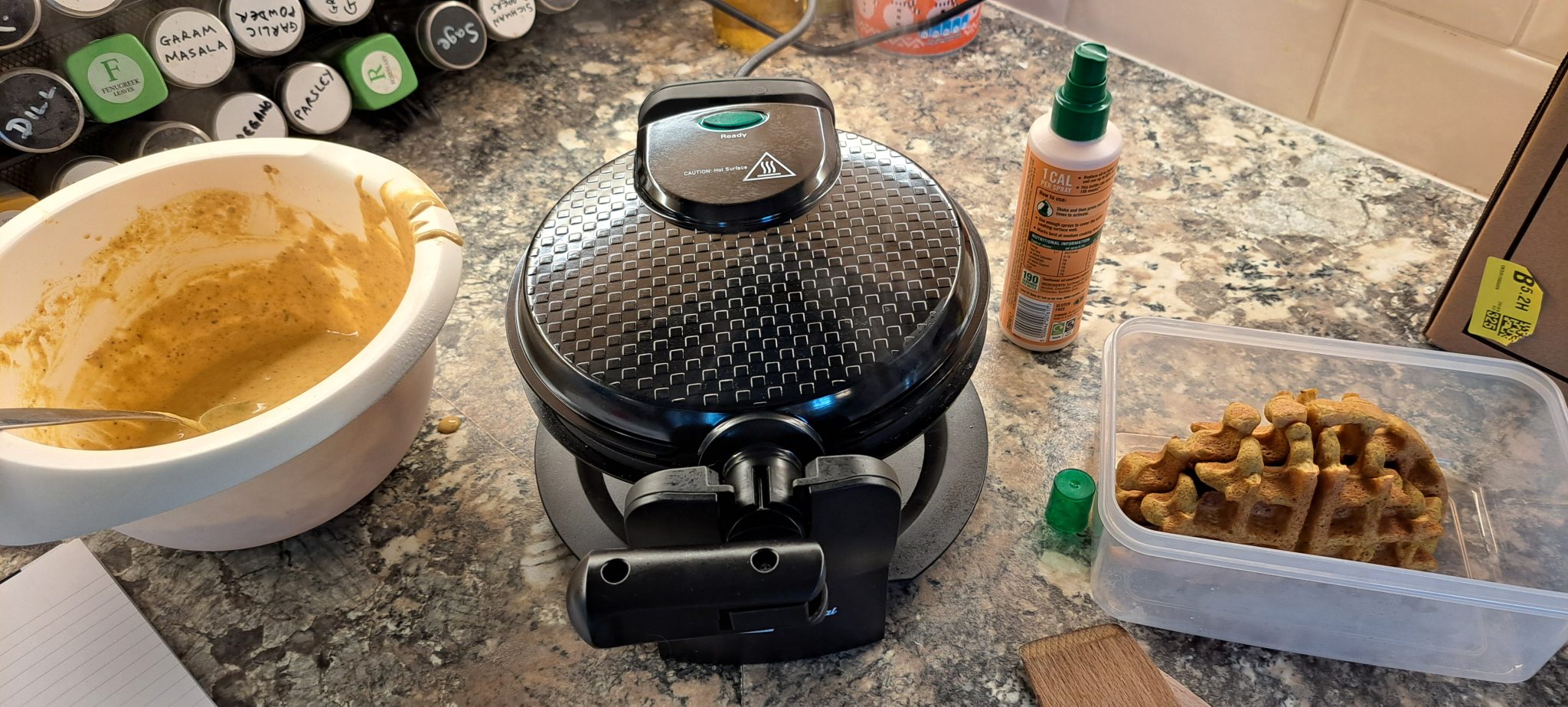
Batter, the waffle maker, and the first waffle…
  • 70g Vital wheat gluten
  • 70g Gram flour
  • 10g Nutritional yeast
  • 20g Curry powder
  • 7g EasyBake yeast
  • 300ml Water

It needs something to make bubbles in the batter, and I decided to use yeast instead of baking powder. I don’t remember why I decided not to use eggs, but the absence of salt is explained by high blood pressure… It’s all just mixed together, and left to ferment for half an hour.

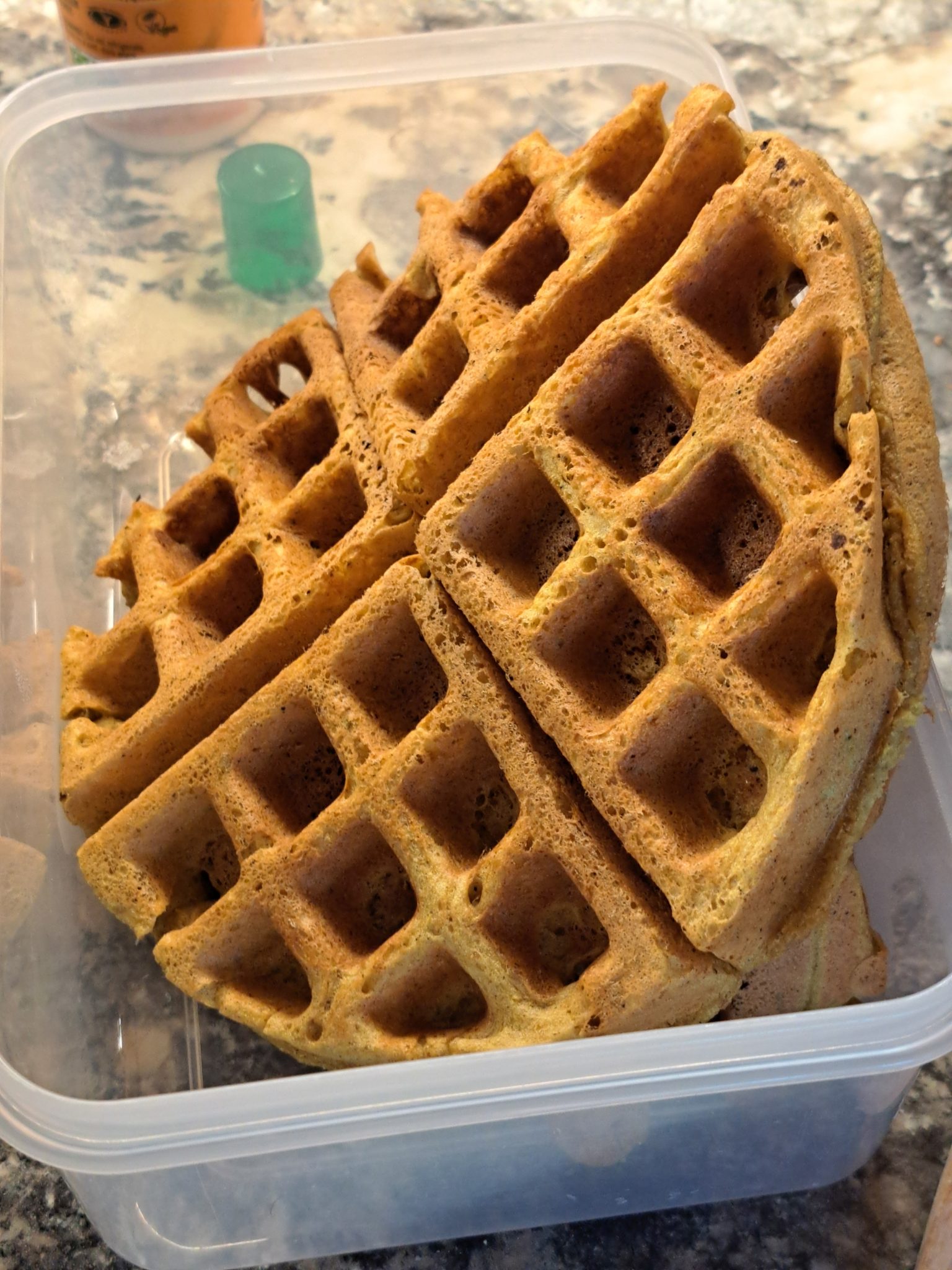
The result of the experiment.

The amounts in the list above give just under three waffles. I expect adding a couple of beaten eggs would have made just the right amount of batter. The result is chewy, like seitan, but more airy, and the flavour depends on your curry powder. I used the mild curry powder recipe from Pat Chapman’s “250 Curry Recipes and Accompaniments”.

Nasi Goreng Awan

What on Earth is that? Indonesian chicken fried rice, with accompaniments.

In 1970, Nasi Goreng was my favourite dinner in the canteen. It was wonderful, and all I can remember about it was that it was chicken fried rice with a fried egg on top. But we had very good Asian cooks in the canteen, so it must have been OK.

To recreate it, I referred extensively to “Sambal and Coconut“, yet another of the cookbooks I really like.

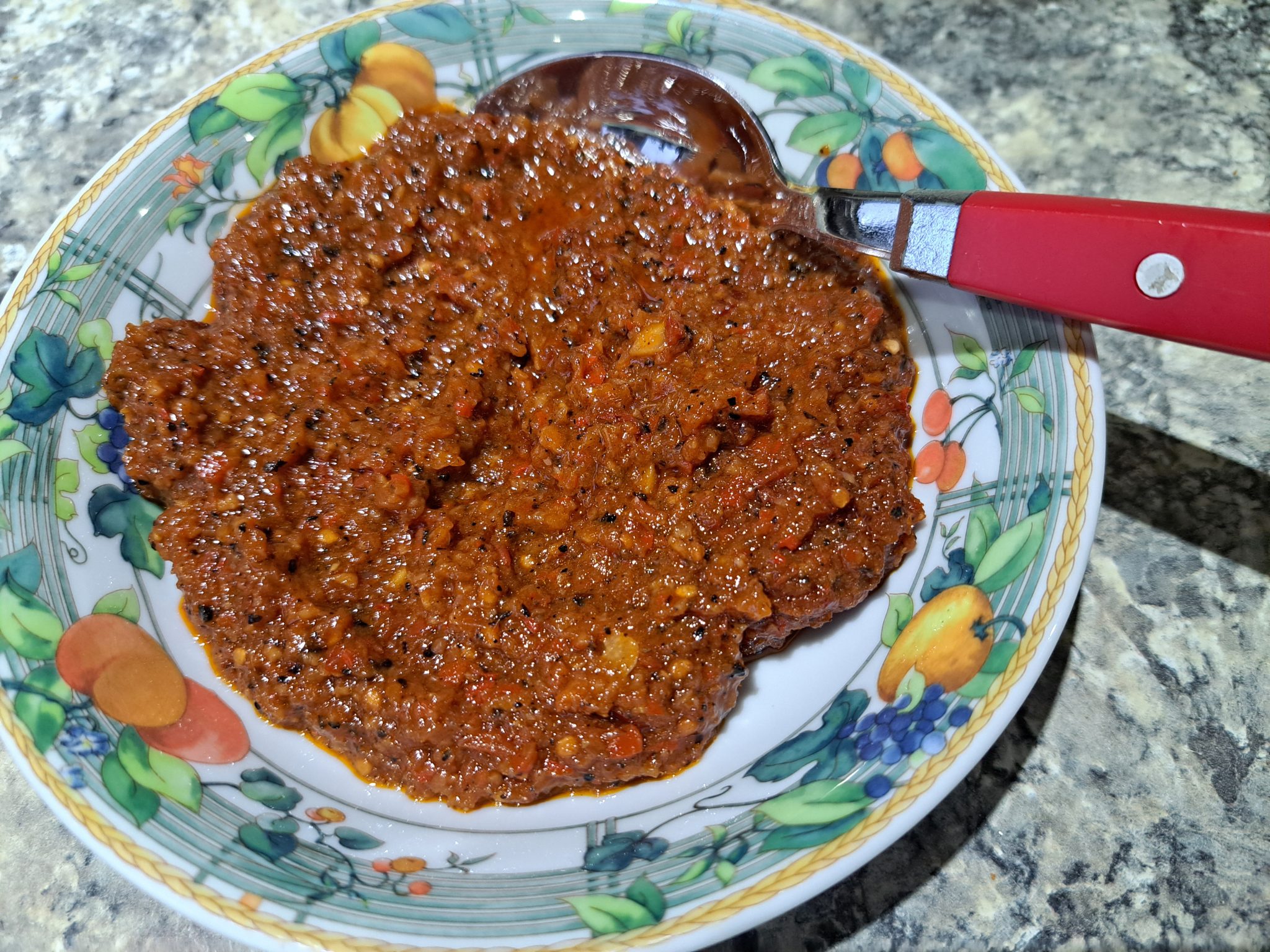
This is a tomato and chilli sambal, which I think could have done with quite a lot more chilli. Home grown tomatoes made it very tasty, though.

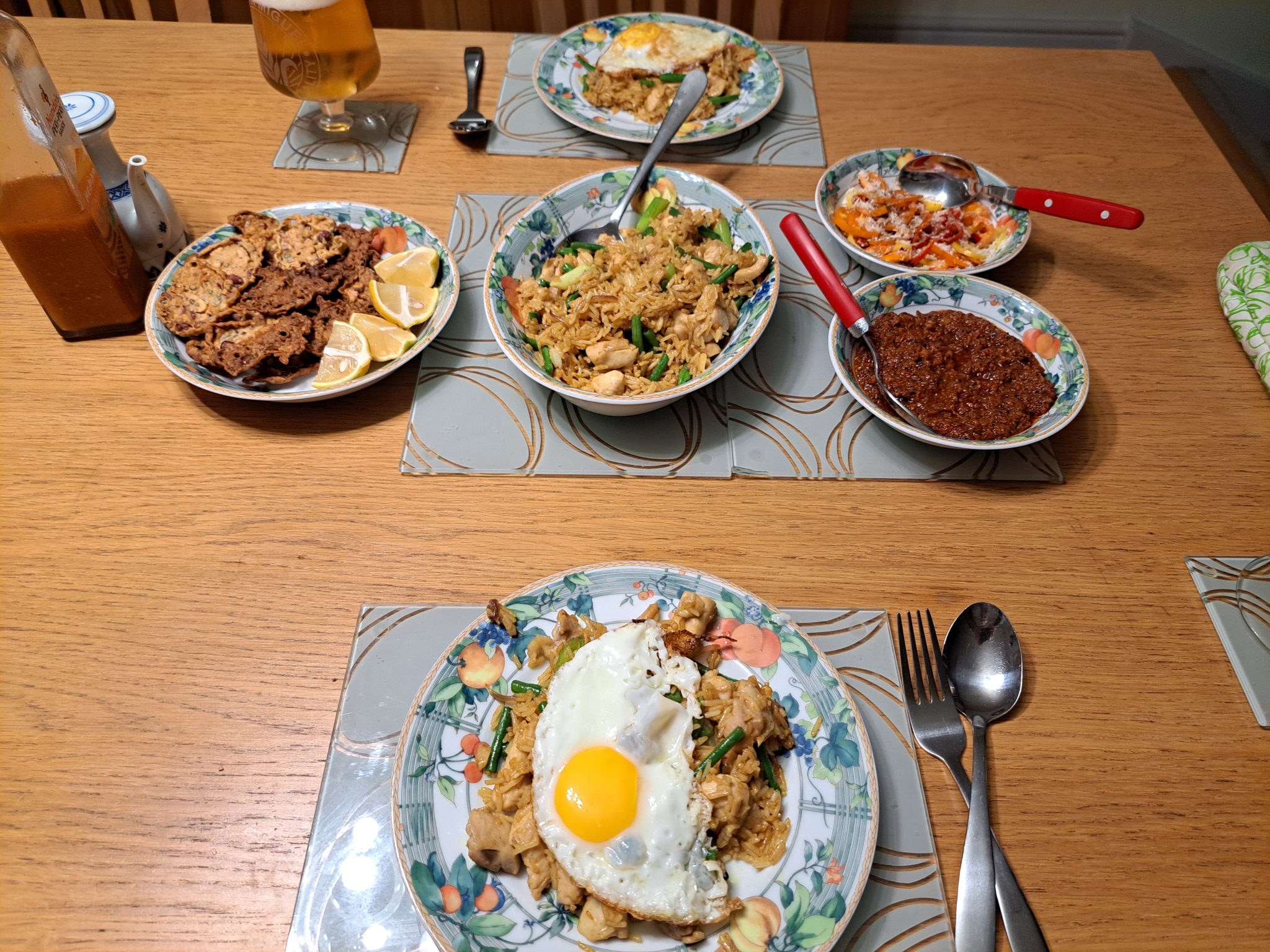
To the left, peanut and lime leaf kerupuk. Centre is the nasi goreng that was not yet on the plates. Right side, a mild pepper and coconut salad, and the sambal.

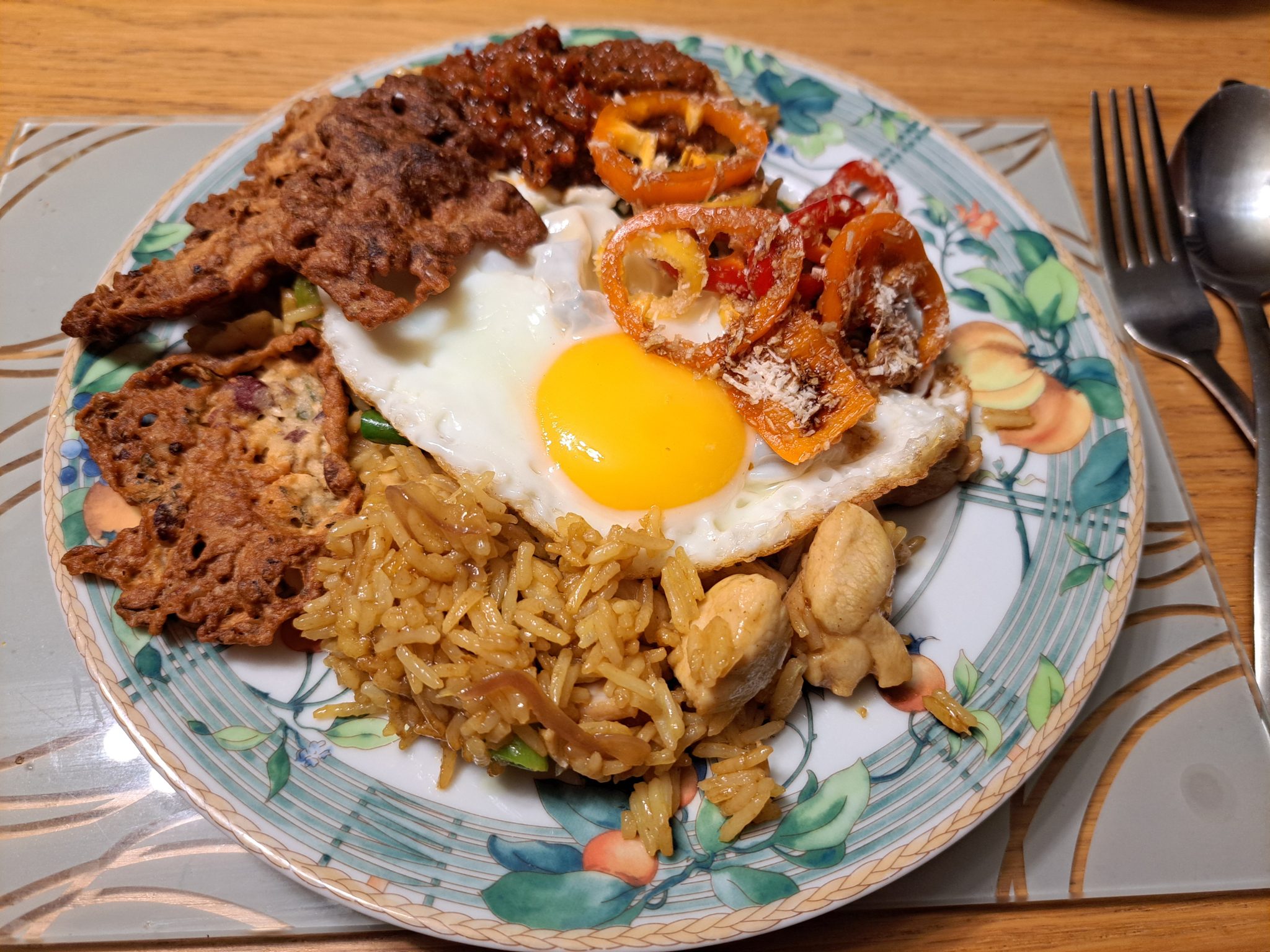
Here’s my plate, after I had added the accompaniments. It was all tasty, with good contrast between the crunchy kerupuk and the tender chicken. Will make again, with more chillis…

Sous Vide Duck Breasts

The main problem I have had with Gressingham duck breasts, when cooked in the way described on the package – fry the fat off, bake to cook through – is that the duck breasts always came out much smaller when they were cooked, even though I baked them for the absolute minimum time in the recipe. They also tended to be a little tougher than I wanted, and cooked part way through, rather than nice and medium-rare almost to the edge. The answer to these problems is mentioned in the heading…
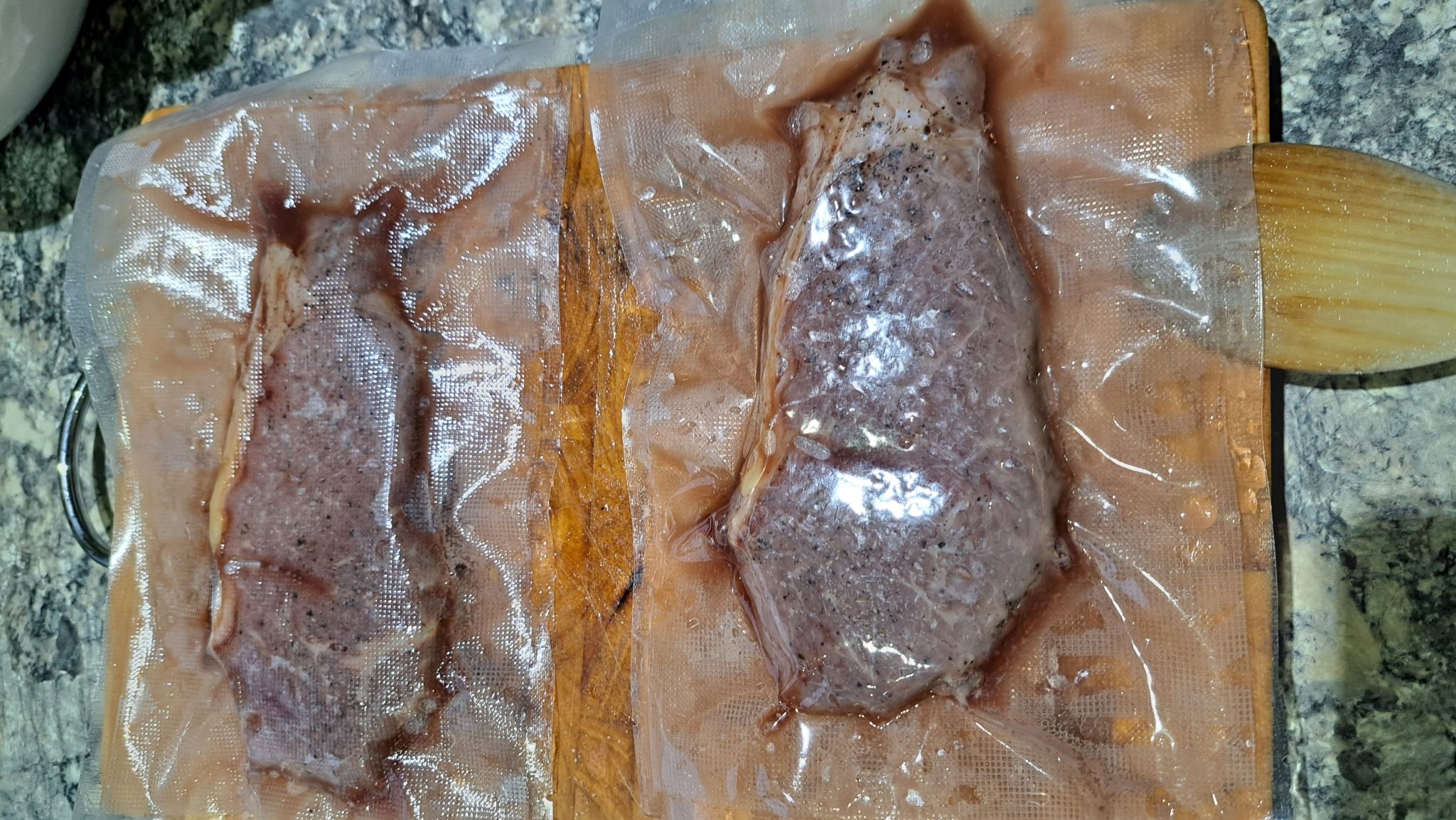
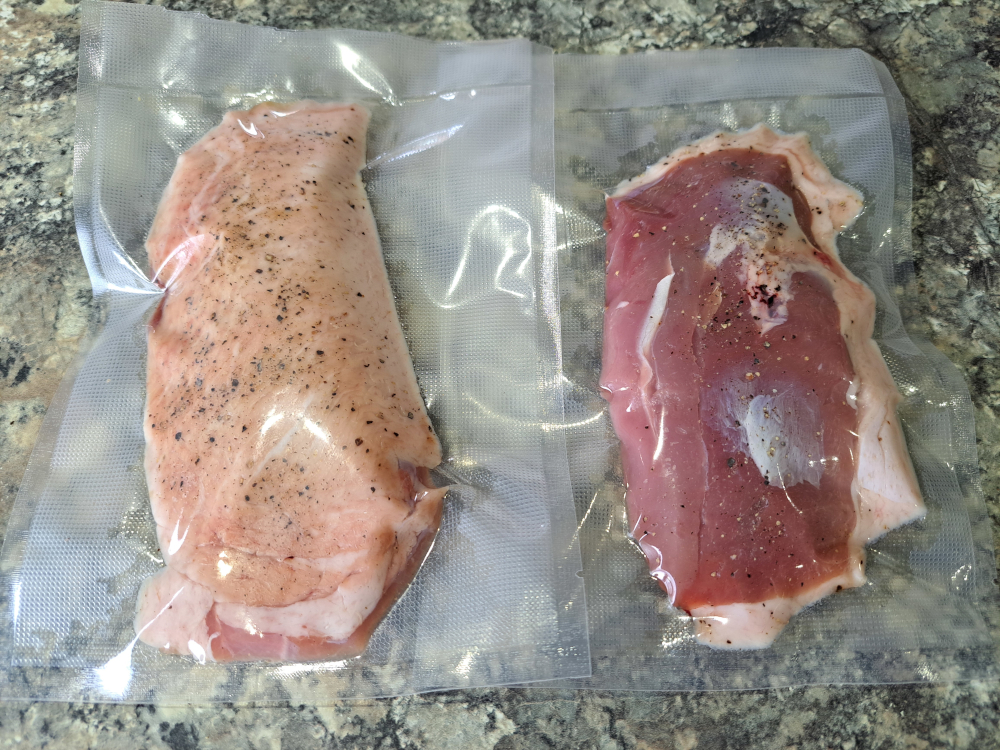
Two vacuum packed, seasoned duck breasts.
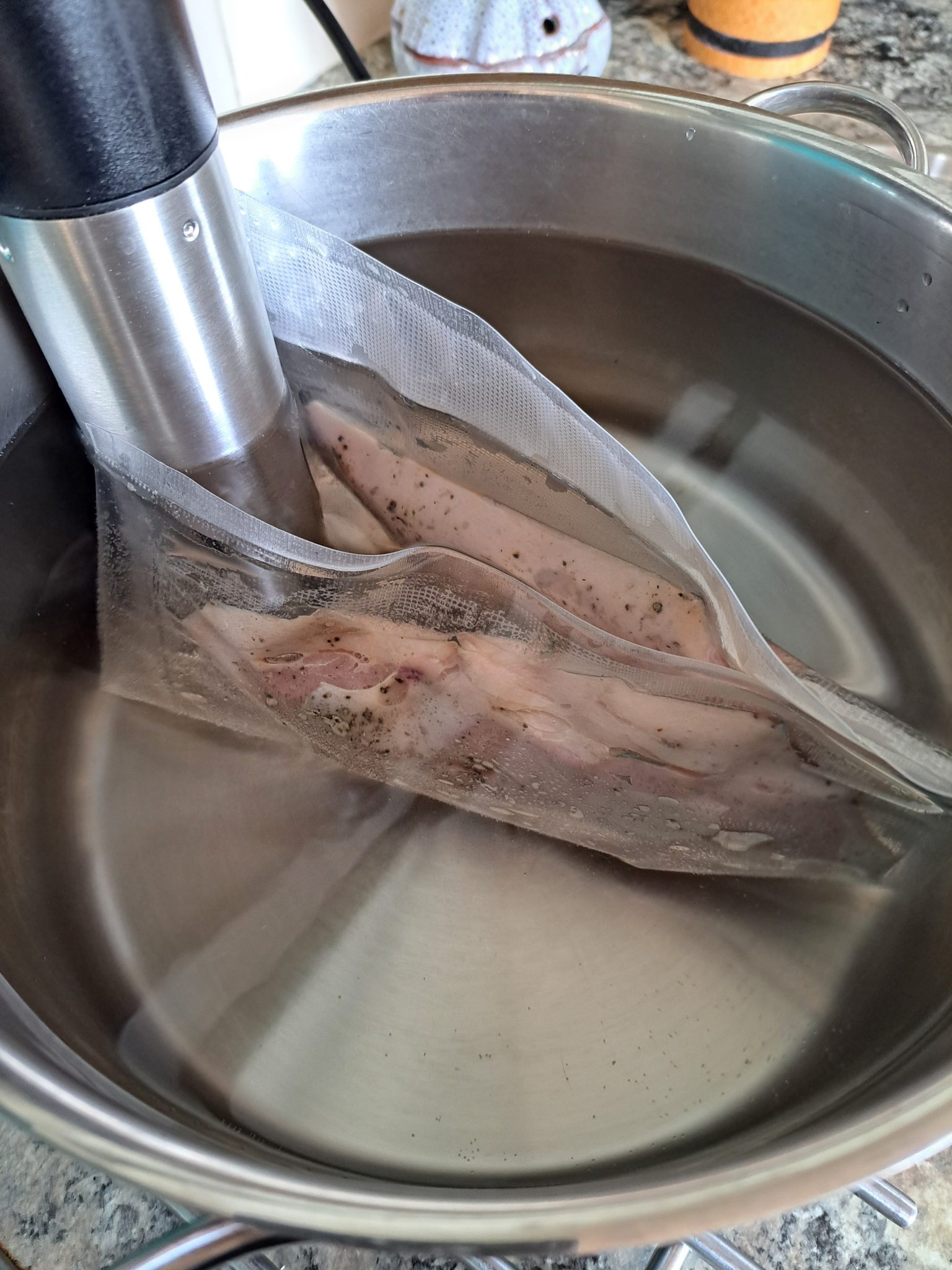
Two duck breasts in the sous vide pan.

The thing about ducks, you know, is that they float. I nearly included a Monty Python clip at this point, but you either know which one I mean, or you won’t understand at all, so I left it out. Anyway. Three hours at 55°C, pushing them away from the heater every once in a while. Then I heated a cast iron pan to what is technically known as bloody hot, gave them enough of a frying to crisp the fat up (yes, I know, a few seconds more would have been even better…) and served them.

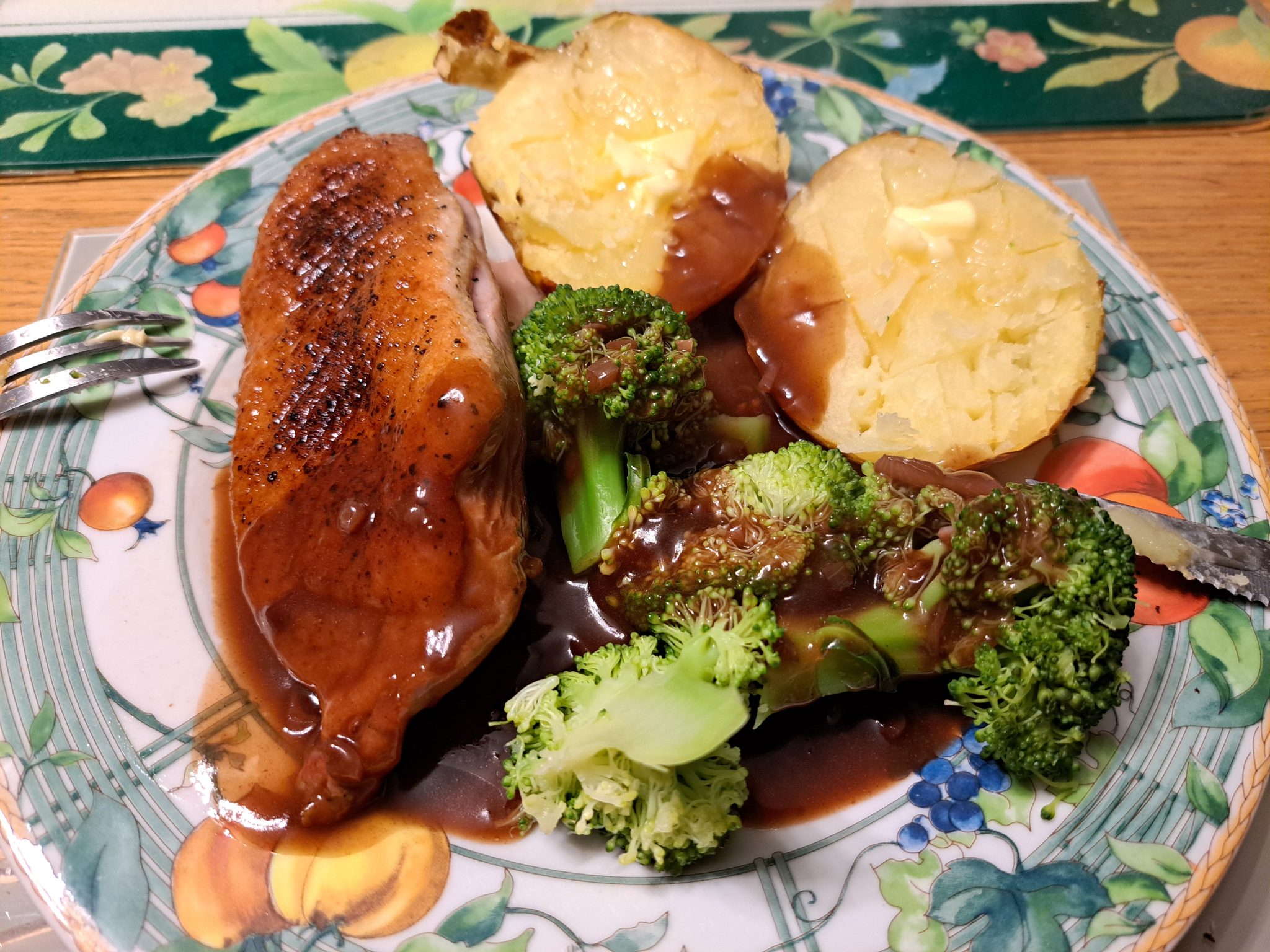
Unshrunken duck breast, baked potato, steamed broccoli, and sauce.
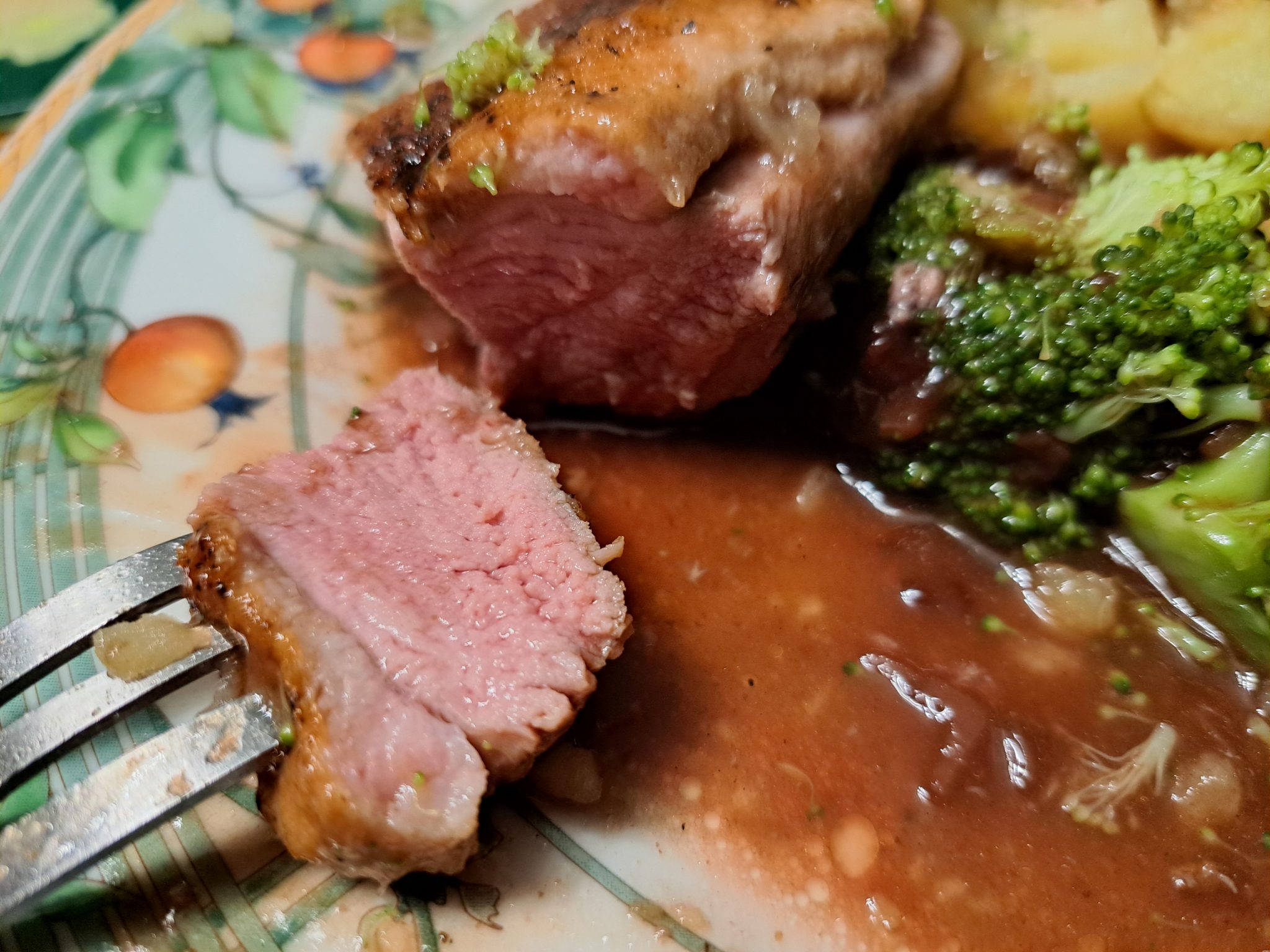
The shot that shows it was worth the faff…

This is definitely the way I will do those lovely Gressingham duck breasts (can I have some freebies, please, Gressingham?) from now on, only I will flash fry the skin a little more, to render the remaining fat you can see. The meat did not shrink, and it was not overdone at the edges. And the tenderness was noticeable, compared to the traditional method.

Update: The Gressingham web site has more detail than I have given, about how to make both sous vide duck breasts, and confit duck legs.

Steaks, new toy…

I recently bought a new foodie toy, a sous vide cooker, which I hope will be useful to prevent duck breasts from shrinking when I cook them. It should also enable me to cook medium-rare steaks, without the risk of over or under cooking them. I found it on eBay, for £30. Apparently, I could connect to it with my phone, and control it that way, but there’s nothing wrong with the control panel on top, which is what I shall use instead.

As a very safety conscious Walrus, naturally, I have read the instructions carefully. It’s the usual stuff, you know, don’t use this in your sword swallowing act, etc… Later on, I shall be heading out into the World, in order to Read all instructions.

This is part of the instructions what I read.

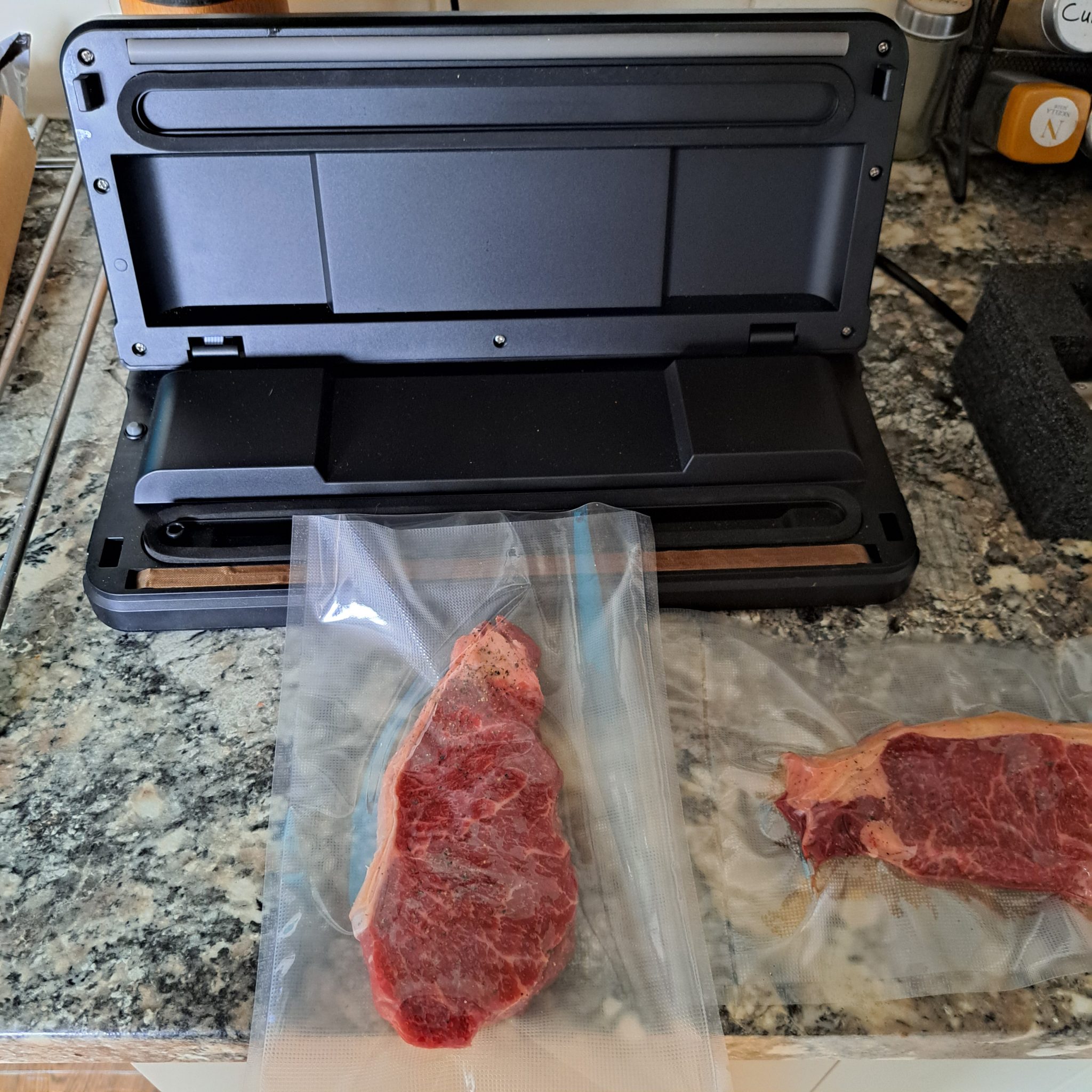
I already had a nifty device for vacuum packing the steaks, so I seasoned them, and got the air sucked out of the bags. You don’t need this device, really. It’s entirely possible to use Zip Lock bags, and get as much air out as you can, though they may tend to float if you don’t get it all out. But it’s a cooking toy, so I love it. Made by Tayuugo, if you want one like it…

The second steak, about to be suffocated. To the right, one I did earlier.

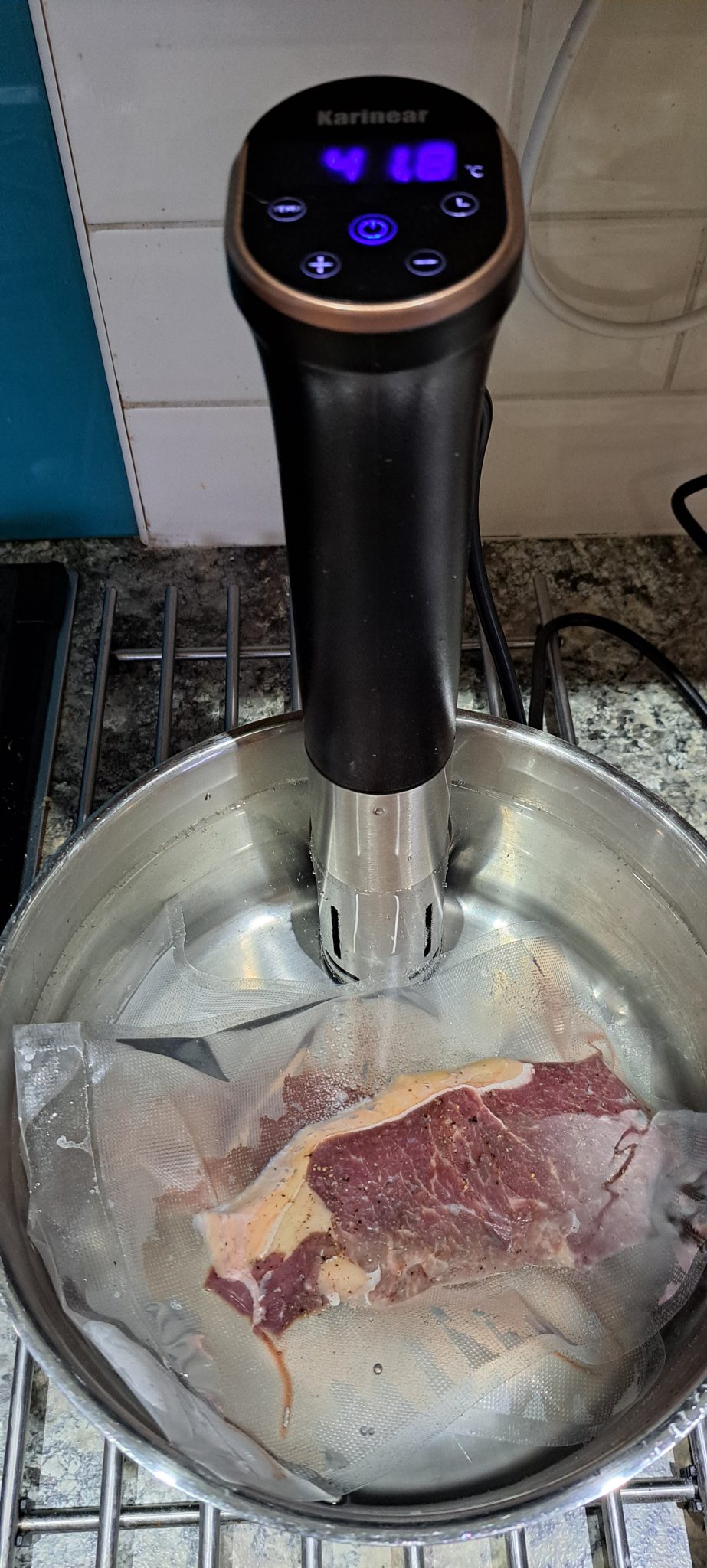
Next step: fill a big pan with water, clip the sous vide device on, and set it going. The temperature should be 55°C, and up to two hours is plenty of time. It doesn’t take long to get up to the right temperature. Meanwhile, I baked a couple of potatoes, and then fried some mushrooms in butter.

After almost two hours in the water bath, the steaks are cooked, but they don’t look like it. They need a quick flash fry in a very hot pan.

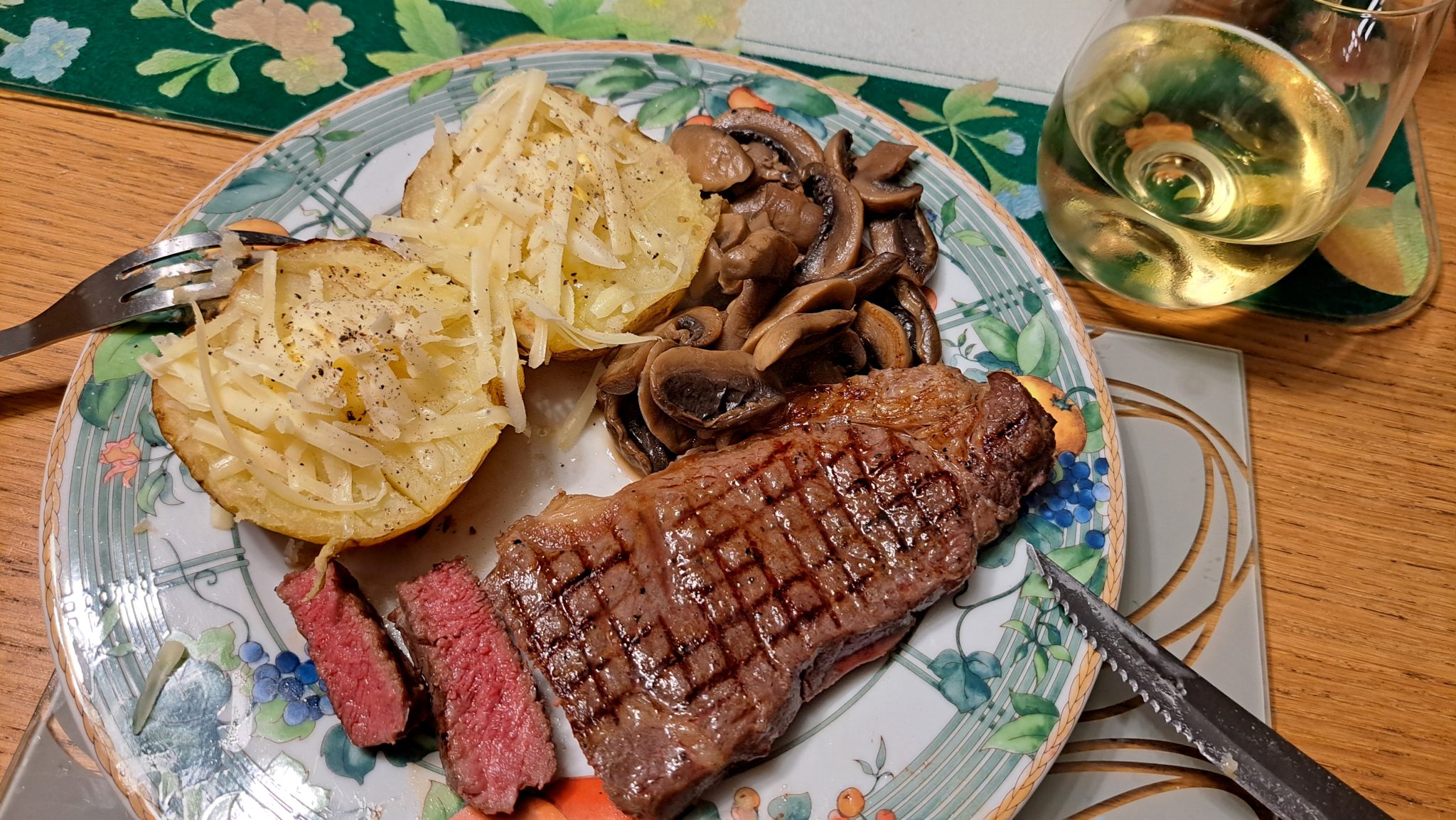
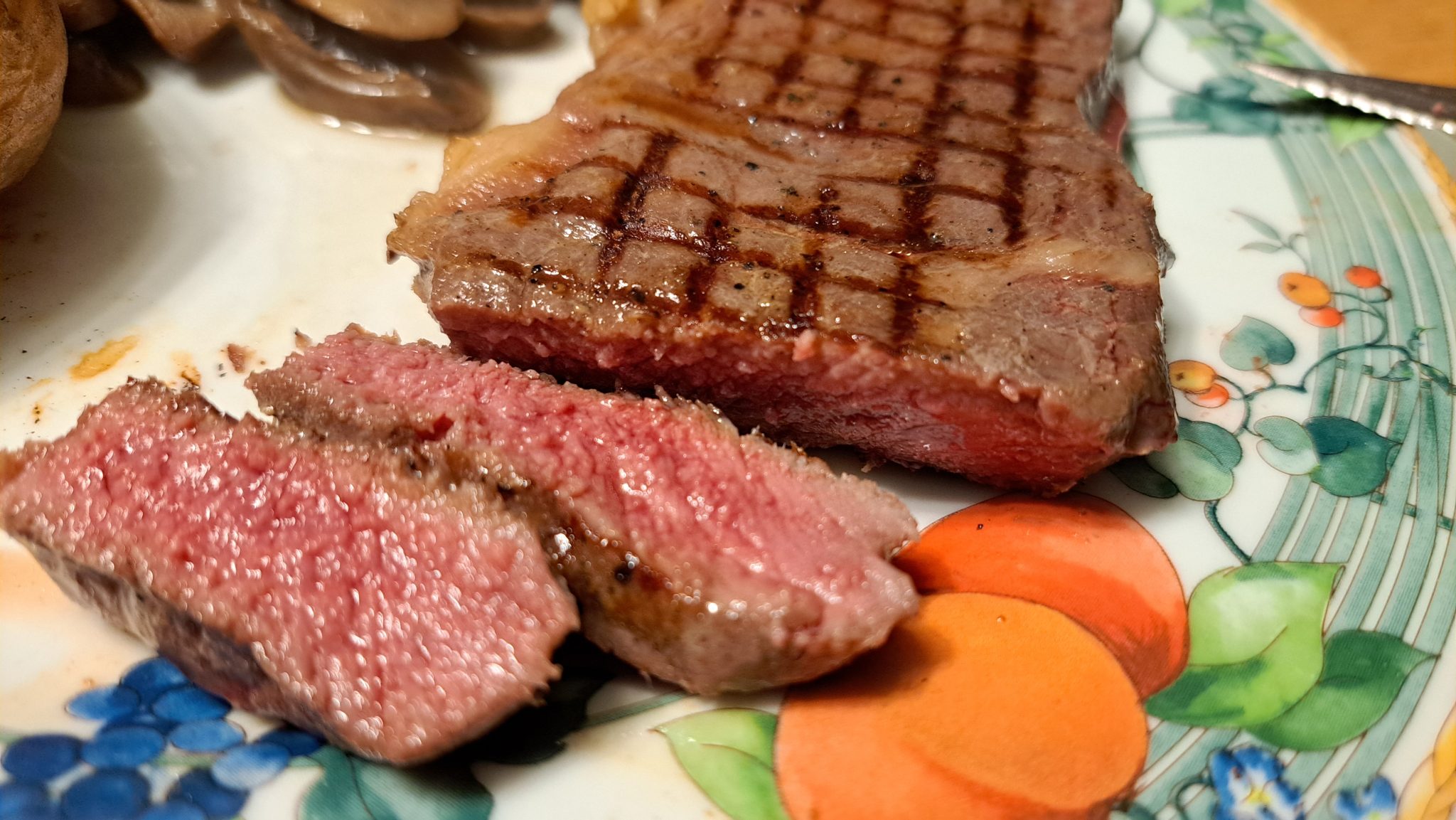
It was a very quick flash fry, and I didn’t take any pictures while I was doing it… but here’s the plated result…

Now, you may call that rare, rather than medium-rare, and you may be right, but it is definitely what I was aiming for. The big difference between cooking the steaks this way, and frying them, is the way they’re not overcooked at the surface, with a smaller pink area inside. Now that I know the process, I will not be using cheap supermarket steaks like these, but really good ones from the friendly local butcher.

Update: This sous vide device died the third time I used it, and I got a refund. My new one is an Inkbird one, and cost twice as much. Let’s hope it lives longer…

Seitan Steaks

This is not a blog post about the morality of eating meat, as I very much enjoy eating several sorts of meat, and I wouldn’t think there was a moral problem, if a shark decided to eat me. After all, I am pretty sure I have eaten bits of shark. But even I have to admit that the production of meat is a serious problem, ecologically. We needed that Amazonian rain forest to create oxygen, you know? And there are health grounds for eating less meat, as anyone who listens to their doctor will know. Besides, it costs a fortune these days.

I’ve always thought it a bit odd that some vegans try to create realistic imitations of meat dishes, when there are a huge number of delicious vegan dishes that don’t look at all like meat. Instead, they look like the vegetables they are made from. They taste great, too, and I enjoy eating them.

But, as a way of saving money, being able to cook something that feels like a steak when I chew it, tastes a lot like a steak, doesn’t force me to go and floss my teeth after dinner, and costs much less than a steak has to be a winner. So, I ordered up some ingredients that were needed, online, and had a go at a recipe from https://itdoesnttastelikechicken.com which, by the way, has an excellent cookbook you can download.

The ingredients I didn’t have to hand were the rather strange sounding vital wheat gluten, and nutritional yeast flakes. This is not a good food for anyone with an actual gluten intolerance. I would also advise against it, if you have a problem with lentils, such as, you know, flatulence.

The recipe uses cups, tablespoons, etc, but lets you switch to metric, which is good. However, it then uses volumes for some of the ingredients, instead of weights, so I’m providing weights here. That’s right, I weighed the ingredients, as I measured their volumes. Such is my dedication to the cause…

Recipe websites have a tendency to use beautiful photographs of such things as all the ingredients, arranged artistically in a blender, but cooked lentils are hard to arrange artistically, so you get to see this, instead…

In the blender, you can see –

  • 220g vital wheat gluten
  • 220g cooked lentils
  • 90g water
  • 5g nutritional yeast
  • 25g tomato puree
  • 25g dark soy sauce
  • 5g garlic powder
  • 3g chili powder
  • 3g liquid smoke
  • 1g freshly ground black pepper

The internet suggested I’d need to cook half the final weight of lentils; I cooked a hundred grams of red lentils for ten minutes, and ended up with 280g, and if you think I ate the other sixty grams, you’d be correct. They smelled amazing when I was cooking them, so down they went.

There’s now a delicate balancing act to perform. If you run the blender for too long, all that gluten will form a solid block; not long enough, and there will be unmixed ingredients. As soon as that is done, tip the result out, and knead the lump, bearing in mind that you’ll be toughening it up if you go on too long.

Tip it out!

Cut it into four pieces. Now roll them out until they’re about half an inch thick. As you can see, I failed to do that, and ended up with thickish lumps. Next time, I shall be careful to do this, instead of trying to hand shape them…

They get steamed for about half an hour. After that, they go in a marinade in the fridge, until you are ready to use them, or you can freeze them.

  • 50g water
  • 20g olive oil
  • 20g dark soy sauce
  • 10g maple syrup, which I omitted

I left the maple syrup out because if you fry these in a hot pan, it will burn.

The next picture is what we actually had for dinner, after I made these – a chicken Caesar salad. Because that’s what I was asked for, when I explained what I had made. The next day, I cut up one of the steaks, and used it in a sweet and sour pork recipe, served with rice. I can confirm, these “steaks” are very much like meat to eat, but the flavour isn’t exactly right. I propose to fix that, by including distinctly non-vegan flavourings, like beef stock, the next time I make a batch. I will also roll them out properly!

This actually is chicken, but tasted also of anchovies and Parmesan, as is right and proper.

This never used to happen…

A Carex hand soap dispenser, unexpectedly dripping.

Climate change benefits – number 94.

Nowadays, storms are worse than they used to be. Fact.

As a result, they have lower barometric pressure at their centres. When the storm gets close to you, the pressure drops, and the air in the hand-soap bottle pushes the soap up and out of the pump nozzle.

Climate change deniers will, of course, say something stupid now…