Risotto, and a dessert.

Nearly ready!

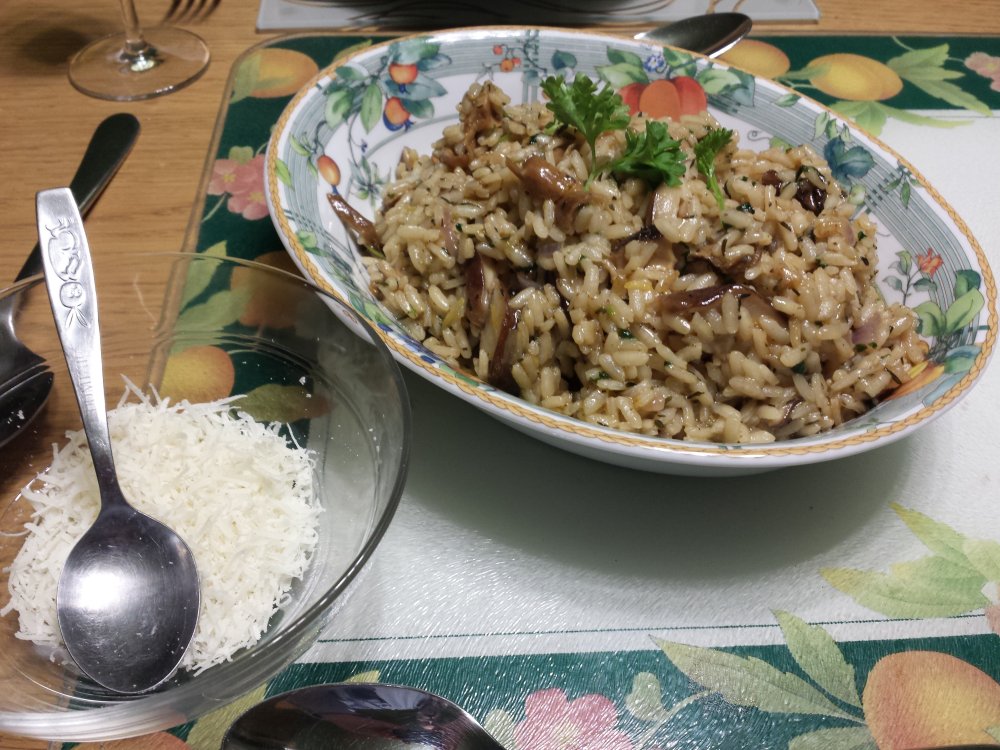
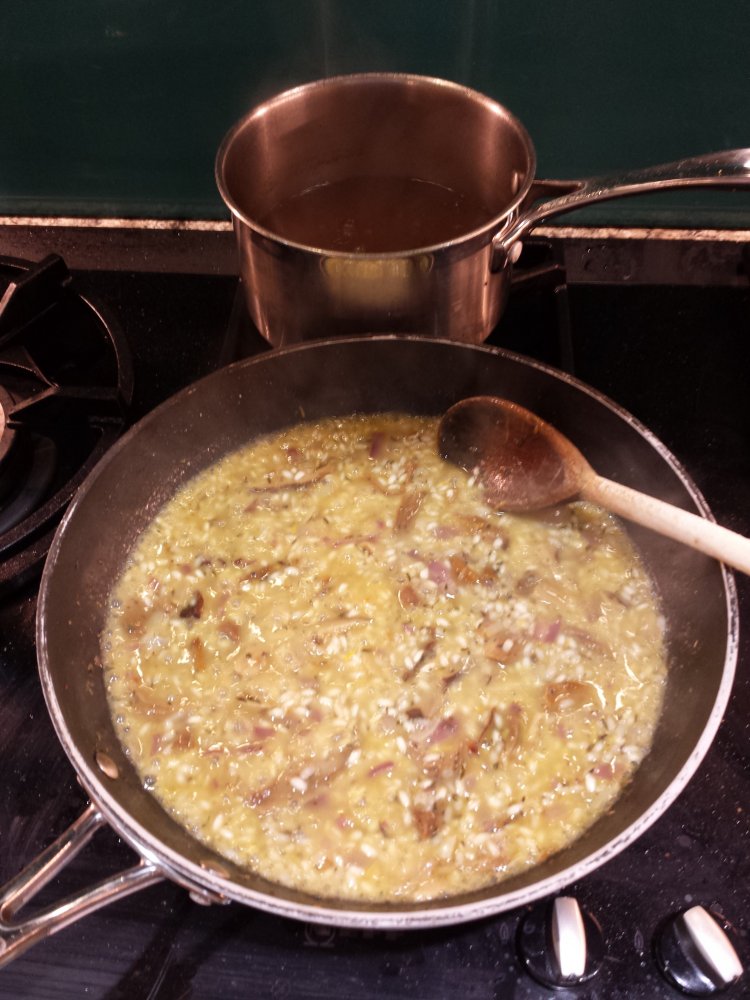
Last night’s risotto, which I made with arborio rice, red onion, garlic, white wine, vegetable stock, parmesan, fresh parsley, dried porcini, dried mixed mushrooms, and fresh shiitake mushrooms. 


When it was finished, it looked like this. It was really quite good, as my wife said so.
I‘ve only just noticed that the spoon in the parmesan is one that was given to our son when he was a baby.

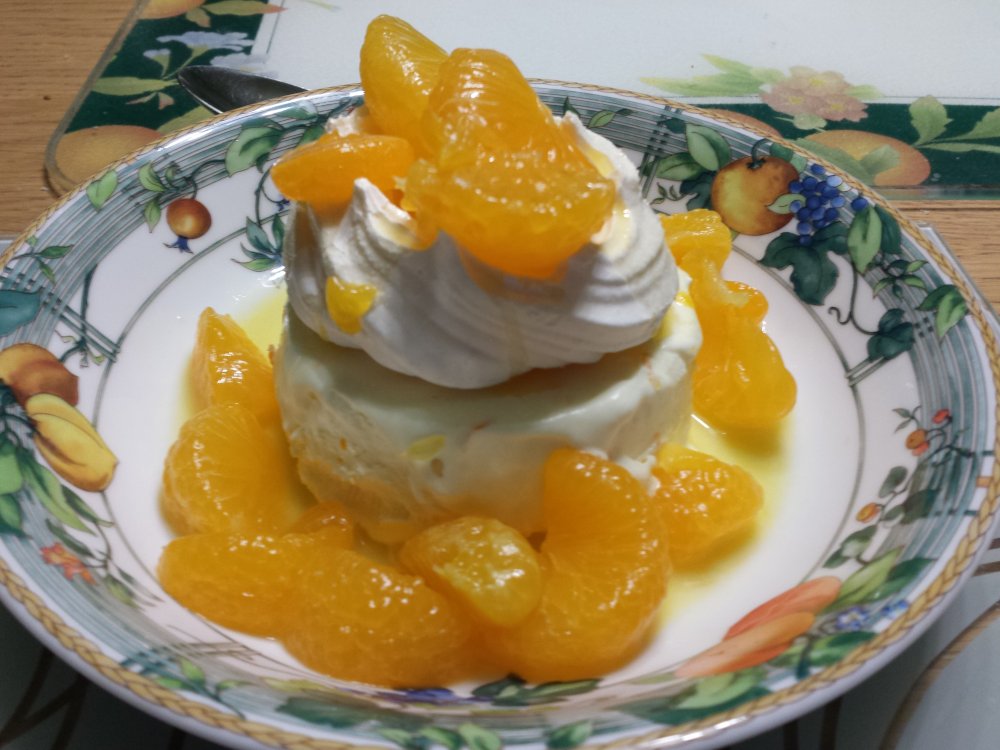
Yes, I really did make a dessert!

Nothing particularly fancy, really. Orange ice cream from a recipe by Nigella Lawson. One of Mr Tesco’s meringue nests, and some tinned mandarin segments.

Sausages!

This is the recipe in one of my two sausage making books, that I just finished making. There seems to be a different Loukanika recipe for every Greek village, perhaps every house in every village. I was a bit surprised this one didn’t have paprika in it, but I resisted the temptation to meddle with it. This time…

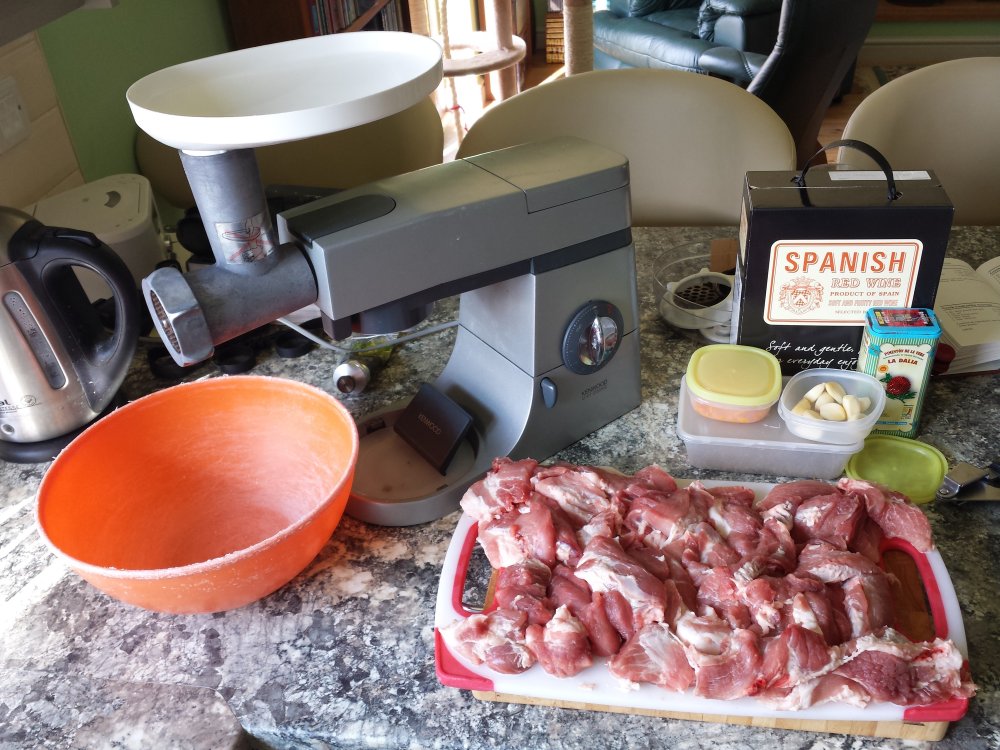
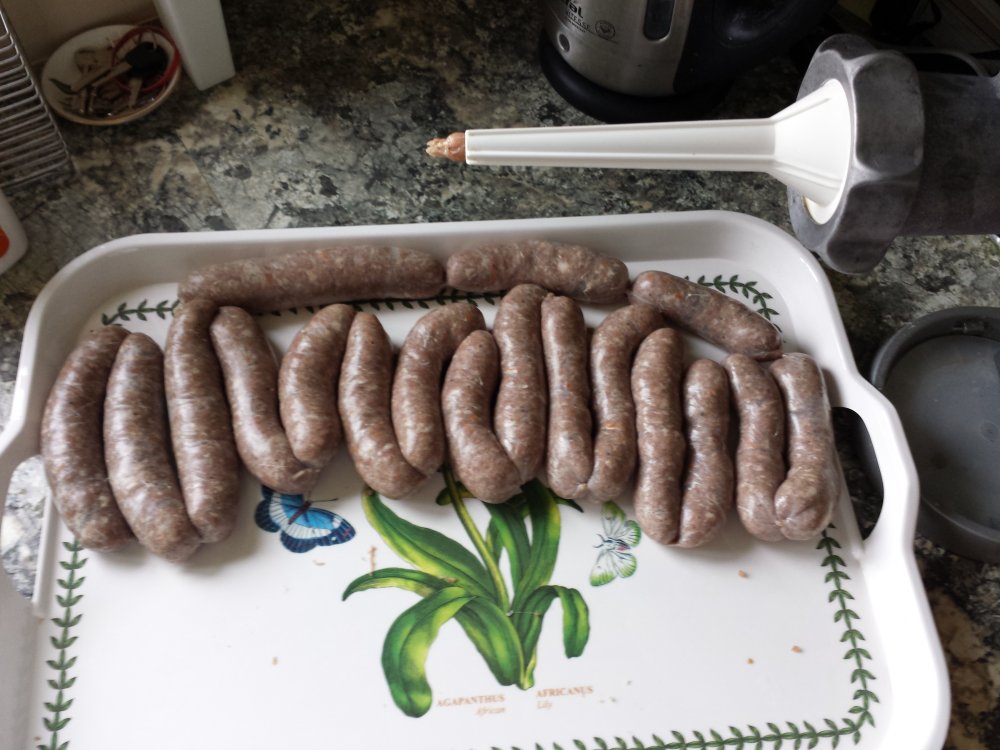
Here we go! The meat has been in the freezer for an hour. You do that so it is cut up without all the juices escaping when you mince it. I don’t have any pictures of the mincing happening, as I really didn’t want to get raw pork all over my phone, but I promise you the mincing did happen. The garlic went in at this stage, to save the faff of crushing it separately. The box with the yellow lid contains the zest of two unwaxed oranges. Once the meat and garlic were minced, I added the herbs, zest,  spices and salt. I very nearly forgot to add the red wine! Some days I worry about my sanity. All that gets thoroughly mixed, and the human hand is the best tool for the job. You can see the actual mistake I did make, in this next picture. That is a small sausage funnel, suitable for use with sheeps’ casings, but I’m using hogs’ casings, which are quite a bit bigger. Rather than shifting the casing to the right size funnel, I just held the casing back a bit more than usual, until the meat filled it.

And here are all 18 of the sausages, along with a little bonus. The last of the sausage meat doesn’t emerge from the nozzle, once it has passed the end of the helical thingy, it doesn’t advance any further. I took it out, and made it into a patty, and fried it. It was delicious. I’m really looking forward to sausages for tea…

Pickled herrings, part 1.

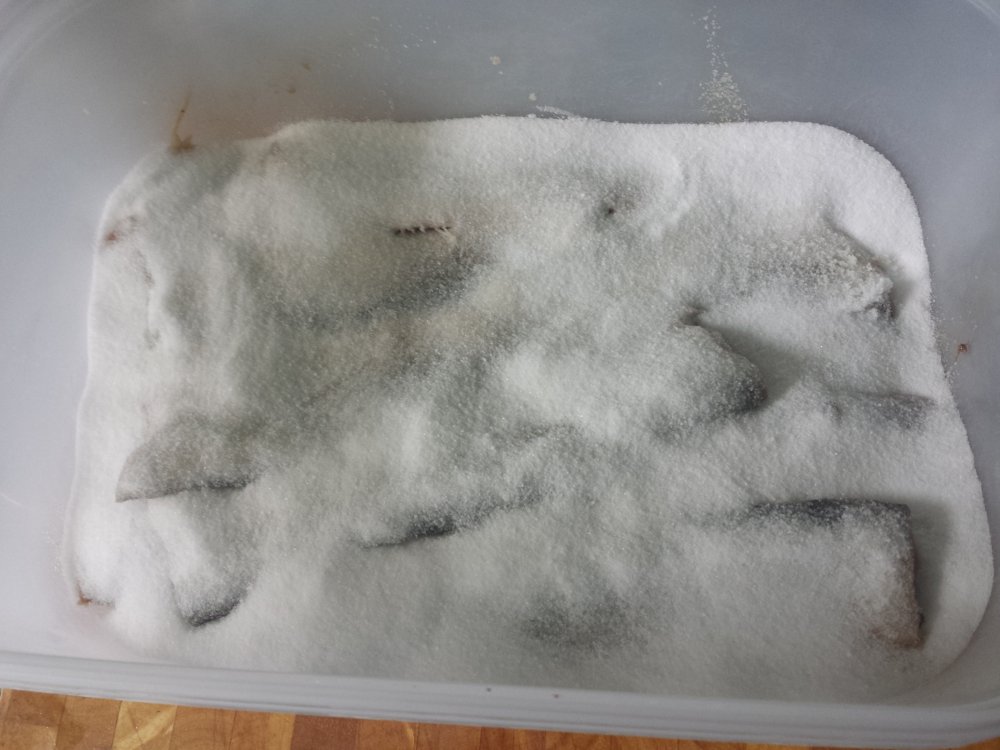
I forgot to take a picture until I had already gutted and filleted the first four of the eight herrings I bought.

The plan is to make a jar of pickled herrings. I hope they will be tasty, because it’s a lot of work for such little fishes.

They have to be salted for a week, before they go into the spicy vinegar. I’m using two plastic boxes, having made a few holes in the inner one for drainage purposes. 


By the time that’s done, they will be even smaller and thinner than they already are.


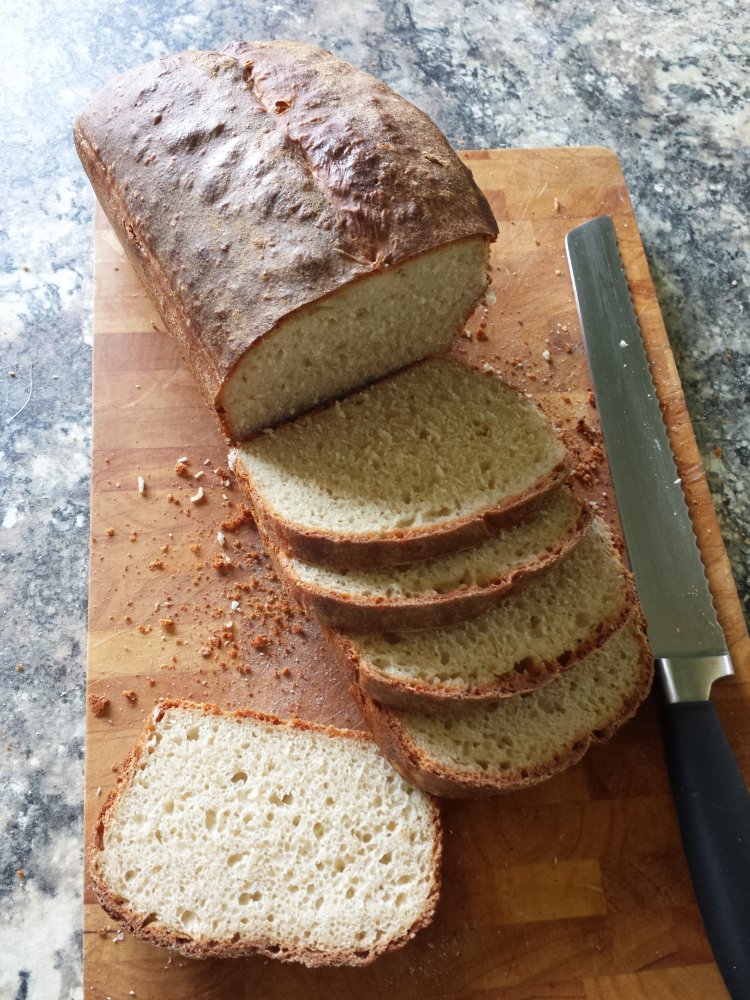
Here is a sensible loaf of white bread, to make up for the bizarre one I posted the other day. 

I’ll show them who’s got guts!

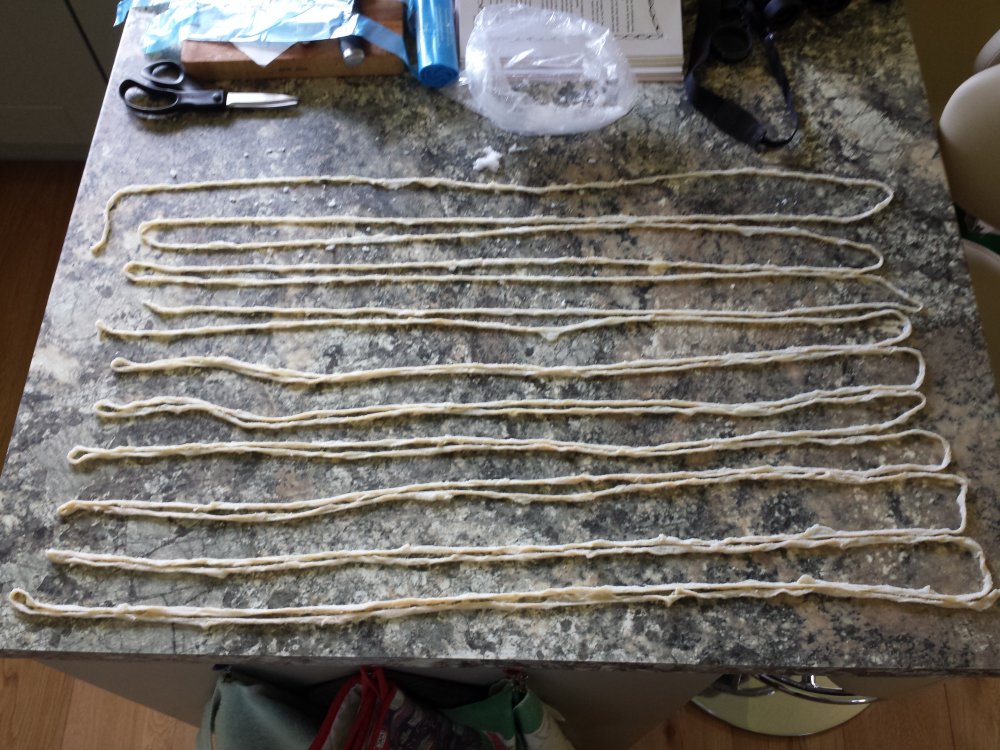
It’s ages since I made any sausages. The first step, getting some casings, has been accomplished. I got these bits of pig gut online, at www.sausagemaking.org/

Easy ordering, and quick delivery. If you are not in the UK, you’ll just have to Google for a nearby supplier.

There’s enough here to make five batches, I think, so the four lots in the blue bags are currently frozen. They keep indefinitely when frozen…


I rewarded myself for this short step on the road to juicy sausages by having a nice, tasty, warm pastrami sandwich. The bread’s made with spelt, not rye, but was still enjoyable.

I‘ve put pork on the shopping list. Scary pictures, in due course…

Feet of clay. or perhaps dough?

Oh, look! 

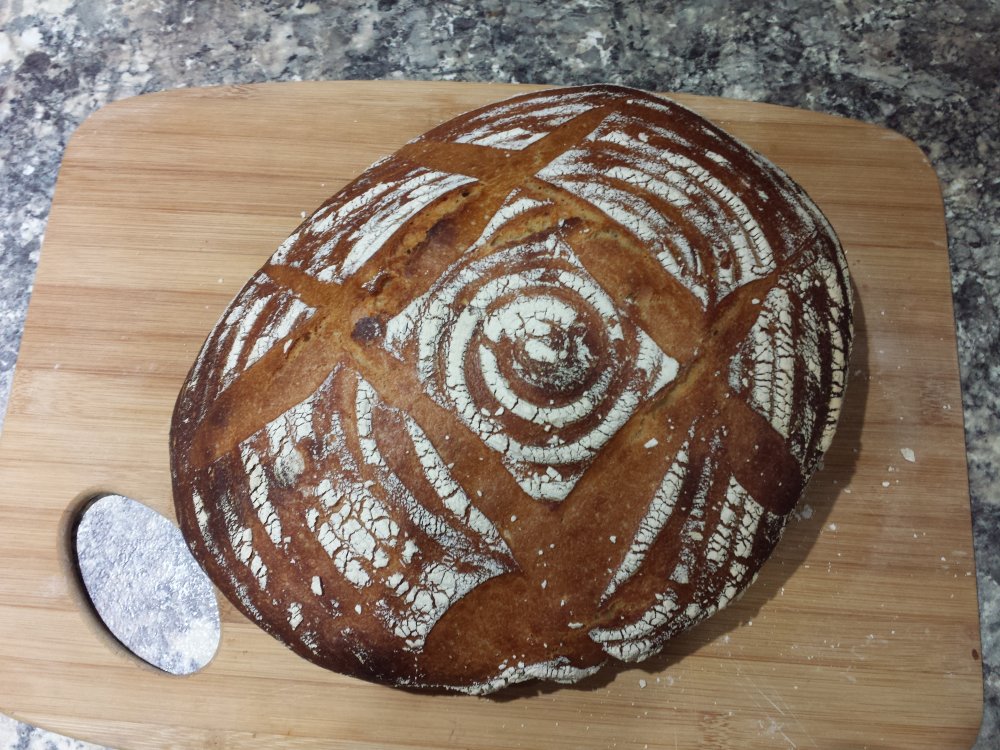
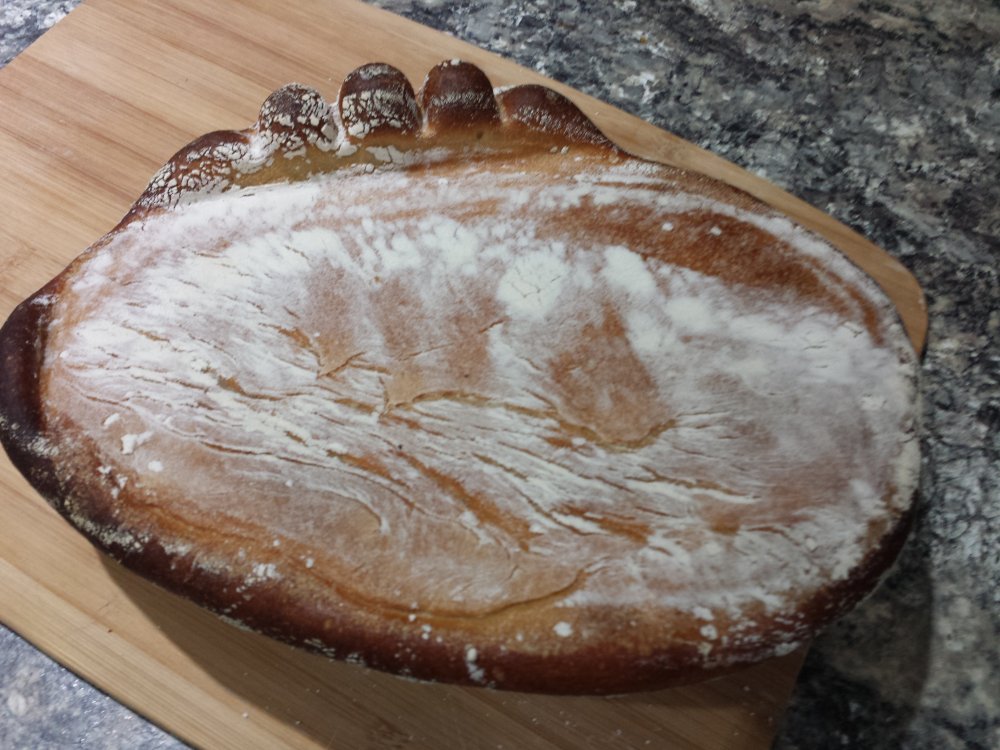
It’s another of those marvelous looking artisan sourdough loaves. Or is it?
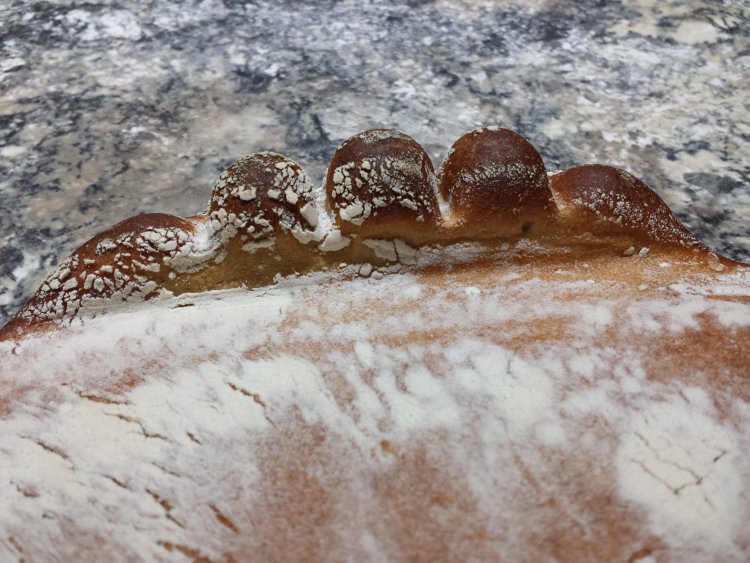
What can this mystery object be? It looks like a closeup of part of Mr Sasquatch.
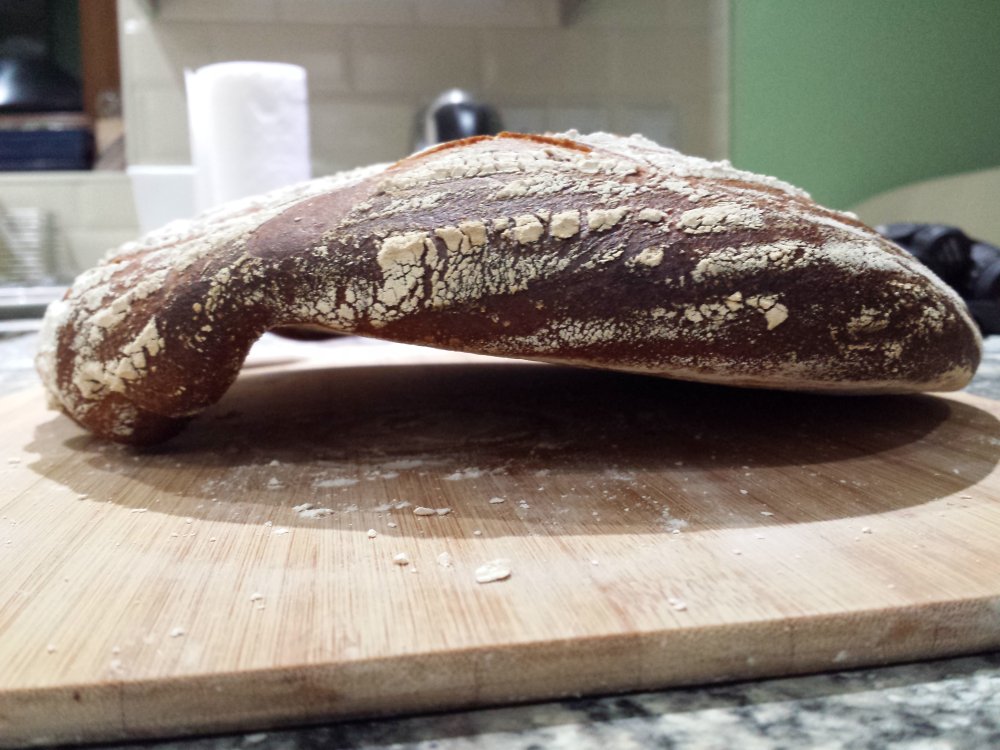
When you have a sudden attack of clumsiness, as you are putting your dough onto your baking stone, and fail to keep it all on the stone…

You can end up baking something pretty bizarre. This has been a public service message, to show you that I can’t make great bread every time.

A little something from the Canary Islands.

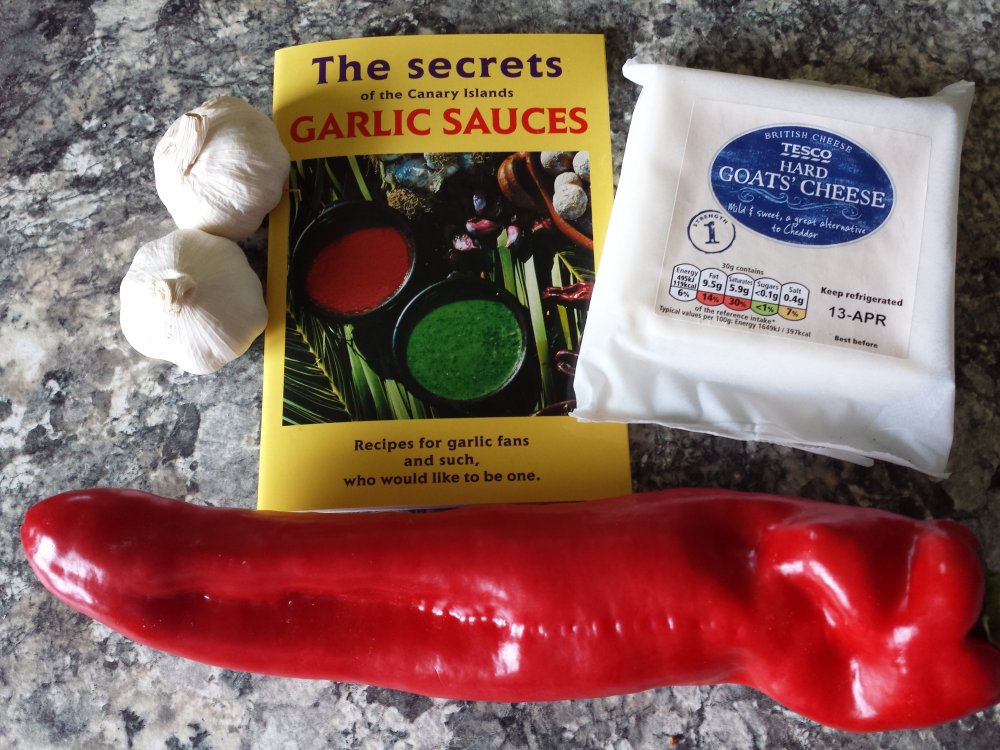
This is almost certainly the smallest cookbook we have. It contains recipes for some amazing sauces that are popular in the Canary Islands, and I brought it back from Fuerteventura a few years ago.
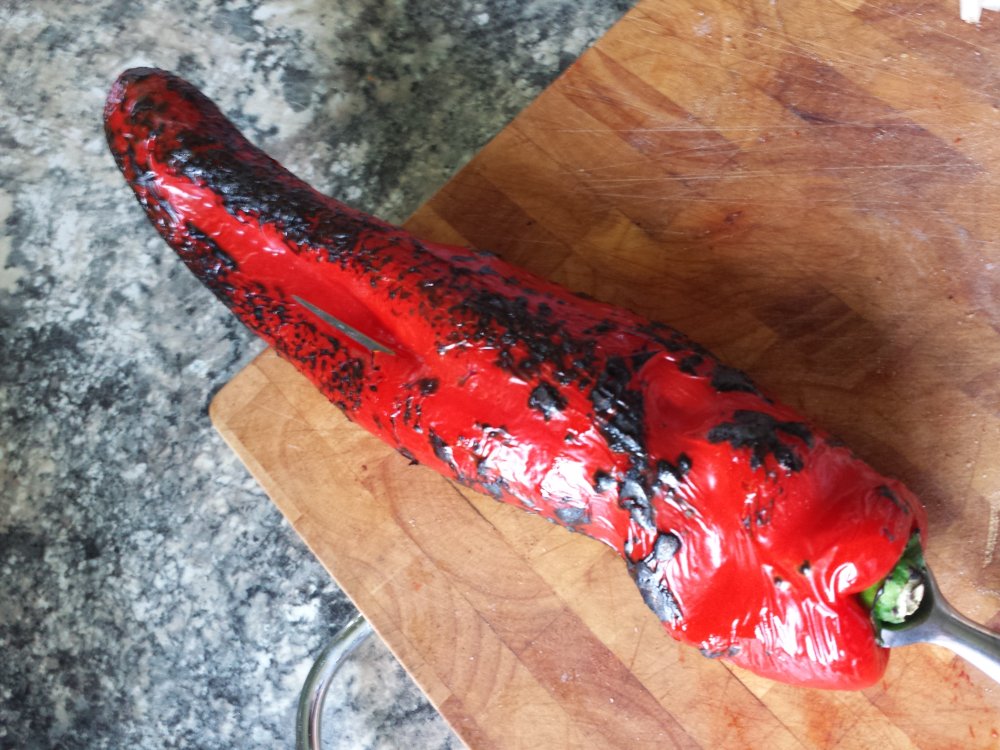
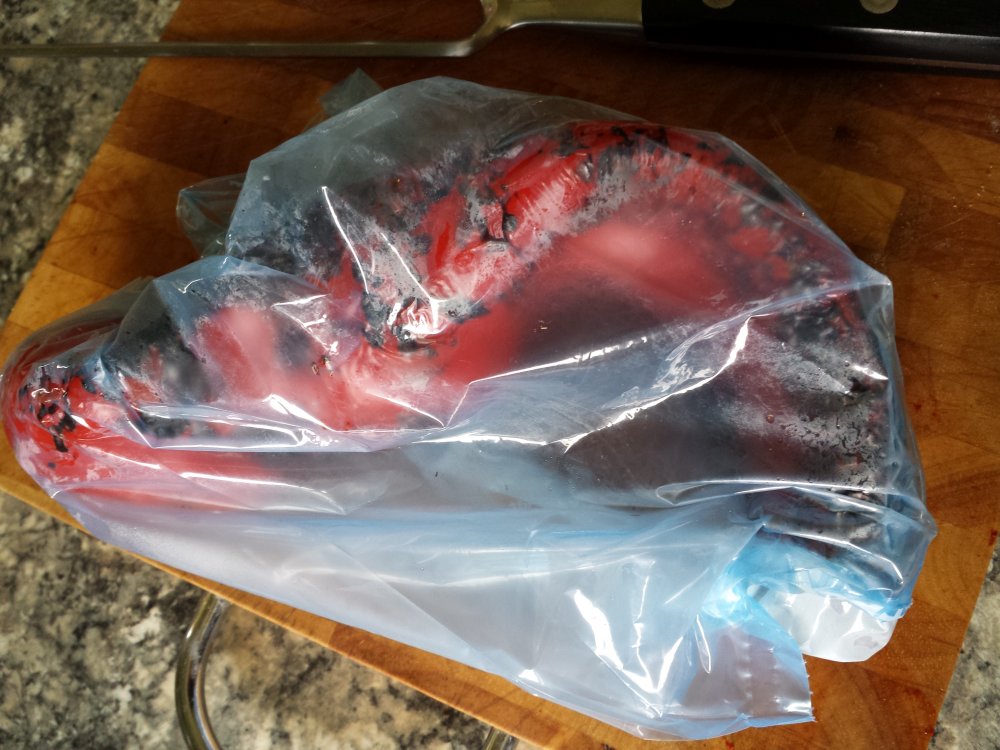
I wanted very much to make Almogrote Gomera, a cheesy, garlicky dip, but didn’t have the necessary beef tomatoes. I decided to use red pepper instead, as we just happened to have one handy. As you can see, here, I’ve scorched the skin to get the peel off. To do that, once it is nicely blackened, it goes into a plastic bag to cool down.

Once it is cool, the skin can be scraped off with a knife, to reveal the cooked interior. The stem, seeds and any big pithy bits are disposed of.
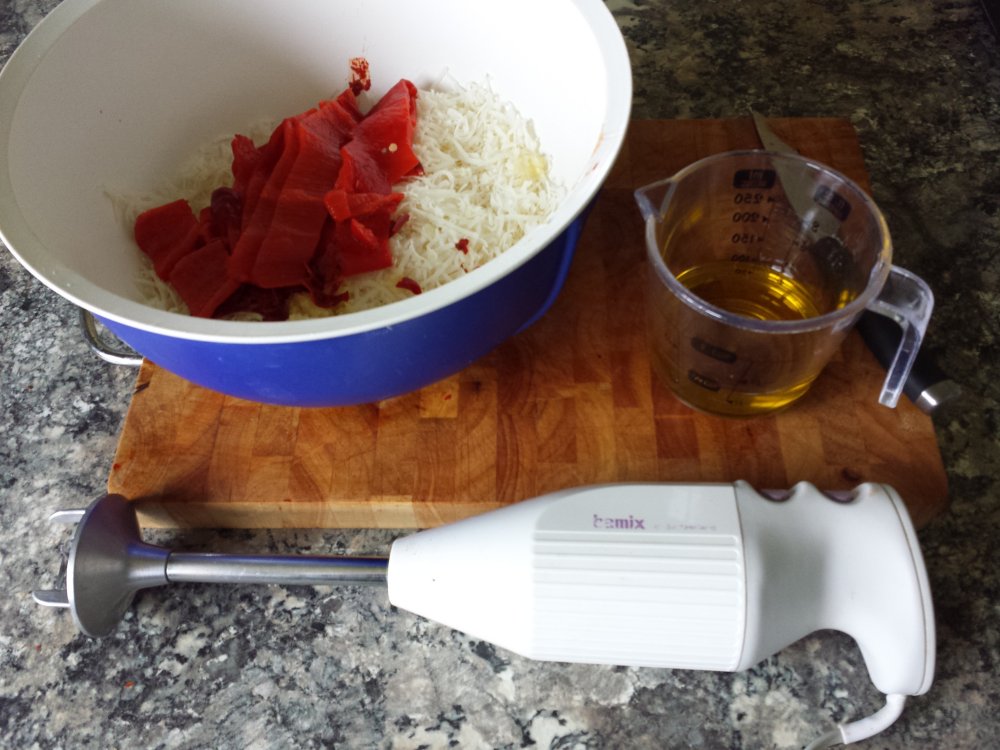
The grated cheese, crushed garlic (lots), salt, pepper, well soaked dried chillis, and  olive oil just need to be mixed to a paste with some suitable device – here is our trusty Bamix.
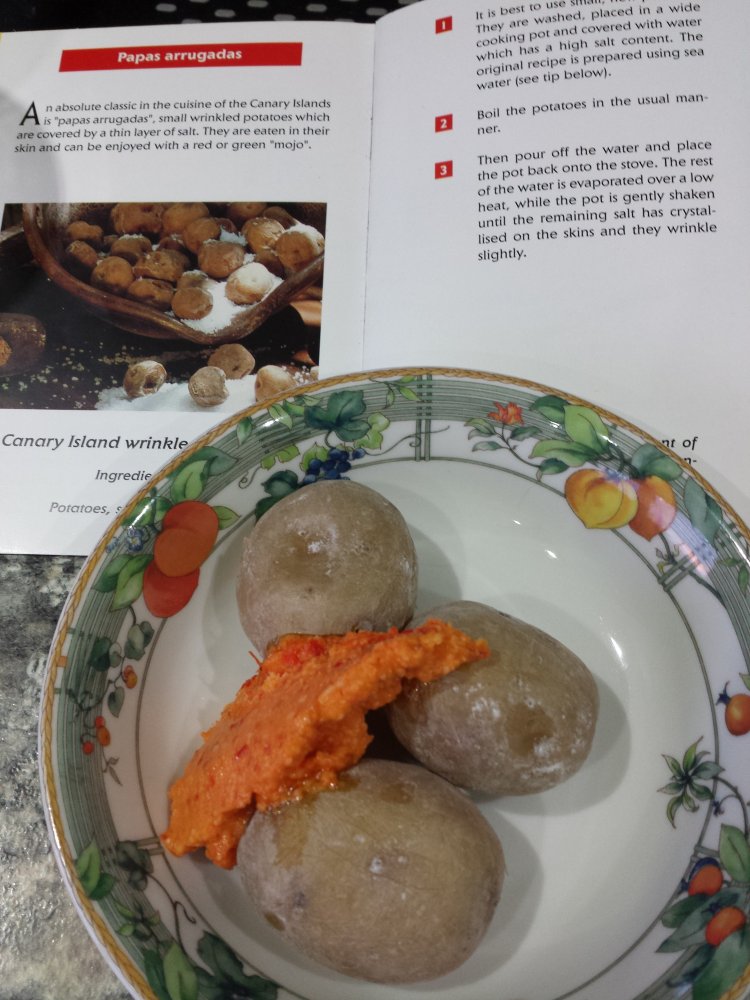
I also made some papas arrugadas, which translates as wrinkly potatoes. There is so much salt in the water that the potatoes actually float! Cook for about 25 minutes, tip almost all the water away, and heat gently, shaking the pan, to crystallise the remaining salt on the potatoes.
Snack attack! Papas Arrugadas with Almogrote Gomera. Surprisingly, the potatoes are not as salty as you would expect. As soon as I can get hold of some more dried chillis, I intend to make my favourite Canary Islands mojo, which is mojo picon.

It was very quiet. But I’m back.

I managed to mess my main computer up, to a colossal degree, a few days ago. The recovery seems to be working, touch wood.

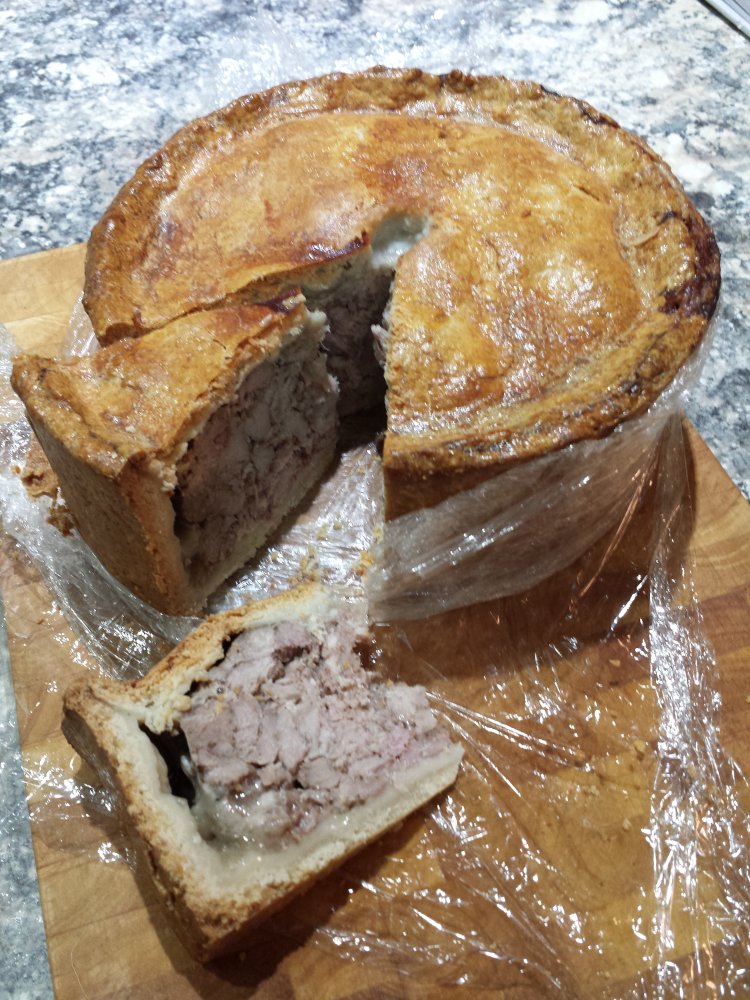
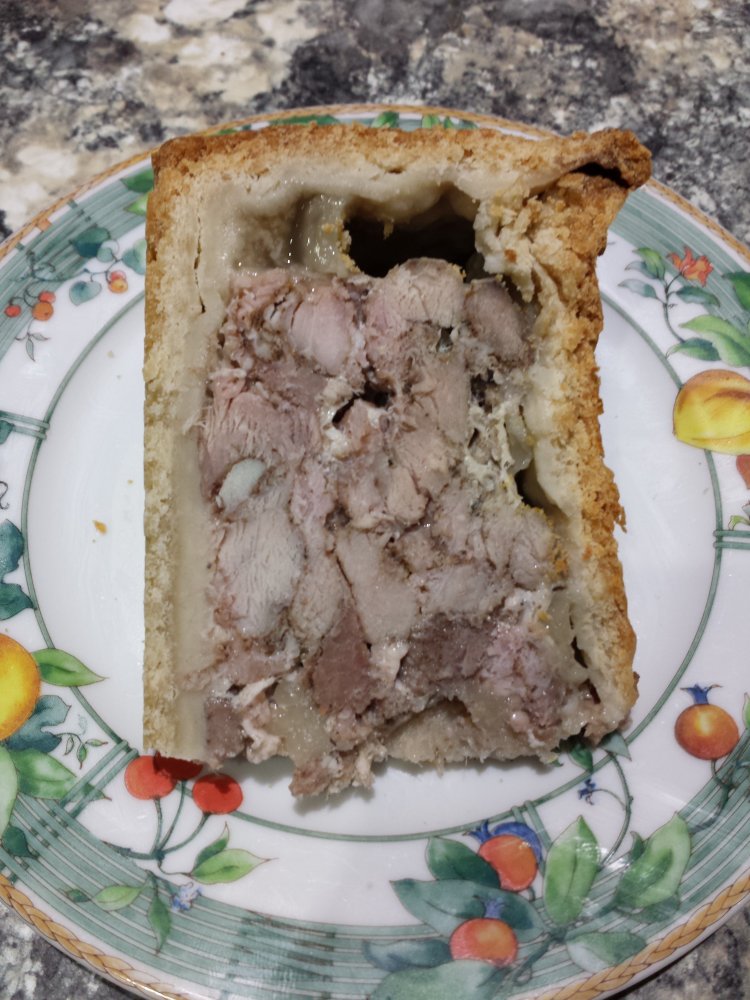
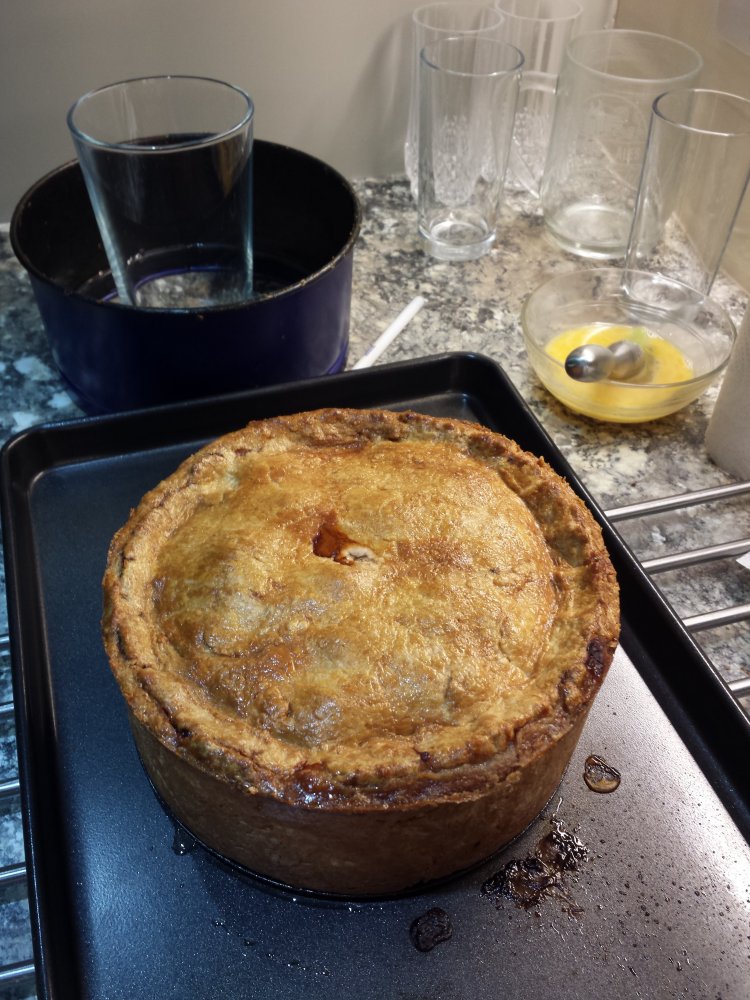
Here is the pork pie I made. There are minor technical faults, for instance, I should have domed the meat, to make it easier to fill it up with jelly where the meat has shrunk away from the sides. But I’m very pleased with the pastry, the delicious flavour of the meat (perhaps ever so slightly too much nutmeg), and the appearance of the thing.
As you can see, that gap at the side should have been filled with yummy jelly, which would have helped it to keep longer. But then, as it is all gone now, I can’t see a problem with that.

Next time, I think I will attempt a raised pie, cooked without the benefit of a tin to support it. And I will probably use different meat and flavourings. Some duck would probably be good.

Life of π.

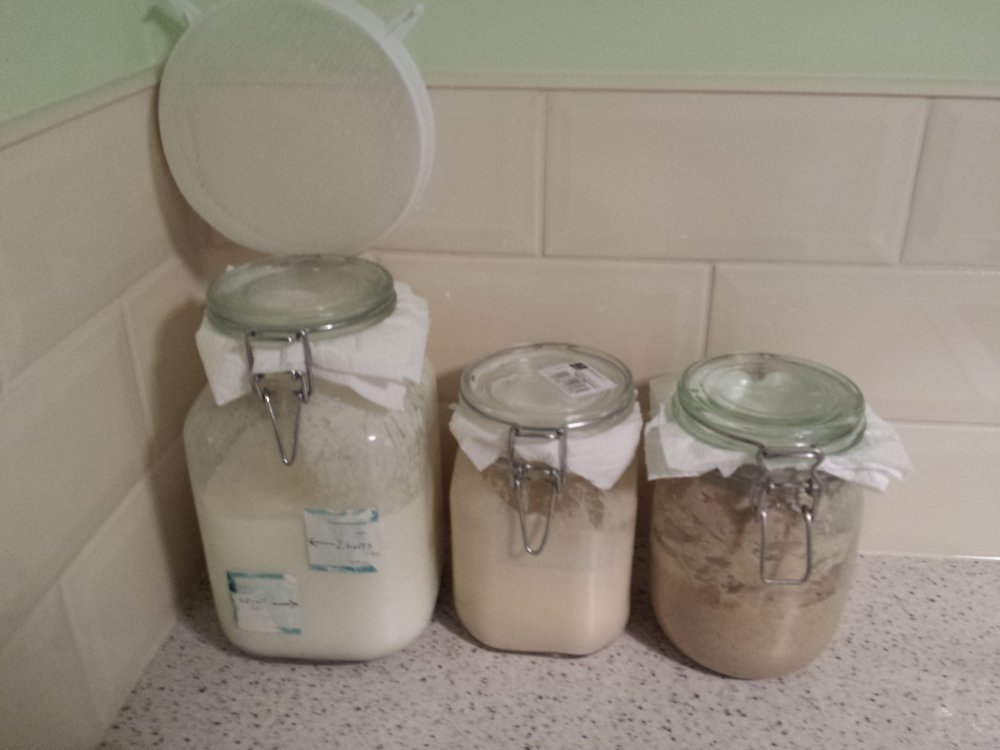
The recent post about a day in the life of a foodie was woefully incomplete. I totally forgot to mention some of the things that get done pretty much every day. The jar on the left, in this picture, is the one I make kefir in. For authenticity, I should be using a goatskin, of course. And it should hang in the doorway, so that anyone passing it can shake it, for luck. That, so I have read, is very much a thing, in Mongolia, or wherever kefir started out. But I’m so lacking in authenticity that I’m not even using mare’s milk. It’s hard to picture the Mongol hordes charging towards your defences mounted on cattle. Anyway, each day, the kefir is strained, and the liquid part goes into the fridge. The disturbing lumps, refered to in most kefir literature (yes, that too is a thing) as kefir grains are given more milk to work on.
In the other two jars, I have sourdough starters, one plain, and one rye. The hardest part of keeping sourdough starters is getting used to the amount you have to throw away. You see, the micro-organisms in the starters excrete waste products; if you just add flour and water, these waste products build up. Chucking half of the starter away before you feed it means half the waste products are removed, and the remaining little chaps get to work in a cleaner environment. Anyway, on to Π…
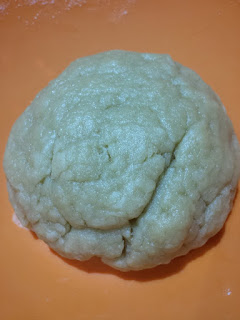

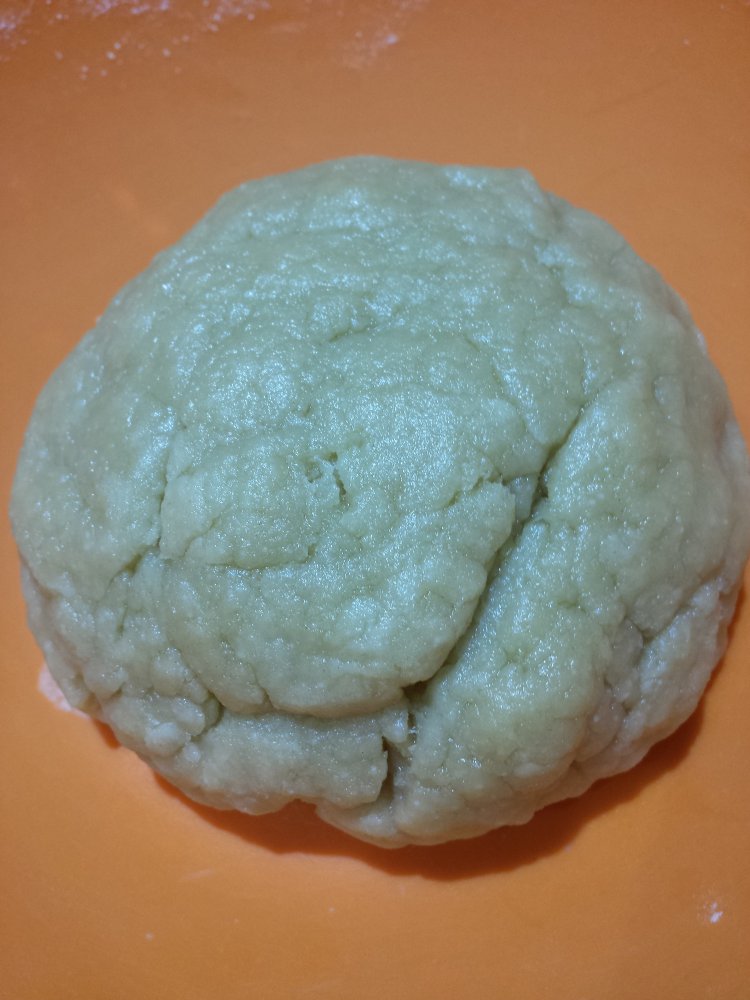
This blob is the strange pastry that the pie will be made in. It’s hot water crust, and contains a disturbing amount of lard. I studied a couple of recipes, before making it. The one in Leith’s “How to Cook” uses butter and lard, but it’s a recipe for a proper raised pie. I made mine in a tin, as the extra challenge of building a self-supporting pie case seemed a little risky for a first attempt. I was following in the doughty footsteps of Tim Hayward, whose “Food DIY” has inspired so much of what I have been writing here. 

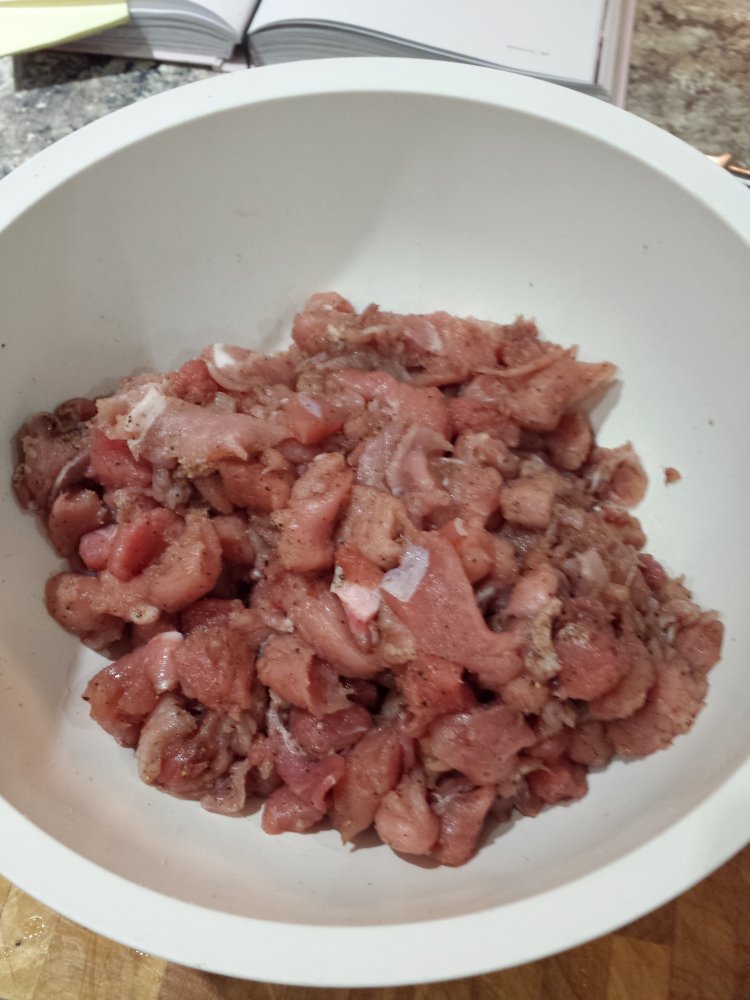
Although this is from the recipe for a Gala Pie, I’m just using the meat, and not adding the boiled eggs. What we see here is chopped pork, with the addition of some shop bought, unsmoked bacon, for its preservatives. Harder to see are the salt and the spices. I’ve resisted the inclination to reduce the amount of salt, as it also has a preservative effect. Tastes good, too.
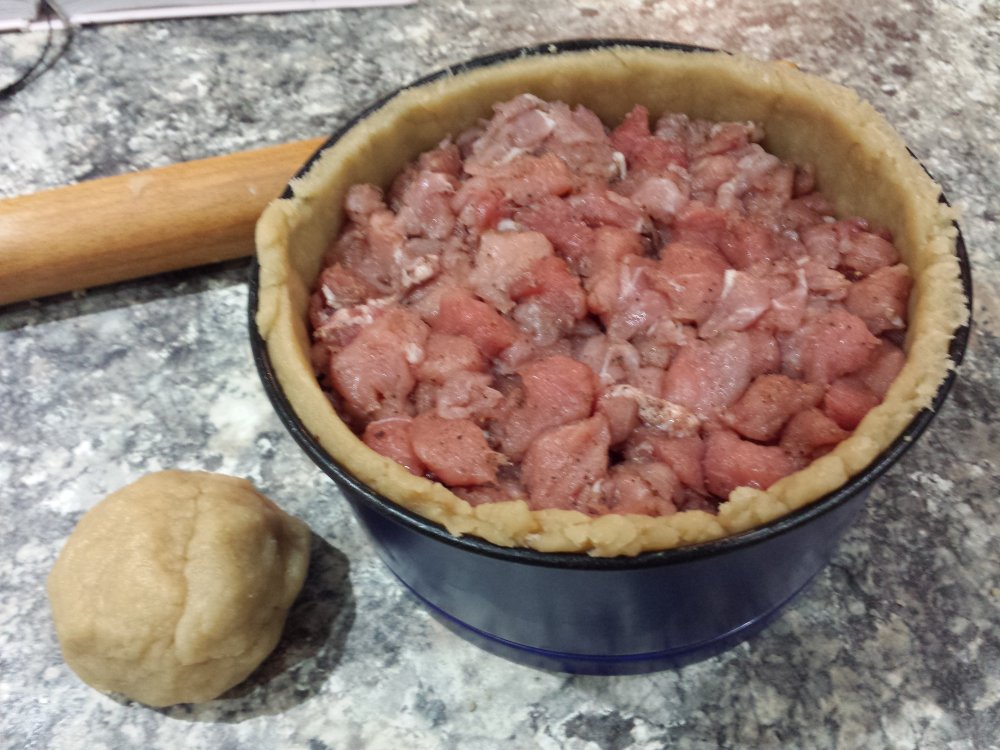
So, a third of the pastry is waiting to become the lid of the pie. I’ve lined the tin with the rolled out three quarters of it, and done my best to make sure there are no cracks. In goes the meat, and at this point, I’m wondering how Mr Hayward managed to get four boiled eggs in his pie as well as 1200g of meat.

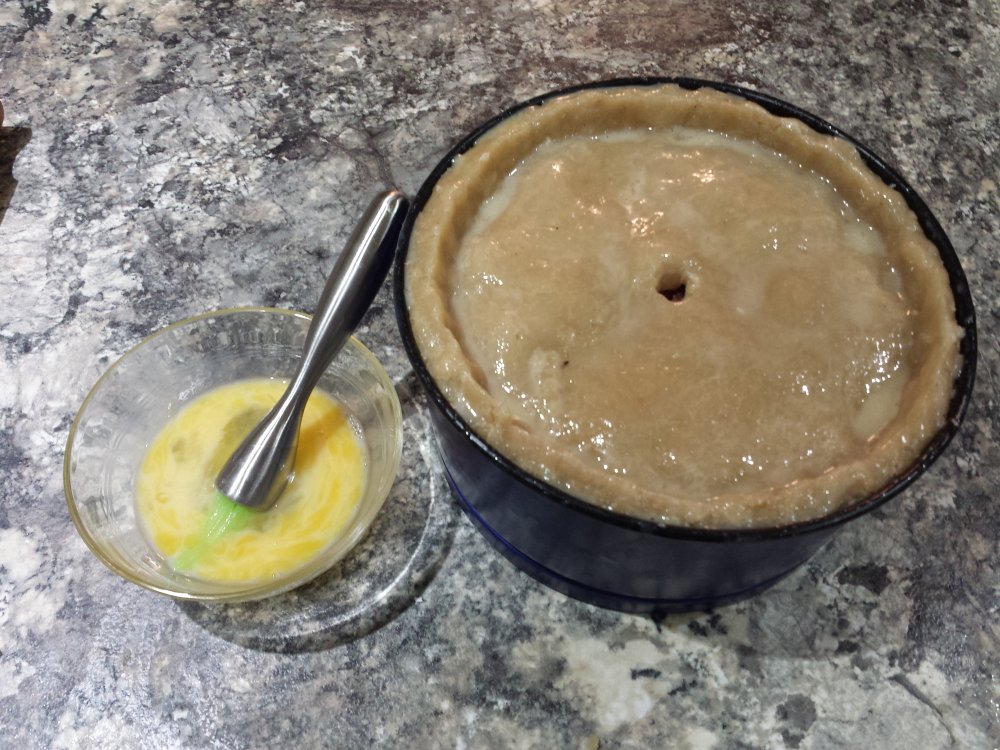
On with the lid, glaze it with a bit of beaten egg, make a hole in the lid, and bake the pie at 180°C for an hour and a half. Because I’m still learning how to use this oven, a check of the internal temperature seemed like a good plan. Yes, pork is certainly cooked if it gets to 75°C, so the next move is to take it out of the tin, give the top and sides some more egg wash, and bake it for another ten minutes.
Once that’s done, the pie has to cool completely, before having its internal spaces filled with jelly. [Note to Americans, this does not mean jam.] The jelly seems to me to be a little soft, so I’m reducing it a bit before using it, to make sure it sets hard. More soon…

Mmmmm, pig’s foot jelly.