Nigella Lawson. Author of numerous cookery books. Star of a quite watchable cookery show, which tends not to be difficult stuff. Daughter of an utter git.
Rather than writing about her, I thought I’d just post some pictures of this morning’s bakery – pear and ginger muffins, from “Nigella Express”, a favourite in our house.
If Nigella, or her publisher, object to me showing this one example recipe, will they please tell me?
You will notice that I annotate recipe books, as how else can you remember how to make the recipe better the next time?
To save time this morning, I did the preparation last night.The bowl contains flour, sugars, baking powder, and ground ginger. The jug was in the fridge all night, and contains vegetable oil, yoghourt and kefir (instead of sour cream), honey, and two large eggs.
Muffin cases onto baking tray. The oven is already pre-heating by this point.
Pour the jug into the bowl after peeling and chopping the pears.
Mix it all together, and spoon the result into the muffin cases.
Sprinkle brown sugar on top, and put them in the oven for 20 minutes. You may have noticed that I annotate recipe books. It’s a good way to remember little details that make things work even better when you use the recipe again. I already said that, but I wondered if you were paying attention.
Hmmm, not too shabby! Thanks to doing the preparation the night before, I was able to do this even without having a coffee first. They do go rather well with coffee, for breakfast.
Sometimes, I just don’t feel like cooking a formal “meat and two veg” dinner. So we have what we call “bits”. Here we have stuffed vine leaves from a tin, a selection of charcuterie from Tesco, a few bits of artichoke, and four dips. The orange coloured one is made from our home-grown carrots, with yoghourt in the middle. Then there’s hummus with dukkah sprinkled on it, a beetroot dip I think I invented, with pine nuts on it, and (probably) an aubergine dip.
Clearly, what’s missing is bread and wine. See below…
Well, we ran out of the last bacon I made, a while ago. Even worse, Mrs Walrus bought some shop bacon, which we know just isn’t as good as the home made kind. You might suppose making bacon is difficult. You might even suppose it’s something to do with an old, vulgar joke, but that’s up to you. How come I know how to do it, then? Simple. I stand on the shoulders of giants…
Some useful books.
How?
Well, I had to nip out to the shops, as I had no mozarella, and it is Pizza Saturday. After that, I nipped into the butcher’s shop near the supermarket. (I would have given you a link to Deri Page, St Clears, but I don’t do links to Facebook pages.) There were only a couple of people waiting, and I enjoyed the conversations about their relatives who never eat minced beef, and make that two kilos, please, and what on earth is going on in Laugharne? Then I bought a nice bit of pork belly, complete with skin and ribs.
Belly pork, with eight ribs still in.
I used my favourite Sabatier boning knife to separate the ribs from the belly, trying not to cut too close, because when you’re eating ribs off the barbecue, it’s best if there’s a good amount of meat on them. I left the skin on, other bacon makers remove it now. That might give them a quicker cure, but I like the choice of whether to fry the bacon with or without it.
The ribs, not too closely cut.
Of course, the remaining meat and skin were too big to fit in my plastic brining box, so I cut them in half.
Two pieces of belly pork.
The cure I used is mostly cooking salt, with some dark brown sugar mixed in, and this time, about half a teaspoonful of ground white pepper. Some of it gets rubbed fairly firmly into the meat, while the rest is kept handy to use as the curing proceeds in the fridge, which is usually about two weeks. I look at it daily, draining the liquid from the box, and checking that no mould is trying to establish itself. If it does, I wipe it off with vinegar soaked kitchen towel. It never comes back from that!
Pork with cure on it.
I used to put far more cure than this on at first, but it really doesn’t need that much, and you can end up with bacon that’s too salty.
Both bits of pork, with cure, in a plastic box.
There are actually two plastic boxes in the picture, the inner one has holes in it for the liquid that emerges from the pork to drain down into. It’s tipped out daily, more cure is added as necessary, and the meat gets turned over. If anyone knows a proper word for that liquid, please enlighten me!
End of part one…
Part the Second
I have washed the cure off, patted the meat dry, and put it back in the fridge, propped up on chopsticks to dry out for a week or so. Then I’ll smoke it. There will be pictures.
Part Three
A day ago, I set up the ProQ smoker, filled with oak sawdust, in its specially optimised smoke chamber (it’s a galvanised dustbin from B&Q), hung the bacon up, and started the sawdust smouldering. I don’t mess with little candles to light it, a blast from my blow-torch does the trick. It burns for about twelve hours. Today, I went and got the smoked bacon. I’ll be slicing it tomorrow, and vacuum packing the results, before freezing them. I may also have a bacon sandwich.
And, finally…
I have a bacon slicer. It’s not a very good one, but it’s better than my previous one, which was Chinese, and had internal gears moulded roughly from steelmaker’s slag, or possibly something worse. The gears wore out within weeks. Anyway, I’ve sliced the bacon into a range of rashers, rough chunks, and indescribable bits and pieces. They will all taste lovely. And, in order to store portions without continuing to make everything smell like smoked bacon (I’m not saying that’s a bad thing), I have used this lovely little vacuum packing machine.
Forgive me Readers (if any) for I have not blogged about food for over a fortnight!
I just received an email from the Guardian’s Rachel Roddy, about mashed potato. Now I know many people think mash comes in a packet, and you just add water, and some of us are old enough to remember the Cadbury’s Smash robots laughing at our primitive way of making them… “they cut them with their metal knives”.
Normally, I might just read it, and perhaps some of the things it links to, but I was rather impressed with the way Rachel Roddy referenced, in one paragraph, all of…
Rachel Roddy mentions an Italian trattoria, that served
the puree di patate con lardo. It turned out to be a small mound of buttery mashed potato topped with three slices of cured pork back fat that had once been white, but was now translucent as it melted into its mountain. It remains one of the most delicious things I have ever eaten and summed up the joy of mashed potato: ordinary and luxurious, silly and serious. Mash, wonderful mash.
Now, I have wanted to make lardo for ages, but hey, it’s the 21st Century, and farmers in the UK are mostly producing damned skinny pigs, because everyone knows fat is dreadfully bad for us, so you can’t even get pork fat a couple of inches thick, even when you go to a real butcher. Part of the problem is that pigs are not kept until they have time to get properly fat before they’re rushed off to whatever food product factory has the contract for them. It’s the same problem when I make bacon, as well, there’s only just enough fat on it to be able to fry it properly. Once upon a time, you would put bacon in a pan, fry it, fry the eggs in the fat that was left behind, and then soak the fat up with a Staffordshire oatcake, and eat the lot. I once made a batch of Staffordshire oatcakes, and they were wonderful. I must make more, as I no longer live in Staffordshire, and nobody sells ready-made ones here in Wales.
We keep an index book of recipes that we like, and rely on. It has several entries for Bechamel sauce, but only one of them can be the best.
There’s one in “The DIY Cook”, by Tim Hayward, and he’s really, really good, and so is his sauce…
There’s another, in Rick Stein’s “Secret France”, and do you know what? He’s really good as well, and the photography in his recent books is at pure genius level…
There are several other recipes…
But my favourite recipe for Bechamel Sauce is in an oldie but goodie, “Mediterranean Cooking” by Hilaire Walden. Fans, you are in luck. It’s still available, on Amazon, and it’s really cheap. This is so good that I haven’t bothered to see if Nigella does a good one. I bet she does, though…
So…
A pint of milk
1⁄4 of an onion
A chopped up carrot
A fair bit of parsley
At least one bay leaf
50g of unsalted butter
25g of plain flour
2 large eggs, beaten
Salt and pepper, if you like
Bung the milk in a pan, with the onion, carrot, parsley, and bay, bring it gently to a boil, cover it, and turn off the heat. Beat the eggs in a jug, or some container you prefer.
Let those sit for 15 minutes, while you do this in another pan. Melt the butter, stir in the flour, and let it cook for about a minute. A lot of cookery books tell you to cook it until it smells “biscuity”. I’ve never detected that smell from butter and flour, but if you can, that’s your guideline. I can’t smell saffron, let alone biscuity, so I ignore that instruction, and stir it until it is smooth.
Next, strain the milk into it, and throw the stuff in the strainer away, unless you can think of some arcane use for it.
Simmer the mixture for about five minutes, then take it off the heat, stir it like fury, while pouring in the beaten eggs as slowly as you can, tip it on top of your already partly cooked moussaka, or whatever other dish you are improving, and finish cooking it…
…when I started blogging, ooh, ages ago, it was going to be a food blog. And about computers. But suddenly, politics got a bit too intrusive in our lives, and I ended up writing quite a lot about the dreadful crooks who were messing up everything for everyone.
Don’t panic! I am not going to stop lambasting the criminal gang who have hijacked our country, and dragged us unwillingly out of the EU. [Yes, I can justify that claim, and probably will quite soon.]
But… but there are a lot of really good food blogs, mostly about restaurants I couldn’t afford to eat in, even if I wanted to eat their rather too fancy food. And how do you even begin to compete with Jay Rayner’s restaurant reviews, especially the magnificent ones where he really dislikes both the restaurant and the food?
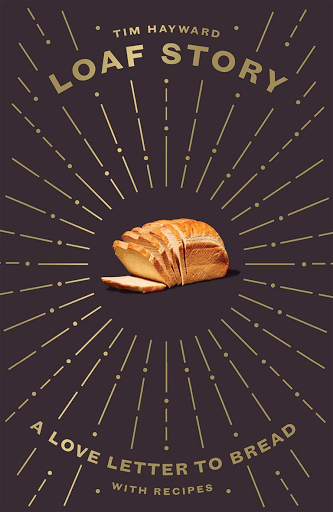
Loaf Story A Love Letter to Bread
And then, he only went and started writing about cookery books, a while before I had come up with the idea, and doing it really well, the monster. However, there’s this book that I chose as a birthday present for myself…
You know how some books are so good that you keep reading bits out to the significant other in the room? This book has so many bits like that, that the ordinary bits are hard to find.
It’s by Tim Hayward, whose “Food DIY” was the inspiration for a lot of my early blog posts about things like home made charcuterie. It’s a book with recipes, not a recipe book.
You might think that a book based on bread, with sections on toast, sandwiches, and various bread-based concoctions would be a bit ordinary. I took this to bed, to read myself to sleep. Bad mistake. I was laughing my head off for hours, fascinated also by the interesting footnotes. Yes, this book has footnotes. The author reveals his opinions about many food items that people have firm opinions on, like Marmite, salad cream – has to be Heinz, but he tells you how to make your own, baked beans – must be Heinz, and not the low fat, sugar, salt version. I suppose the fact that I agree with him on all these things explains in part why I think this is a truly great book.
“After boiling for six to six and a half minutes, she cools them under cold water, peels, then fries in a pan filled a third of the way up with 160C sunflower oil (if you don’t have a thermometer, drop in a cube of bread and it should turn golden in 25-30 seconds).”
No. If you don’t have a thermometer, get a thermometer. They’re not expensive. Standing there, timing cubes of bread until one turns “golden” in the right time is silly.
Something or other reminded me recently that I can’t seem to detect the smell or taste of saffron. A lot of people love it, and write passionately about it. They’ve smelled it being brought to them even before the waiter came through the kitchen door. They say they’ve had it explode in their mouth. And I have missed out…
I wondered whether it was just me, or a fairly common thing, to be unable to smell and taste saffron, so I made a Twitter poll.
It was worded very poorly. To be fair to myself, at the time, I didn’t think about it at all carefully. The result was that it didn’t work the way I had expected.
A lot of people thought this was a question about whether saffron is wonderful, whether it is over-priced, or any of several possible interpretations. What I should have actually asked was “Can you smell and taste saffron”. Like this…
Of course, this isn’t good enough, either, as it discriminates against people who want to say that they can’t afford saffron, or have never heard of it. But the worst thing is, all we can tell from the result of the original poll is that about half the people who saw the poll, and answered it,
like the smell of saffron
and about half of them
think it is too expensive.
which actually tells us nothing at all about how many people can detect the taste and smell of saffron, and how many cannot.
Conclusion
Polls. We see lots of them quoted, and they are mostly about politics, and are supposed to let us know how people think about things that matter rather a lot more than whether one can detect saffron.
And a lot of those polls are even less well designed than mine. Some are even designed to make people draw the wrong conclusion, and it’s not easy to tell which ones those are, is it?